Advancing energy flexibility in buildings
Transforming building energy management with smart control systems
The BuildInFlexergy project, funded by the Dutch Mission-Driven Research, Development, and Innovation (MOOI) program, is revolutionizing building energy flexibility. This is supported by the Dutch Ministry of Economic Affairs and Climate Policy and the Ministry of the Interior and Kingdom Relations, and managed by the Netherlands Enterprise Agency (RVO). This four-year industry leading initiative unites 10 industry partners (including Eindhoven Engine) and 2 top universities (TU Eindhoven and TU Delft).
A unified approach to innovation
Coordinated and managed by Kropman B.V., the consortium includes installation companies, energy consultants, platform developers, building owners and managers, technology providers, and other experts. The aim is to foster open knowledge exchange and drive innovation through strategic collaboration and widespread dissemination of results.
Buildings at the heart of the energy transition
As the energy sector shifts towards a decentralized, digital, and low-carbon future, buildings—significant consumers of electricity and thermal energy—are key to providing demand-side flexibility. This flexibility allows buildings to adjust their energy use in response to external signals like electricity prices, carbon intensity, or grid constraints, without sacrificing occupant comfort or essential functions.
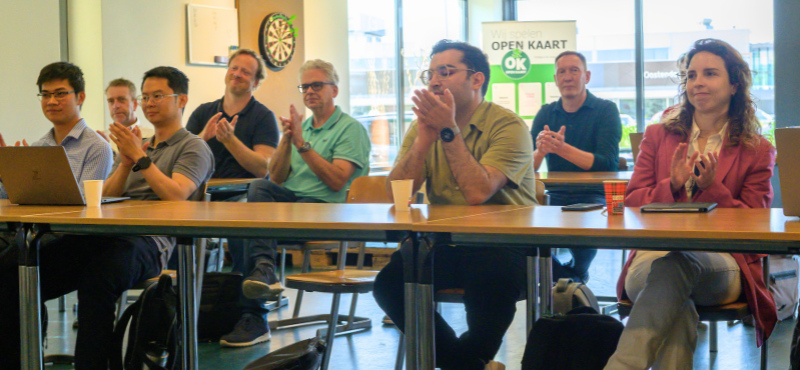
Kick-off meeting 17th June, 2025 | Kropman Nijmegen
The power of model predictive control
Model Predictive Control (MPC) is a cutting-edge tool for optimizing building energy performance. Unlike traditional control systems, MPC uses predictive models and real-time data to proactively manage a wide range of systems, including HVAC (Heating, Ventilation, and Air Conditioning), lighting, heat pumps, thermal storage, electric vehicles charging and other building loads It uses forecasts of occupancy, weather conditions and other relevant parameters to determine the best control actions over a future period, continuously updating the plan based on new data.
The aim of this project is to foster open knowledge exchange and drive innovation through strategic collaboration and widespread dissemination of results.

Real-time responsiveness with dynamic climate control
Dynamic climate control adjusts HVAC settings and ventilation rates based on changing indoor and outdoor conditions. This allows buildings to pre-cool or pre-heat spaces when renewable energy is plentiful or electricity prices are low, shifting loads without compromising comfort or overloading the grid.
Optimizing with key performance indicators
Key Performance Indicators (KPIs) are developed based on the Smart Readiness Indicator. KPIs guide decisions and balance objectives like energy cost, comfort, CO₂ emissions, and grid support. KPIs such as total energy consumption, peak load reduction, indoor comfort indices, and flexibility scores can be prioritized based on goals.
The future of building energy flexibility
The KPI-driven MPC framework makes buildings energy-efficient, grid-responsive, and climate-conscious. This approach is ideal for buildings in smart grids or demand response programs, supporting both building managers’ operational goals and energy system planners’ strategic targets.
In conclusion, combining MPC, dynamic climate control, and KPI-driven optimization can significantly enhance building energy flexibility. This strategy is crucial for making buildings active participants in the low-carbon energy system of the future.
Mijke the Matchbot: Bridging gaps with AI
Introducing Mijke, the Matchbot: a conversational AI designed to bridge the gap between individuals with low literacy and the support systems around them.
Hi, I’m Sichen, and I am currently pursuing an Engineering Doctorate (EngD) at Eindhoven Engine. With a background in Industrial Design and a strong focus on user experience (UX) and interaction design, I completed my master’s at Eindhoven University of Technology.
Currently, I work within the focus area of Inclusive Society. Here, I explore how AI can create more accessible and supportive environments for everyone. Our solution? Mijke, the Matchbot.
The project explores five core challenges:
1. Clarity in communication
Ensuring the chatbot communicates clearly.
4. Multi-modal accessibility
Offering multiple modes of interaction.
2. Emotional connection
Providing a supportive and empathetic interaction.
5. Precision in support
Connecting users with the right help efficiently.
3. User-friendly design
Making the chatbot intuitive and user-friendly.
Interested in more information about Mijke and the MetMij project?
Addressing information inequality
Millions of people in the Netherlands struggle with basic literacy, numeracy, and digital skills. Mijke shows a possibility of solving this information inequality by offering a friendly experience tailored to the real-world needs of often overlooked people via Artificial Intelligence (AI). This work stands at the crossroads of technology, social equity, and public service innovation. It shows how AI can be used responsibly in human-centered design.

Empowering communities
To achieve these goals, I plan to run iterative user tests to gather insights and improve mijke’s usability. to help people with limited basic skills access support more easily and confidently. By doing so, I hope to decrease the workload of stakeholders, such as social workers, employees from municipalities, or public service staff. Additionally, I want to set a benchmark for evaluating AI recommendations in social public service contexts and contribute new knowledge and tools to the fields of human-computer interaction (HCI), accessibility, and digital inclusion.
This work stands at the crossroads of technology, social equity, and public service innovation, showing how AI can be used responsibly in human-centered design.













GENIUS reveals battery to balance campus grid
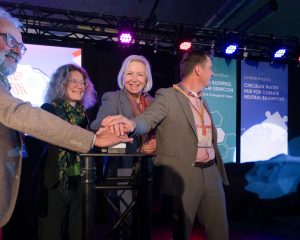
On Monday 18 November, some 180 people gathered in the Disruptor building at the TU/e campus to witness the reveal of the 3.4 MWh battery that is at the heart of the GENIUS project. The battery is key in an attempt to manage net congestion on the campus power grid.


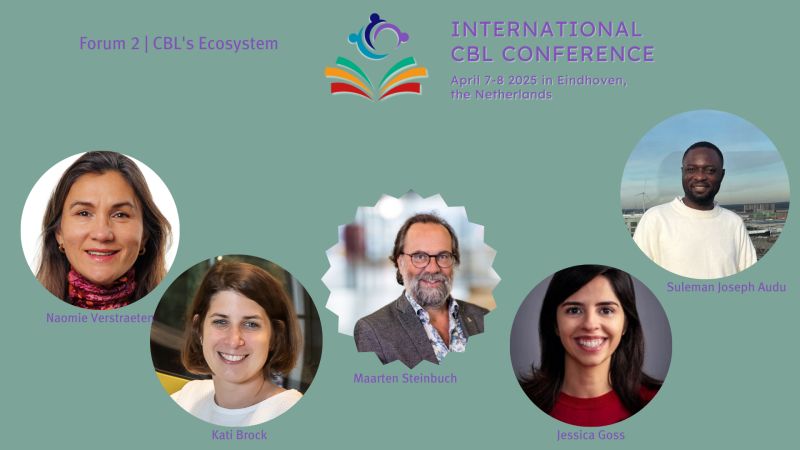
Following the success of the Dutch CBL Conference in 2023, the organization is thrilled to bring together educators, researchers, practitioners, industry leaders, and community stakeholders from around the world.
We are especially proud to feature our esteemed colleagues in Forum 2: Exploring CBL’s Ecosystem:
- Jessica Goss (Designer & Researcher, Eindhoven Engine), an expert in human-centered design and social innovation, will share her insights on tackling literacy challenges with AI-driven solutions for a more inclusive society.
- The session will be moderated by our scientific director, Maarten Steinbuch, ensuring a dynamic and insightful conversation.
New interns
Eindhoven Engine welcomed a vibrant group of new interns in 2025. Get to know them from left to right. Additionally, four bachelor students from TU/e have started. Over the coming months, they will focus on the climate-adaptive region, working one day a week.
We wish them good luck! We hope the interns gain valuable experience and bring fresh insights to the various programs at Eindhoven Engine. Everyone can make impact on society!
- Cathelijne Brantjes | Human & Technology, 4th year, Avans University of Applied Sciences | Inclusive Society
Research on making blended care more understandable at general practitioners’ offices for people aged 18-40 with reduced digital skills.
- Hilde Schram | Strategic Communication, HBO Master, Fontys University of Applied Science | Communication
Eindhoven Engine focuses on the complex challenges our society faces. Addressing these challenges requires a specific approach. Hilde is researching how this approach can be tackled through strategic communication.
- Levi Deerenberg | Business Innovation, 4th year, Avans University of Applied Sciences | Livable Region
Develop a concept that reduces energy consumption at the residential towers Luna & Aurora on the TU/e-campus by actively influencing the behavior of the residents.
- Ivory Johan | Business Innovation, 4th year, Avans University of Applied Sciences | Livable Region
Develop an innovative concept to increase the engagement and participation of students and staff on the TU/e campus around sustainability, by connecting them with sustainable innovations in an inspiring way.
- David Rozenberg | HBO-ICT (Software) , 4th year, Fontys University of Applied Science | Inclusive Society
Preparing the MetMij chatbot for deployment and real-world use. MetMij easily directs people with low basic skills to appropriate support agencies.
- Santiago Triginer | Industrial Engineering, 3rd year, Eindhoven University of Technology | Livable Region
Identifying challenges and solutions for solar panel reuse, and exploring how AI can enhance recycling processes.
- Mare Gijsbers | Business Innovation, 4th year, Avans University of Applied science | Inclusive Society
Develop a methodology to effectively and accessibly introduce the ‘Met Mij’ app to users with low literacy, enabling them to quickly and easily receive support to participate fully in society.
- Rosalie Hendriks | Business Innovation, 4th year, Avans University of Applied Sciences | Inclusive Society
Develop a new concept for people with low basic skills between the ages of 18 and 40 in the Eindhoven region, in such a way that these people can independently ensure the security of their financial situation.
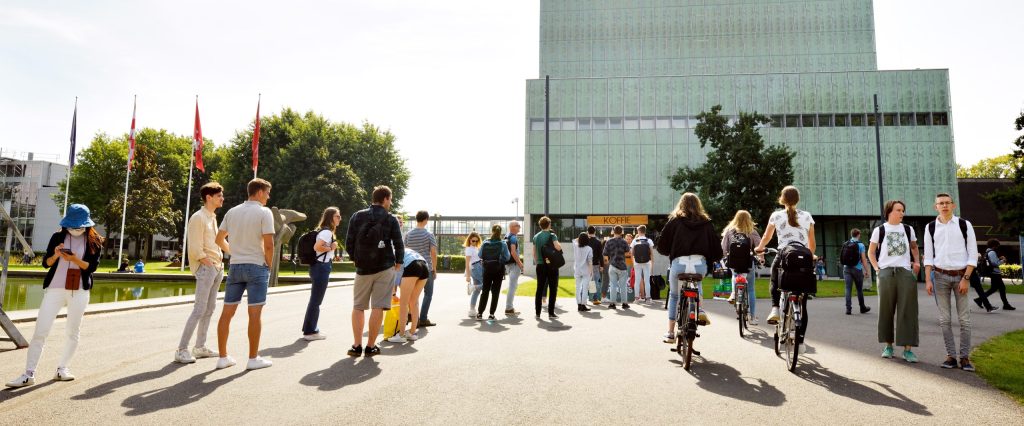
The Career Expo is specially tailored for all TU/e students. However, if you are a non-TU/e student it is possible to walk around over the expo and have a talk with all the companies.
During the expo, students will have the possibility to introduce their selves to over 180 companies eager to answer questions and talk about their potential place in that field of study or business. Students will be able to orient their selves and develop their career like never before.
Media: Technologie met een duidelijk maatschappelijk doel:
[Dutch]
Innovatieversneller Eindhoven Engine gaat nieuwe fase in
Als maatschappij staan we voor talloze uitdagingen. Bij Eindhoven Engine, een samenwerkingsprogramma tussen bedrijven, kennisinstellingen, maatschappelijke organisaties en burgers in de Brainportregio, wordt er al jaren gewerkt aan innovaties om deze problemen het hoofd te bieden. Nu slaat het programma een nieuwe weg in.
Source: Innovation Origins
The project focuses on smartly addressing grid congestion, improving connectivity and creating a sustainable testing ground for innovations. The battery plays a crucial role in optimizing energy flows on campus and enables sustainable growth.
This reveal is for invited guests only.
Innovative solution for grid congestion: GENIUS project
As energy demands continue to rise, many regions, including the Brainport region, are facing significant grid congestion challenges. These issues hinder the efficient use and storage of renewable energy, putting strain on the local electricity network. With ambitious sustainability goals in place, there is an urgent need for innovative solutions to optimize energy management and ensure a stable grid.
Introducing the GENIUS project
A promising answer to these pressing issues is the GENIUS project (Grid Efficiency and Network Integration for Universal Sustainability). With €1 million in funding, the GENIUS project is set to pioneer energy efficiency and tackle grid congestion challenges. This initiative is a collaborative effort involving 13 partners, including Eindhoven Engine, and is part of its Livable Regions program
A blueprint for nationwide application
The project aims to smartly address grid congestion, enhance connectivity, and create a sustainable testing ground for innovations. With the GENIUS project, the TU/e campus will become a smart lab for energy transition solutions. Ultimately, this project will served as a blueprint for efficiently managing energy demand. The goal is to develop solutions that can be applied to approximately 3,500 industrial sites across the Netherlands, ensuring a more stable and efficient energy network.
For more details, check out the article published by Innovation Origins.

Tackling Europe’s Invisible Health Threat
Hi, my name is Devansh Kandpal. I’m 27 years old and I’m an Acoustics R&D Engineer at Sorama as well as an EngD trainee in Smart Buildings and Cities at TU/e.
Noise pollution is one of the largest contributors to poorer health in the European Union (EU). Disturbance of sleep due to environmental noise leads to the loss of millions of hours of sleep, which is directly responsible for added stress and poorer quality of life for residents of the EU. Addressing this issue, the OpenCall project VIPNOM has been conceived to develop advanced methods for noise measurement and visualization. VIPNOM, which stands for Virtual Position Noise Measurement, is a consortium between Sorama, TU Eindhoven and ReSound. It represents a convergence of diverse engineering disciplines, all focused on innovating scalable technologies that will revolutionize how noise is measured and visualized across various scenarios. I am pleased to undertake the assignment for my EngD traineeship as part of this project. The focus will be on resolving the inaccuracies identified in noise level recordings.
Revolutionizing stadiums and highways
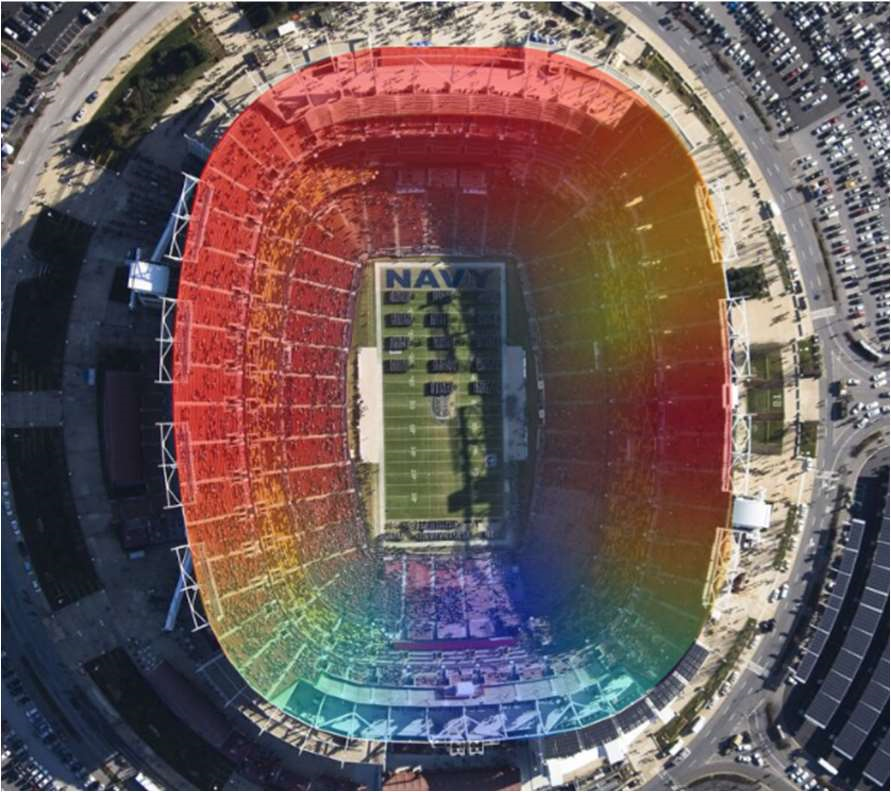
VIPNOM’s breakthroughs have notably enhanced smart stadiums and highways. By integrating advanced, real-time audio capture algorithms, Sorama’s acoustic monitors can now effectively map noise data. This technology has transformed stadiums into intelligent arenas that utilize noise levels to foster positive fan conduct, thereby ensuring a secure and welcoming atmosphere.
In parallel, these principles have been adapted to monitor vehicular noise on highways. Sorama’s acoustic cameras serve as ‘noise radars’, pinpointing excessively loud vehicles to cultivate a more serene environment. These two applications have been adopted worldwide.
Enhancing accuracy through innovation
In some cases Sorama encounters inaccuracies in noise level recordings due to environmental variables and hardware constraints. The VIPNOM team is proactively addressing these issues through multiple approaches. These include designing predictive machine learning models to compensate for losses, using acoustic models to account for environmental conditions and how noise propagates in the same, and using physics-based compensation solutions for acoustic inaccuracy.
As part of this effort, I focus on crafting digital signal processing (DSP) algorithms essential for calibrating acoustic monitors in expansive venues like sports arenas. My work extends to creating simulations and visualizations that improve the spatial accuracy of beamformers within Sorama’s acoustic monitors, as well as developing transfer functions derived from acoustic modeling to further refine their performance.
A quieter world through acoustic innovation
VIPNOM aims to raise awareness about environmental noise and the health risks that it poses. We aspire to do this by creating new technologies that visualize noise in different ways. We aim to harness collected noise data to create solutions that make the world a quieter and healthier place to live in.
We aim to harness collected noise data to create solutions that make the world a quieter and healthier place to live in.