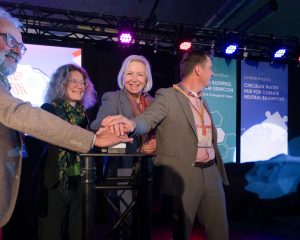
Join us in celebrating 5 years of Eindhoven Engine!
During our birthday party, we’ll share the milestones, successes, and challenges we’ve experienced within the organization and our projects. Come and join the festivities. It promises an afternoon of celebration, where we’ll introduce our next steps as we transition from technology push to society pull, offering an opportunity to embrace disruption.
We look forward to your arrival and toasting together to our anniversary.
See you on May 29th!
Media: ‘Slim schuurtje’ voorziet gebouwen het hele jaar door van energie (DUTCH)
Op de TU/e Campus in Eindhoven werken twee startups aan een nieuwe ontwikkeling die de energietransitie moet helpen versnellen. De startups combineren zogeheten warmtegevelpanelen met slimme energieopslag in de vorm van een berging; de zogeheten Smart Heat Shed.
Daardoor is bijvoorbeeld ook ‘s winters voldoende energie beschikbaar om een woning of kantoorpand te verwarmen. Om het systeem verder te verbeteren is een proefopstelling gebouwd op de TU/e Campus. Het project is één van 28 projecten van innovatieaccelerator Eindhoven Engine en is mede mogelijk gemaakt door Regio Deal Brainport Eindhoven.
Source: Brainport Eindhoven
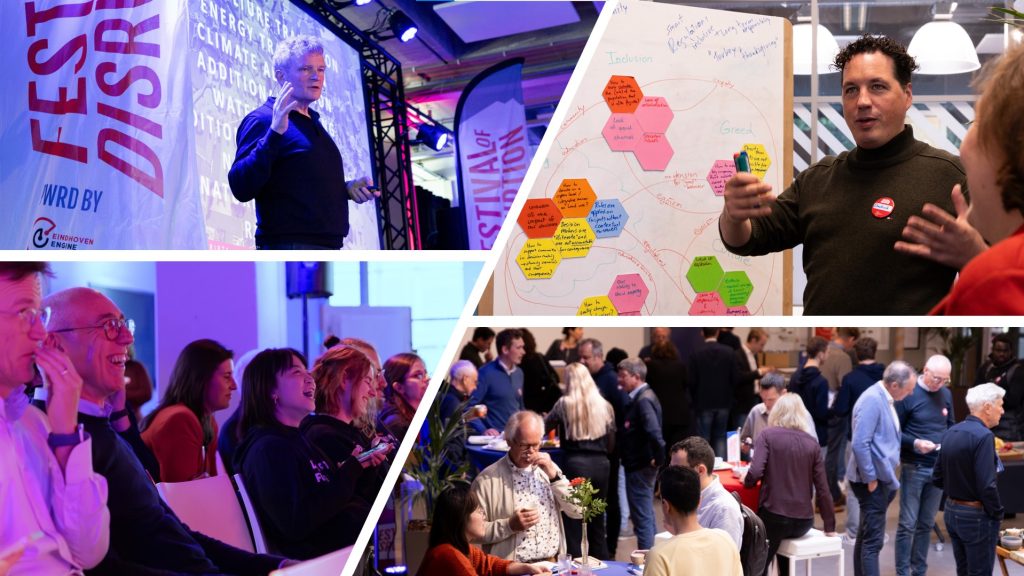
Festival of Disruption filled with energy and enthusiasm
The Festival of Disruption’s second edition thrived with energy and enthusiasm. Kicking off the day, architect and urban designer Floris Alkemade offered a compelling perspective on how to embrace transformative changes.
Engaging workshops
Following this inspiring start, attendees were presented with seven engaging workshops, each delving into methods to expedite innovation, including ‘Design doing’, ‘Accelerating transitions via disruption’ and ‘1+1=3.’ Moreover, they had the chance to stay up to date on the latest developments in Eindhoven Engine’s OpenCall projects and the Emergence Lab initiative focusing on low literacy. As the day drew to a close, the atmosphere was charged with excitement during the wrap-up quiz, concluding a day, filled with learning, inspiration, and networking.
Did you miss out on the festival or do you want to relive the day? Get an impression of it here!
Possible continuation for SmartMan project at Fontys
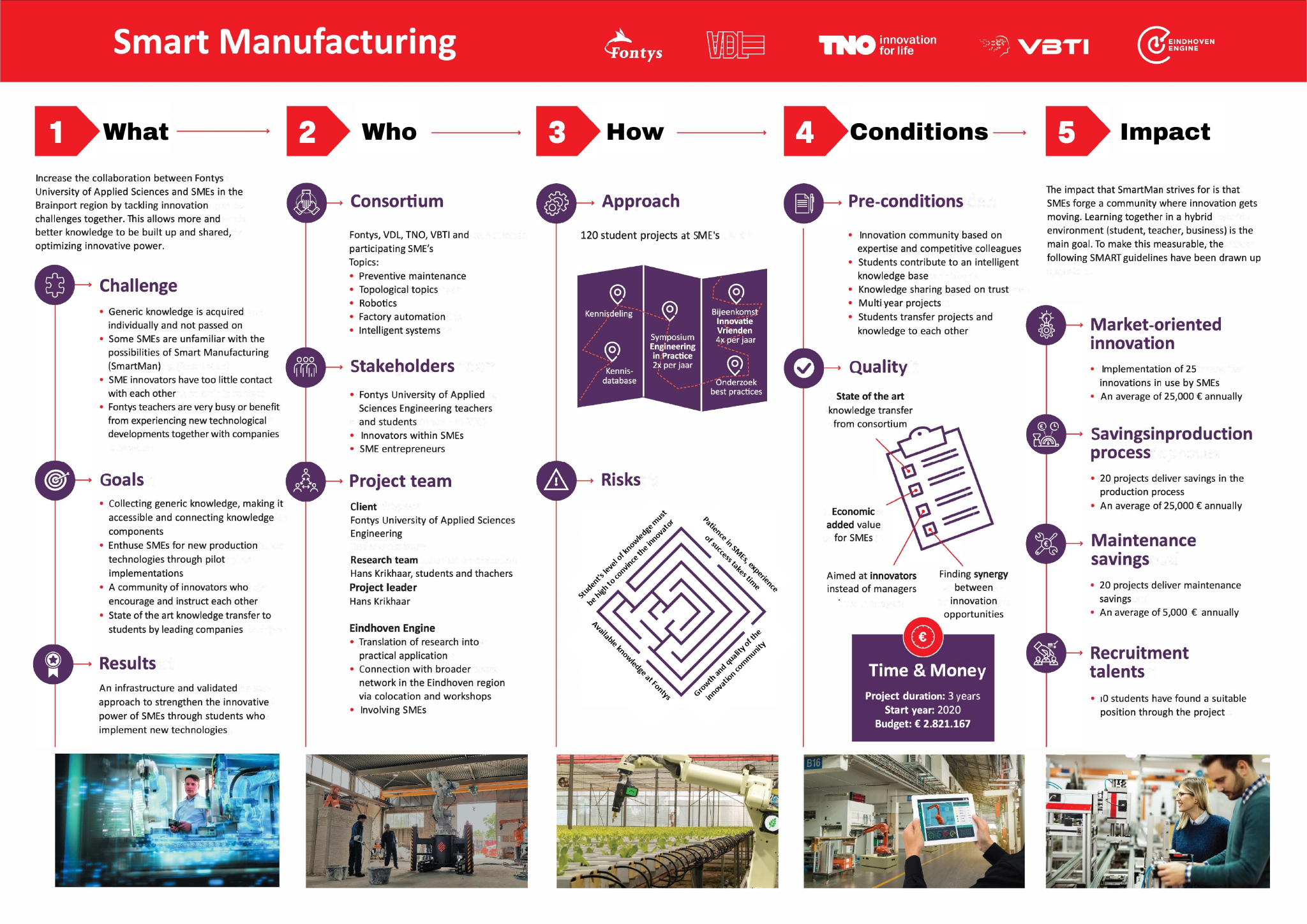
The SmartMan project at Eindhoven Engine is approaching its end date. SmartMan is an OpenCall project that started in 2020 and has a duration of three years. This summer, the project ends at Eindhoven Engine, but is working on a follow-up at Fontys Engineering.
Hans Krikhaar, who is leading this project and is a lecturer in Smart Manufacturing at Fontys Engineering, understood that SMEs have a great need for innovation, but lack the capacity and knowledge to do these innovations themselves. To be ahead of the competition, it is extremely important for SMEs to keep innovating their production processes. The industries need to adopt Smart Manufacturing. The fresh perspective and knowledge of Fontys students are the outcome here. In the ecosystem knowledge exchange at Eindhoven Engine makes cross-pollinations possible between Fontys students, SMEs, other companies and institutes. With the help of Eindhoven Engine, it results in a validated approach to strengthen the innovation power of SMEs in the Brainport region.
Projects in three focus areas
The goal of SmartMan project was to annually realize 40 subprojects carried out by 2nd, 3rd and 4th year Fontys students at SMEs. During the 3-year period at Eindhoven Engine, indeed a total of 120 projects at various companies were successfully completed. A very nice result considering this project withstood the corona epidemic. In the SmartMan project with Eindhoven Engine, Fontys, TNO and Brainport Industries as partners, students do their internship and graduation assignments in various facets of Smart Manufacturing.
These can be divided into three focus areas:
1. Topological design, which includes additive manufacturing and lightweight structures.
2. Intelligent systems (AI, low-code modeling and digital twinning).
3. Factory automation and robotics.
Knowledge exchange at Eindhoven Engine makes cross-pollinations possible between Fontys students, SMEs, other companies and institutes.
At VDL, successive students have worked on modular injection molds (topological design). In the area of intelligent systems, several students have used artificial intelligence for VBTI to further develop vision analysis, and at Siemens, students have collaborated on developing digital twins. Students have also contributed to factory automation solutions at various companies. At Eindhoven Engine project Carbyon DAC, a student even collaborated on the process plant for making CO2-absorbent material used to reduce CO2 in the atmosphere.
Stronger link
Fontys Engineering is working out plans to follow up on SmartMan. The goal is to link research even more closely to student projects in companies, especially in SMEs. Students will receive assignments within research domains at companies and teacher-researchers will provide the necessary knowledge transfer. This allows future students to complete their assignments more efficiently with the guidance and knowledge of the lecturer-researcher.
Possible continuation for SmartMan project at Fontys
The SmartMan project at Eindhoven Engine is approaching its end date. SmartMan is an OpenCall project that started in 2020 and has a duration of three years. This summer, the project ends at Eindhoven Engine, but is working on a follow-up at Fontys Engineering.
The Automotive Week 2023 is thé hotspot if you want to keep up with the latest European developments in mobility and if you want to expand your network in our mobility sector. Innovative technologies and the right skills become more and more important to make the world of mobility smart, sustainable and safe.
In the heart of the Brainport region, at the Automotive Campus in Helmond, we open our doors to the international public to experience the mobility of the future.The Automotive Week offers an exclusive look behind the scenes for future talent, professionals, governments and knowledge institutions.
Eindhoven Engine reporters Ferry Wortelboer and Jasmijn Schol will be at the Talent Fair (16 April) to find out how visitors envision future mobility. Does this match with the innovations we will be seeing this week? How do innovations in mobility accelerate?
The built environment is responsible for about 36% of the global energy demand. About 5-30% of the energy use of buildings is related to energy waste due to faults in heating, ventilation and air conditioning systems. The goal is to develop a self-learning module that can monitor and diagnose climate systems in large buildings.
Generic, robust and reliable fault detection & diagnosis tool
Rick Kramer is the leader of this project and Srinivasan is one of his PhD candidates. Srinivasan is focusing on developing a generic, robust and reliable fault detection and diagnosis tool that can help with the early detection of these faults and eliminate energy wastage.
Personalized control system in an office environment
Within this project, EngD trainee Petros is focusing on the people within large buildings. He is doing research on the control and functionality of a personalized control system that people will be able to use in their office environment to tailor it according to their needs and preferences.

About the project
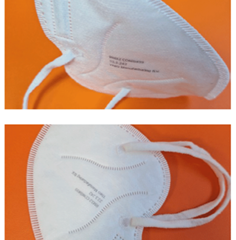
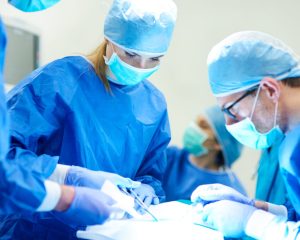
The project started with a feasibility study on market introduction. The mouth-nose mask is an innovative product that is made almost entirely (95%) from biological renewable raw materials: PLA with bio-PP for a filtering effect and recycled steel for the nose bridge. As the mouth-nose mask is 20-45% lighter, less raw materials are used.
The development and production of the new ProM mask will be more sustainable by using the knowledge and skills of previous in-house development and production processes combined with the knowledge and expertise of prominent Dutch scientific knowledge and training institutes.
Together, we aim for a sustainable future by making and keeping innovative, sustainable mouth-nose masks available for healthcare in the Netherlands and, where possible, the rest of Europe.
We have been able to produce a new affordable and sustainable FFP2 medical mask. These masks are ready to be tested and certified by the proper notified bodies in 2023 and may eventually be brought to the market.
This research is supported by Small Business Innovation Research (SBIR) of the Netherlands Enterprise Agency (RVO).
Other updates
Sustainable mouth/nose mask consortium successfully concluded
Media: Eindhoven Engine competes with cheap face masks from abroad
Accelerate by working together
Partners
Videos
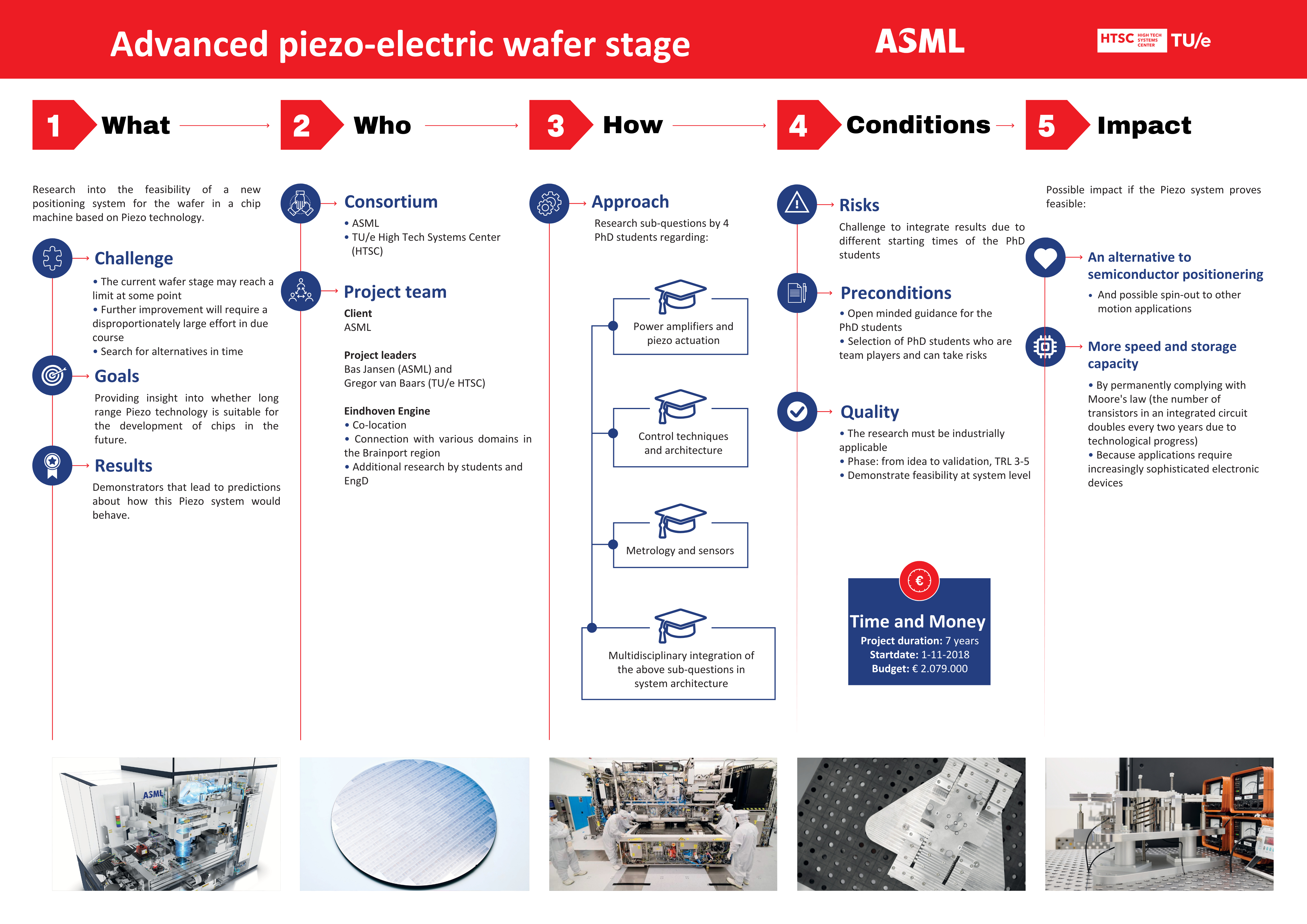
Gregor van Baars – Projectlead TUe & Systems engineer TNO
ASML is extremely successful with their current technology. The question lies in how much room there is for expansion. This research begins from a completely different standpoint, offering significant advantages but also presenting numerous challenges.
Ron de Bruijn – PhD candidate TU/e
My research is about wafer stages that are driven by piezoelectric actuators. These actuators make a mechanical contact between the rest of the machine and the wafer stage. Minimal disturbance or vibration in the rest of the machine could actually affect a wafer position.
Infographic
Archive
Media: Zoeken naar nieuwe concepten buiten comfortzone gevestigde ontwerpprincipes
Podcast Kracht van de Regio
Partners

Infographic
Project updates
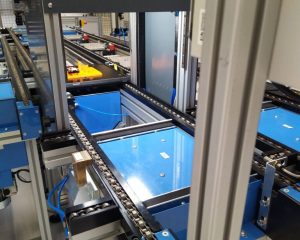
A year of SmartMan
Thinking outside the box: students, SMEs and the SmartMan project
Shareholders, SMEs and SmartMan: the viewpoint of Ella Hueting
Brainport Regio Deal Innovation Projects – Eindhoven Engine
Eindhoven Engine is one of the Regio Deal innovation projects with social impact.
Check out this video showcasing our way of working, the Carbyon project and SmartMan project.