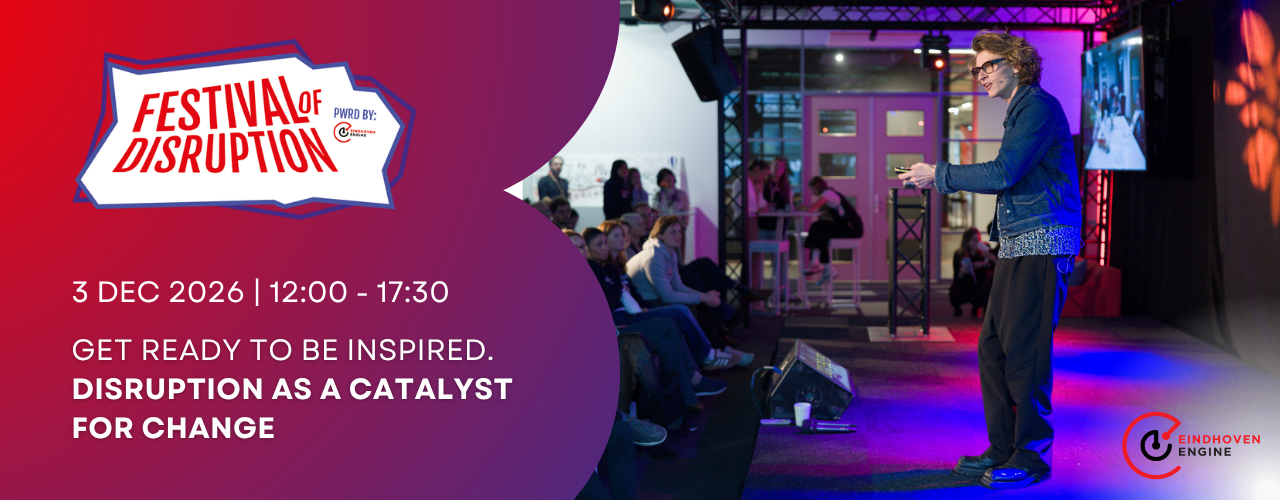
Following the success of last year’s edition, we’re excited to welcome you back to the Festival of Disruption on Thursday 3 December 2026.
Join us for a day of inspiring keynotes, thought-provoking discussions, interactive sessions, and meaningful networking with changemakers, researchers, entrepreneurs, policymakers, professionals, students, and anyone passionate about shaping a better future.
Get inspired | Keynote Hans Stegeman
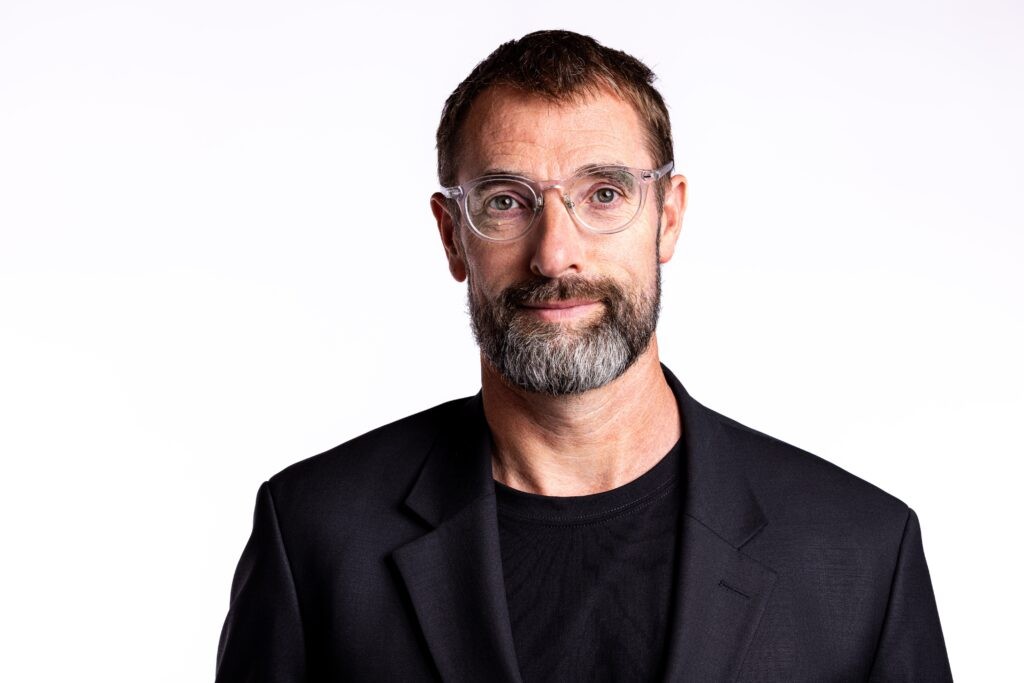
We are delighted to announce our keynote speaker: Hans Stegeman, Chief Economist at Triodos Bank.
Hans is known for looking beyond economic figures and trends. He connects economics with societal transitions and challenges us to rethink the systems, assumptions and structures that shape the way we live and work.
“In times of disruption, transforming societies is possible. But how to do that in the right way?”
Explore | Biomimicry: learning from nature
Nature has spent 3.8 billion years solving complex challenges. What can we learn from those solutions? How do ants collaborate so effectively? What can forests teach us about resilience?
In this interactive exploration, you will discover how nature’s strategies can help reshape organisations, technology and society.

Discover | Dynamic program
Throughout the afternoon, you will be immersed in a dynamic program featuring:
FREE ENTRY – LUNCH AND NETWORKING DRINKS INCLUDED
Act | Be part of the change
Disruption begins with curiosity. Join us on 3 December and discover how new ways of thinking can unlock new possibilities for the future. Sign up now and be part of the change.
Workshops

Workshop program coming soon…
Previous versions

Registration Festival of Disruption 2026
We look forward to welcoming you to the Festival of Disruption!

Feel free to drop by and learn about the effort of students over the last six months. Registration is not needed.
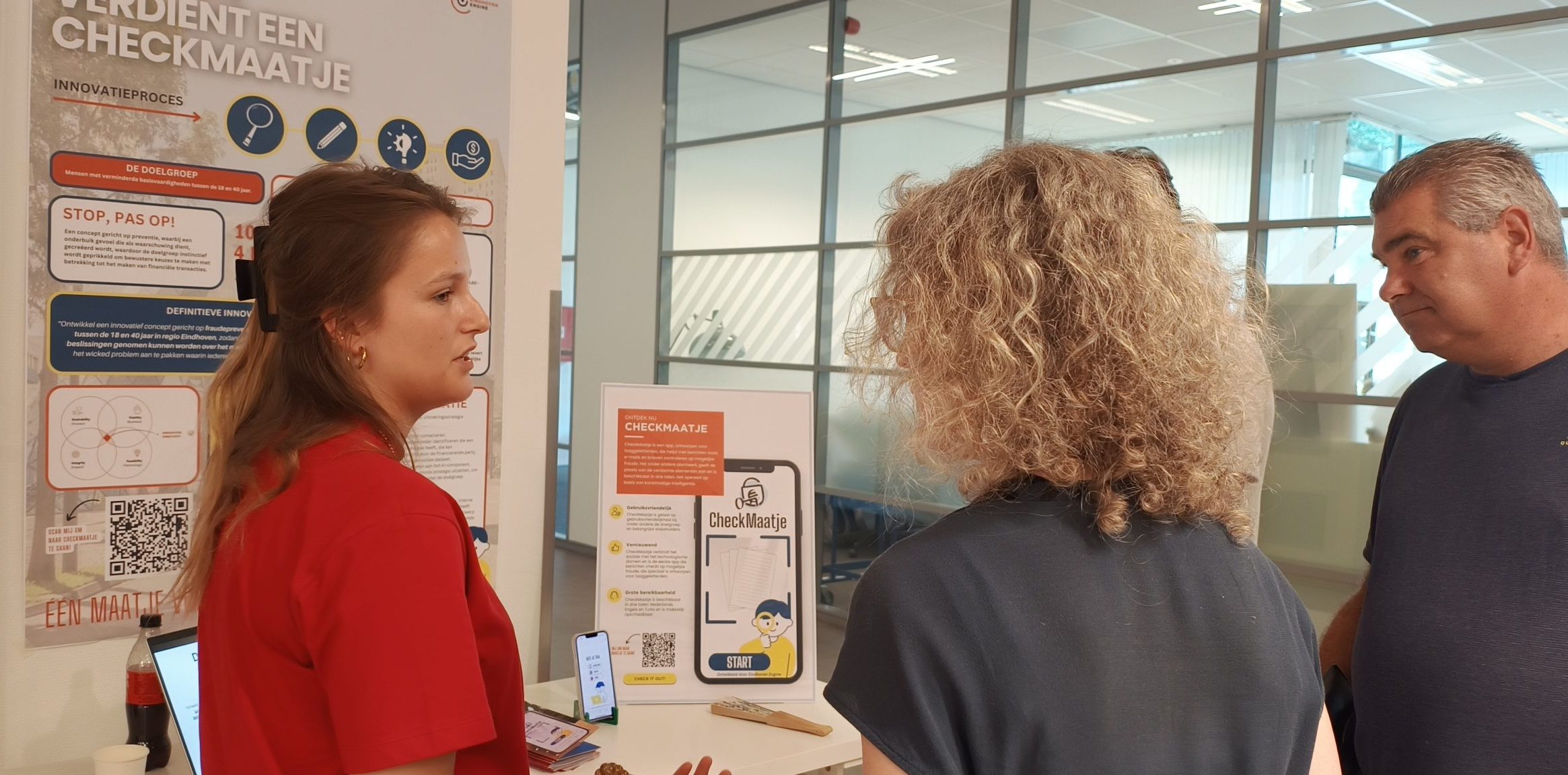
It also provides a valuable moment to receive feedback, exchange ideas, and gain insights from one another’s work. The session will follow an interactive and informal format: all interns will present their projects simultaneously, while participants are encouraged to walk around and explore the different presentations.
Eindhoven Engine News – March 2026
In this edition of Eindhoven Engine News: Building a sustainable semiconductor industry together, two grants, each 50K for Livable region and Inclusive society & more.
What else is happening at Eindhoven Engine?
Media: How can we keep Eindhoven’s air as clean as possible?
Anyone who lives in Eindhoven breathes a different mix of exhaust fumes, dust particles and fresh air every day. But where exactly the air is most polluted, and who is most affected, remained unclear for a long time. That’s why the Municipality of Eindhoven, TNO, Zicht op Data, TU/e and Fontys are working together within Eindhoven Engine on DynaPopeX: an innovative approach that shows where residents inhale high concentrations of fine particulate matter and nitrogen dioxide, and how the city can take targeted action.
Thanks to funding from the Regio Deal, these insights are now sharper than ever.
Source: Brainport Eindhoven
Photography: Nick Bookelaar
You can’t do this as a single organisation. The strength lies in the collaboration between the municipality, knowledge institutions and companies, which makes insights faster and more widely applicable.
Eindhoven Engine News – October 2025
In this edition of Eindhoven Engine News: Festival of Disruption 2025, How healthy is your neighborhood?, Mijke the Matchbot update & more.
What else is happening at Eindhoven Engine?
Media: Mijke the Matchbot guides you through the jungle of social organisations
Imagine you have a question about finances, your health, or a difficult letter. But in the maze of social organisations, your first attempt always leads you to the wrong organization. For over three million Dutch people with limited basic skills, this is a daily reality. Many give up out of frustration or shame. Mijke the Matchbot aims to change that: a friendly digital assistant, developed with support from the Regio Deal Brainport Eindhoven funds, that actually points you in the right direction.
Source: Brainport Eindhoven
New interns
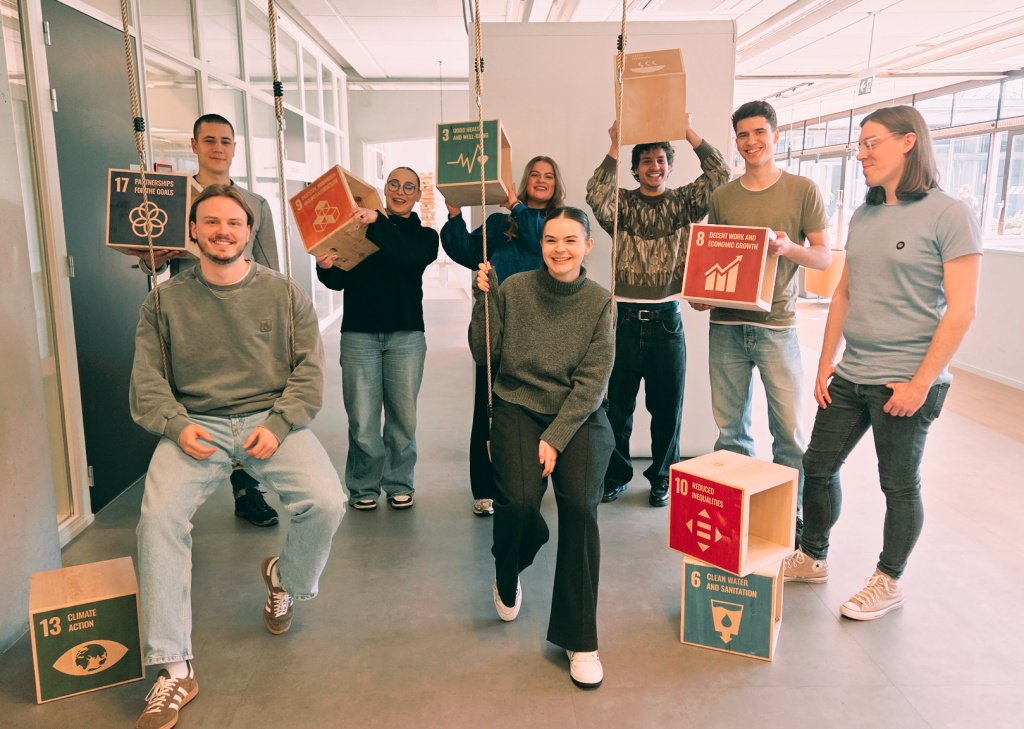
Eindhoven Engine welcomed a vibrant group of new interns in 2025. Get to know them from left to right. Additionally, four bachelor students from TU/e have started. Over the coming months, they will focus on the climate-adaptive region, working one day a week.
We wish them good luck! We hope the interns gain valuable experience and bring fresh insights to the various programs at Eindhoven Engine. Everyone can make impact on society!
- Cathelijne Brantjes | Human & Technology, 4th year, Avans University of Applied Sciences | Inclusive Society
Research on making blended care more understandable at general practitioners’ offices for people aged 18-40 with reduced digital skills.
- Hilde Schram | Strategic Communication, HBO Master, Fontys University of Applied Science | Communication
Eindhoven Engine focuses on the complex challenges our society faces. Addressing these challenges requires a specific approach. Hilde is researching how this approach can be tackled through strategic communication.
- Levi Deerenberg | Business Innovation, 4th year, Avans University of Applied Sciences | Livable Region
Develop a concept that reduces energy consumption at the residential towers Luna & Aurora on the TU/e-campus by actively influencing the behavior of the residents.
- Ivory Johan | Business Innovation, 4th year, Avans University of Applied Sciences | Livable Region
Develop an innovative concept to increase the engagement and participation of students and staff on the TU/e campus around sustainability, by connecting them with sustainable innovations in an inspiring way.
- David Rozenberg | HBO-ICT (Software) , 4th year, Fontys University of Applied Science | Inclusive Society
Preparing the MetMij chatbot for deployment and real-world use. MetMij easily directs people with low basic skills to appropriate support agencies.
- Santiago Triginer | Industrial Engineering, 3rd year, Eindhoven University of Technology | Livable Region
Identifying challenges and solutions for solar panel reuse, and exploring how AI can enhance recycling processes.
- Mare Gijsbers | Business Innovation, 4th year, Avans University of Applied science | Inclusive Society
Develop a methodology to effectively and accessibly introduce the ‘Met Mij’ app to users with low literacy, enabling them to quickly and easily receive support to participate fully in society.
- Rosalie Hendriks | Business Innovation, 4th year, Avans University of Applied Sciences | Inclusive Society
Develop a new concept for people with low basic skills between the ages of 18 and 40 in the Eindhoven region, in such a way that these people can independently ensure the security of their financial situation.
Media: Innovation accelerator Eindhoven Engine enters new phase
Technology with a clear social purpose an starting with the problem.
As a society, we face numerous challenges. At Eindhoven Engine, a collaborative program between companies, knowledge institutions, social organizations and citizens in the Brainport region, work has been going on for years on innovations to address these problems. Now the program is breaking new ground.
Source: Eindhoven University of Technology
Media: Technologie met een duidelijk maatschappelijk doel:
[Dutch]
Innovatieversneller Eindhoven Engine gaat nieuwe fase in
Als maatschappij staan we voor talloze uitdagingen. Bij Eindhoven Engine, een samenwerkingsprogramma tussen bedrijven, kennisinstellingen, maatschappelijke organisaties en burgers in de Brainportregio, wordt er al jaren gewerkt aan innovaties om deze problemen het hoofd te bieden. Nu slaat het programma een nieuwe weg in.
Source: Innovation Origins