Positive developments in second year of executing ‘Brainport Nationale Actieagenda’
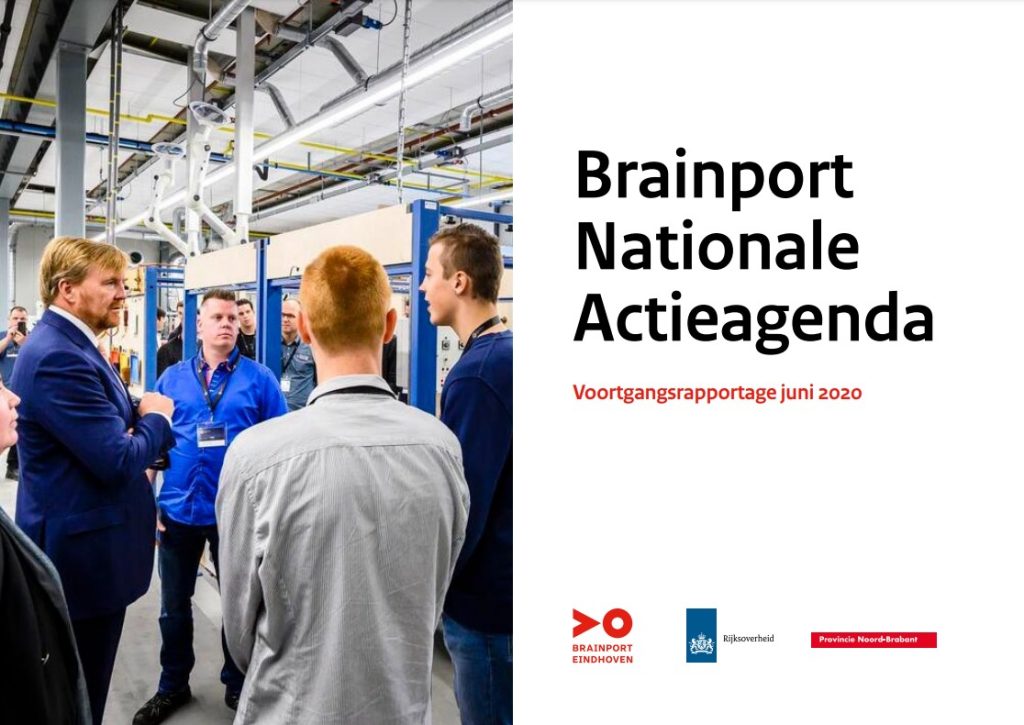
Today’s publication of the ‘Brainport Nationale Actieagenda’ progress report shows the positive developments of the collaboration and execution of the second year of the ‘Brainport Nationale Actieagenda’.
The report provides insight into the many steps that have been taken to elaborate the Mainport status of Brainport Eindhoven. Characteristic during this period is the collaborative effort of the triple helix partners on Artificial Intelligence in the NL AI Coalition, the development of the Brainport Smart District, the substantiation of the first Eindhoven Engine projects and the establishment of the 5G hub on the High Tech Campus. Read more… (Dutch)
Go directly to the progress report Brainport Nationale Actieagenda (Dutch)
Like many of you, we at Eindhoven Engine have had to adapt to the challenges of living and working, facing the impact of COVID-19. Virtual meetings, online workshops and webinars have allowed researchers and related projects to remain on track. In addition, digitalization even enabled many processes to be accelerated …
In this edition of Eindhoven Engine News:
- Virtual location at Eindhoven Engine
- Remote working and online conferencing: the corona impact on Smart Mobility
- Co-location is key for the CM-FDD-HVAC project
- Wicked challenges 2
- The far-reaching impact of epilepsy
- And more
Stay connected with Eindhoven Engine.
Subscribe to Eindhoven Engine News via office@eindhovenengine.nl.
Recover@Home is a personal health plan which patients can execute outside the hospital. This plan is supported by e/MTIC senior management and researchers, clinical and industry partners (Catharina Hospital, Philips) and a start-up coach.
Background
Healthcare in the Netherlands is going through a fundamental shift due to changes in demand for care brought on by the current COVID-19 crisis. Hospitals are under increasing pressure to deal with the increased demand to manage patients with different levels of severity and, at the same time, manage the risk of contamination associated with this highly infectious disease. Patients need to be discharged quicker and the rehabilitation needs to be managed at home. To organize this, healthcare professionals need to make a holistic patient assessment to create a personal health plan which the patient can carry out at home.
But for this to take place Key Innovations are required!
Such as:
- Patient assessment (physical, mental..) to create an individual health plan
- Devices for intelligent assistance for rehabilitation at home
- Remote rehabilitation delivery models to connect all stakeholders in the case management system, identify issues early and triage risk assessment for the right level of response
- Data sharing within the care network
Does this sounds interesting to you? And do you feel you need to support this? Find more information via: https://www.linkedin.com/feed/update/urn:li:activity:6665526585094914048/

“The project is fine,” says Gijs Dubbelman, Assistant Professor in EE-SPS’s Mobile Perception Systems Lab at TU/e. “Everyone is on track and no delay is expected. However, far fewer demos could be done than planned, so the valorization side is leading. Because of the coronavirus, there’s a (good!) focus on research.” He’s referring to the Smart Mobility project of Eindhoven Engine, in which co-located PhD students work alongside semiconductor
giant NXP on Deep Learning for Embedded Automotive Platforms and Spread-spectrum Modulated And interfeRence resilienT RADAR. Although the coronavirus has hampered much of global work and education, projects like this show the resilience of research in Eindhoven.

“Everyone is on track and no delay is expected. Because of the coronavirus, there’s a (good!) focus on research.”
Gijs Dubbelman, TU/e professor
Creative planning
Daan de Geus, a PhD student within the project, has been pleasantly surprised by the ease with which some aspects of the research can be done remotely. “I’m researching scene understanding algorithms for self-driving vehicles and robots, which they can use to gain situational awareness, and I’ve developed a method which is both very accurate and efficient,” he explains. “In principle, I can do almost everything remotely, so not a lot has changed. Working from home is different as I’m a little less productive, but – in general – it’s going quite well.”
For Daan, the main difference arises in communication with fellow PhD students and the students he supervises. “Normally, we’re in the same room and you can ask any questions and brainstorm together. You can’t do that as quickly through Skype or Teams. For undergraduate and master’s students, there’s also normally more face-to-face communication and it’s easier to help them when they’re stuck. It forces you to be creative and work more systematically: I now have dedicated days where I just focus on meetings, interactions with students or my research. I’m a lot more conscious of how I divide my time.”
Ups and downs
n spite of the pandemic, academia and industry keep moving forwards. This year’s International Conference on Robotics and Automation, for instance, moved from Paris to a prerecorded, online environment – including Daan’s presentation of his research. “The upside is that I didn’t have to choose which sessions or workshops to attend as everything is available,” he notes. “One additional plus is that it forces you to be much more conscious of what you’re explaining during your presentation. You might normally do it on the fly but now you really have to explain everything within ten minutes without questions afterwards. The downside is the social aspect, where you get the more creative discussions and ideas with your peers. That’s definitely what I missed the most.” With any luck, next year’s conference will have a physical space for the Smart Mobility project to share even more of their successes.

“It forces you to be creative and work more
systematically. I’m a lot more conscious of
how I divide my time.”
Daan de Geus. TU/e PhD student
More information about the Smart Mobility project.
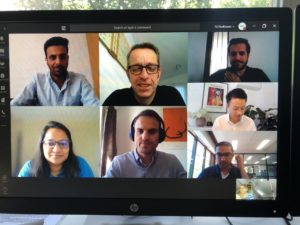
Since April, we’ve been working within the Eindhoven Engine Community. Unfortunately, due to the corona pandemic, we’ve had to work in a mainly remote/virtual way. One of our PDEng trainees started on 1 May, but could not get a visa to come to the Netherlands and now works from his home in Mumbai. The current situation requires flexibility and adaptiveness as it’s a challenge to keep the team connected via laptops and virtual sessions alone.
The coronavirus clearly shows us the importance of good health, which is also threatened by the effects of global warming and air pollution caused by the use of fossil fuels. The Paris Agreement set a goal to reduce CO2 emissions. The preservation of energy resources is one of the key issues in modern society and is therefore of great importance in the built environment. Building installations are responsible for around 35% of the total energy consumption worldwide and use, on average, 20% more energy than is necessary due to inefficient operations. The application of Continuous Monitoring (CM) and a Fault Detection and Diagnosis (FDD) system can improve the operation of Heating Ventilation Air Conditioning (HVAC) plants by detecting faults. This supports their energy-efficient operation as well as their effectiveness when it comes to improving the indoor air quality of buildings.
Co-location
Looking ahead to the second half of this year, we hope for growing cooperation and the involvement of all parties of Eindhoven Engine through co-location. We’re even thinking about setting up the whole team an Eindhoven Engine co-location as this would generate a novel way of working and promote involvement in iconic projects in this region.
In turn, this could result in increased interactions and ‘unexpected connections’, which are difficult in the time of the corona pandemic. This means joining together with people to think differently and to help each other accelerate innovation through our collective, innovative and enterprising spirit. We need personal contacts to inspire each other and come to new ways of thinking. Meeting one other at the co-location will strengthen the engagement between project teams within Eindhoven Engine. Let’s hope that this will soon become possible again.
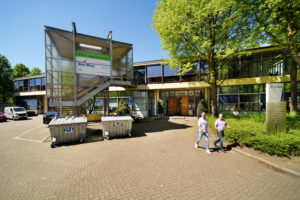
*Continuous Monitoring and Fault Detection Diagnosis of large HVAC systems
Photo: Bart van Overbeeke
Unexpected encounters are important to stimulate creativity, connect people from different backgrounds. This is important for new ideas, new innovations. The challenge, of course, is how to harness this all in this virtual age. For instance, imagine a kind of virtual marketplace where you can facilitate the exchange of ideas, then you could of course, unexpectedly, come across a cool and practical idea.
Most of us will think about co-location as a physical concept of people working in the same space or building. In respect to innovation, one might think about an R&D division or an innovation campus (like the former Natlab or the MIT Medialab). That is what we know works, and has delivered innovations the way we know them.
Multidisciplinary and multidimensional
Today, the demand for innovation is changing rapidly. Most companies cannot continue to innovate the way they did for years, nor can they innovate within their known product lines. The opportunities are being created where multidisciplinary co-creation occurs. The complexity of today’s economy, and the potential disruption, for good or for bad, of exponential technologies force companies increasingly into open innovation. Which means that co-location becomes more multidimensional.
Of course, multidisciplinary open innovation teams, working in co-creation to come up with innovations for problems that matter and that we need to solve, still benefit from sitting together, meeting, exchanging and empathizing. But Corona has shown us that this can be usefully extended by virtual co-location, opening up a multitude of additional possibilities that we did not imagine. Virtual co-location is not just bringing co-location into the virtual world; it is redefining it in order to make optimum use of the collective intelligence of the co-creators.
Extending the boundaries
Then space becomes more than just a physical concept; it becomes an idea, a way of working together, sharing and co-creating in ways we never did before. The quality and diversity of the ecosystem at the co-location, as well as the facilitation of the open-innovation teams, all become part of the concept of co-location. Suddenly, we can do so much more. We exponentially extend what we could have done before only in a physical space. Virtual co-location extends the scope of the possible.
Corona has, paradoxically, given us an opportunity to go beyond what we have done before. It can be a catalyst for co-creation. Become part of this new co-location and share your thoughts and ideas.
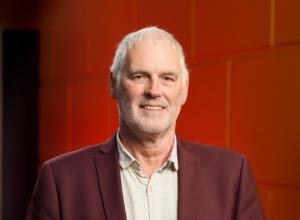

On Thursday 11 June, the first ever Eindhoven Engine webinar was held. This webinar was the first in a series called Impactful Innovations. The goal of the webinar series is to not only share challenges, innovations and impacts across Eindhoven Engine projects but to also actively work towards cross-project group interactions to unlock our collective intelligence.
The webinar, hosted by Joris Dufils, was kicked off by Jesper Pilmeyer, PhD in the NEUROTREND (Neurological MRI-based biomarkers for treatment navigation in depression) project, followed by a presentation by Gregor van Baars, project leader of the ASML project ‘Next-gen piezo-electric wafer stage’. Big thanks to both of you! During the webinar, we experienced a lot of interesting interactions. We’re looking forward to the next one on 9 July.
‘Inspiring to see the first cross-project interactions are taking place
to unleash our collective intelligence!’
Joris Dufils
Eindhoven Engine
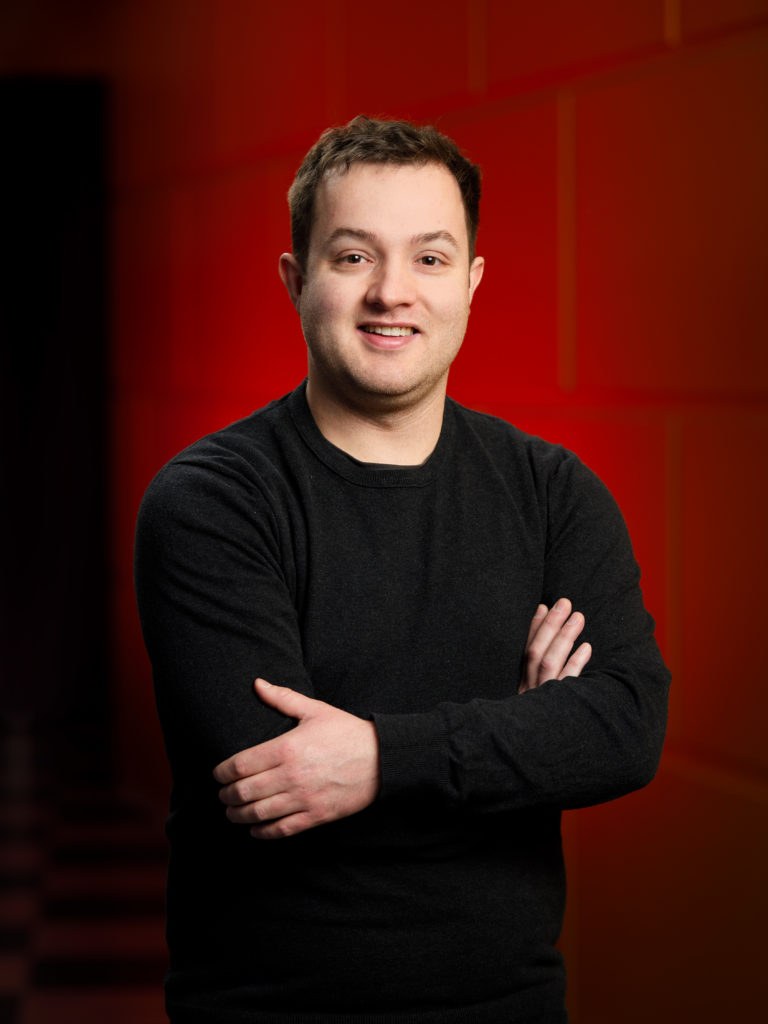
Photo: Bart van Overbeeke
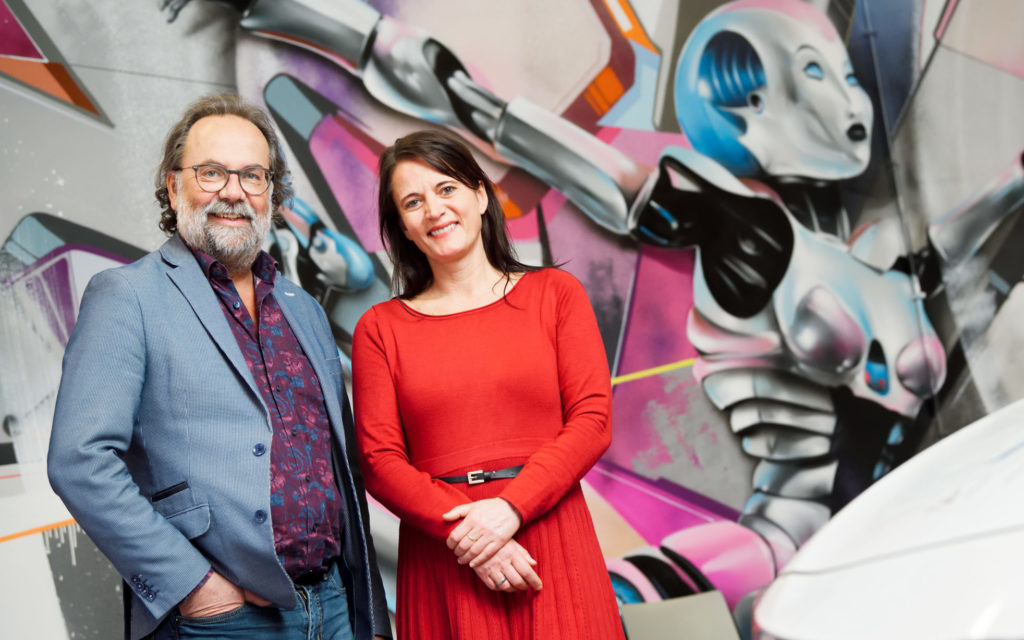
In April and May 2020, ILI organized in collaboration with NSVV, OVLNL and Eindhoven Engine, three small-scale virtual (online) co-creation workshops on intelligent lighting. Elke den Ouden and Philip Ross set-up and facilitated these workshops.

The workshops were primarily intended for professionals from industry and government and their purpose was to initiate the co-creation of (parts of) solutions for innovation challenges in the context of light & lighting. The first workshop focused on smart lighting solutions and applications for Outdoor,
the second on Indoor and the last one on Agro & Food.
For ILI, these workshops provided an opportunity for new public private partnerships for R&D and (technological) innovation, and attracted (new) partners for collaboration in the context of its research and education activities with student teams in Innovation Space and events like GLOW.
The workshops have proven to be inspiring and successful. New links between companies, governments and ILI have been established. In the coming weeks
we will follow up on possible collaborations.
More information about the TU/e Intelligence Ligthting Institute
Photo: Bart van Overbeeke

Source: Mechatronica & Machinebouw
Eindhoven Engine secured over twenty new notifications for project proposals for its third open call yesterday, more than twice as many as expected. It seems this partnership between TU/e, Fontys, TNO and the industry hasn’t been affected by the crisis yet.
TU/e professor Maarten Steinbuch, who serves as the institute’s scientific standard bearer, is also thinking about setting up an operational platform for a potentially new knowledge workers program. Read more…
Source: TU/e Cursor
Photo: Bart van Overbeeke