
Partners





Deep Learning for Embedded Automotive Platforms
The goal is to:
1) Research semi-supervised training methods in order to make neural networks more resilient to adverse imaging conditions, causing the performance drop (wrt. nominal imaging conditions) to decrease with one order of magnitude.
2) Research inference methods that exploit spatio-temporal coherency in video streams, to increase computational efficiency by one order of magnitude.
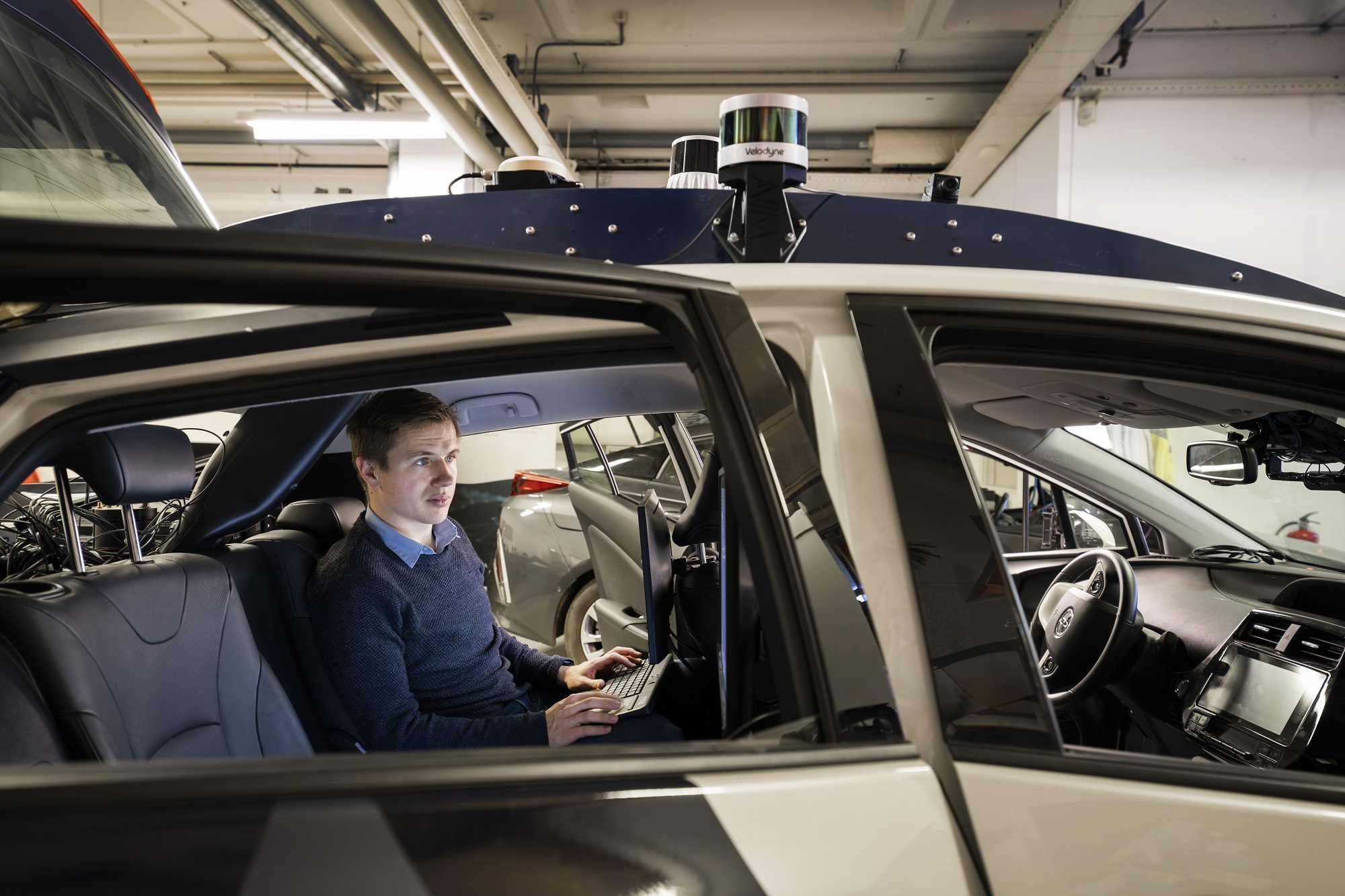
All research results will be validated in real-world conditions using TU/e’s Highly Automated Driving research vehicle. NXP will make available its Bluebox automotive computation platform.
Spread-spectrum Modulated And interfeRence resilienT RADAR
To develop novel nm CMOS 77-81GHz radars frontends that generate ultra-fast arbitrary radar waveforms that alleviate radar interference through spread spectrum techniques. To exploit smartness concepts in the front-ends such as instantaneous receive signal analysis, self-interference cancellation using known transmit signal properties, etc. To design breakthrough performance building blocks such as beamforming receivers and GHz data converters that support reception of high rate long encrypt bitstreams for coding orthogonality with increased range and velocity resolution. Concepts will be demonstrate on NXP’s modulated radar demonstration platforms that will be made compatible and available for the test chips of this project.
With the support from Eindhoven Engine, this project successfully hired EngD trainees and student assistants enhancing the project’s overall impact. The team also benefited from using the garage in Disruptor, which served as a collaborative workspace for developing the self-driving research vehicle. This co-creation space also served as a showroom, where demonstrations were given to stakeholders and external parties.
Project updates
An update on the Smart Mobility project
Building the Future: Fully autonomous driving on public roads is possible in the future