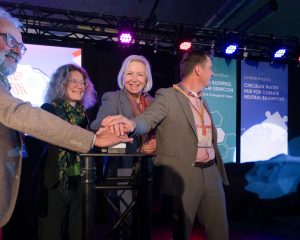
Building a sustainable semiconductor industry together
How Eindhoven Engine tackles the complex challenges of the future
The semiconductor industry is the powerhouse of the Brainport region. With global leaders like ASML and its strong high-tech supply chain, the sector delivers world‑class technology. But with this growth comes a crucial task: moving toward a sustainable and circular semiconductor value chain.
Janne Brok, both the managing director and program manager of the Eindhoven Engine Sustainable Semicon program, aims to contribute to this transition. That’s why she is enthusiastic about joining the Circular Business Program Semicon (CBPS) consortium. The approach within the CBPS is multidisciplinary, and above all, collaborative.
* The Circular Business Program Semicon (CBPS) is a regional initiative focused on accelerating circularity in the semiconductor industry in the Brainport region. Partners include Brainport Industries, ImpactX, Brabantse Ontwikkelings Maatschappij, ASML, VDL ETG, Prodrive Technologies, Neways, KMWE, ERIKS, HQ Pack, Meilink, Aalberts Advanced Mechatronics, TNO, TU/e, Eindhoven Engine, and Fontys.
We are facing a challenge that no single company can solve on its own,” Brok says. “So we need to learn to collaborate in ways that are new for this industry.”
The societal urgency: from linear to circular
ASML systems are designed for very long operational lifetimes, with the great majority of machines ever delivered still in use. Over such lifetimes, however, many components and modules are replaced as part of maintenance and continuous upgrades. In a sector where precision, reliability and throughput are critical, this continuous innovation is essential. At the same time, replaced components can still contain significant functional, material and economic value. The opportunity is therefore not simply to reduce waste, but to find better ways of retaining and recapturing that value across the supply chain.
The problem is not primarily technical. Brok explains: “Technology is something we usually can solve here in Brainport. What makes this really complex are the business models, data exchange, logistics, quality assurance, and above all: how do you distribute costs and benefits in a circular model?” This turns the issue into a systemic challenge, a complex interplay of interests, processes, business structures, and power relations within an extremely refined supply chain.
The Eindhoven Engine approach: a new way of working together
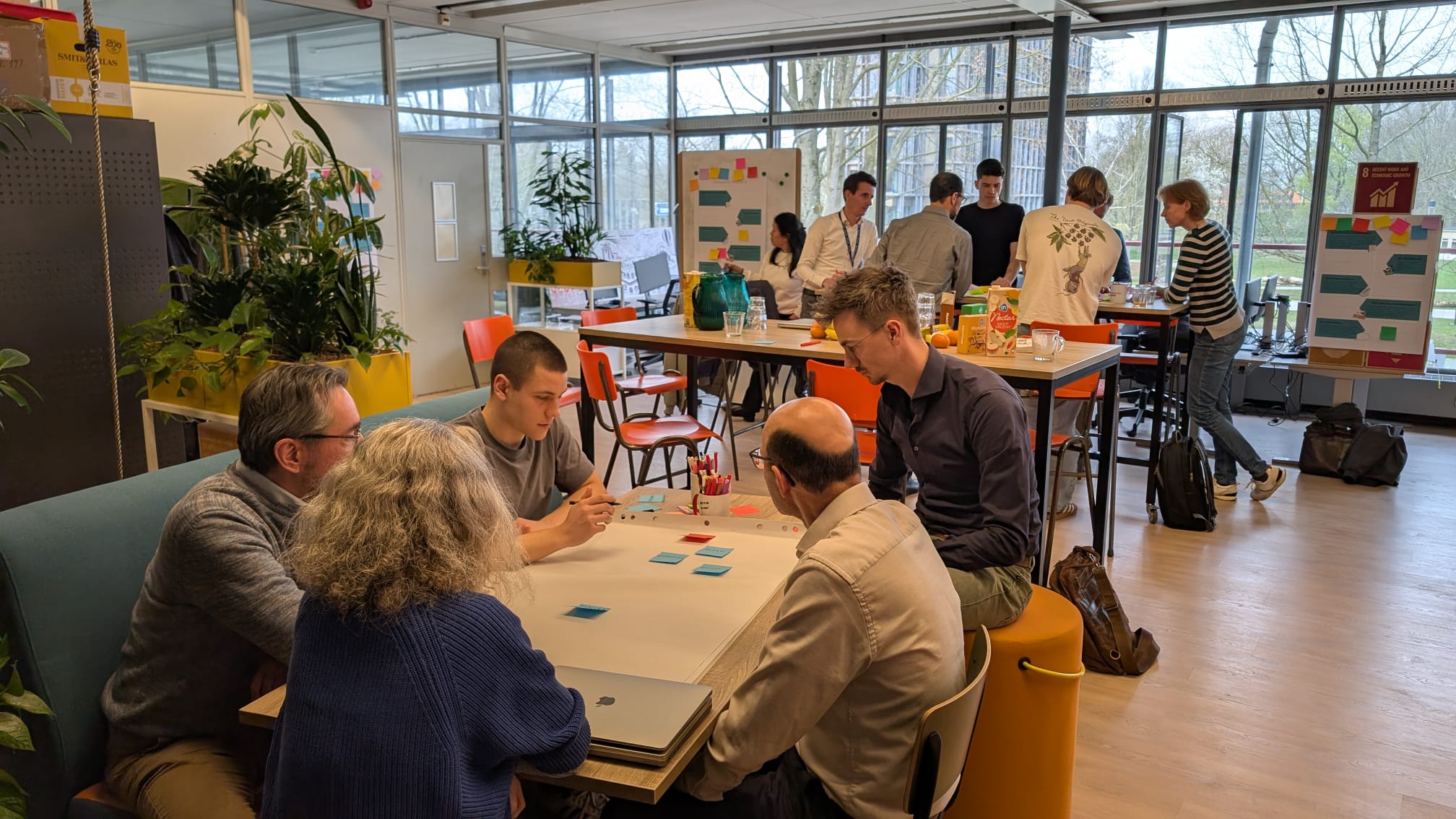
Where bilateral collaboration (ASML and supplier) has been the norm, the CBPS is based on a multilateral approach. It brings ASML, first-tier suppliers, and knowledge organisations to the same table, as equal partners in change.
Eindhoven Engine serves as a neutral orchestrator, creating an inspiring environment where experimentation can thrive. It supports partners by jointly analysing processes and key decision points, offering clear insights into value creation, CO₂ impact, and opportunities for reuse. This collaborative approach helps establish agreements and solutions that benefit the entire chain. Acting as an independent facilitator, Eindhoven Engine operates without commercial interests. Its focus remains on the collective good, supported by strong expertise in guiding system innovation.
Through the involvement of students, the project maps out processes, data flows, and reuse opportunities, often revealing insights that companies find difficult to uncover themselves. Currently, three students from both HBO and WO institutions are working on the project together with partners.
Our role is to create a sandbox where companies can experiment safely,” Brok says. “We set the conditions, invite the right people, and help teams move from individual interests to collective goals.”
The strength of the ecosystem: prepared for shared responsibility
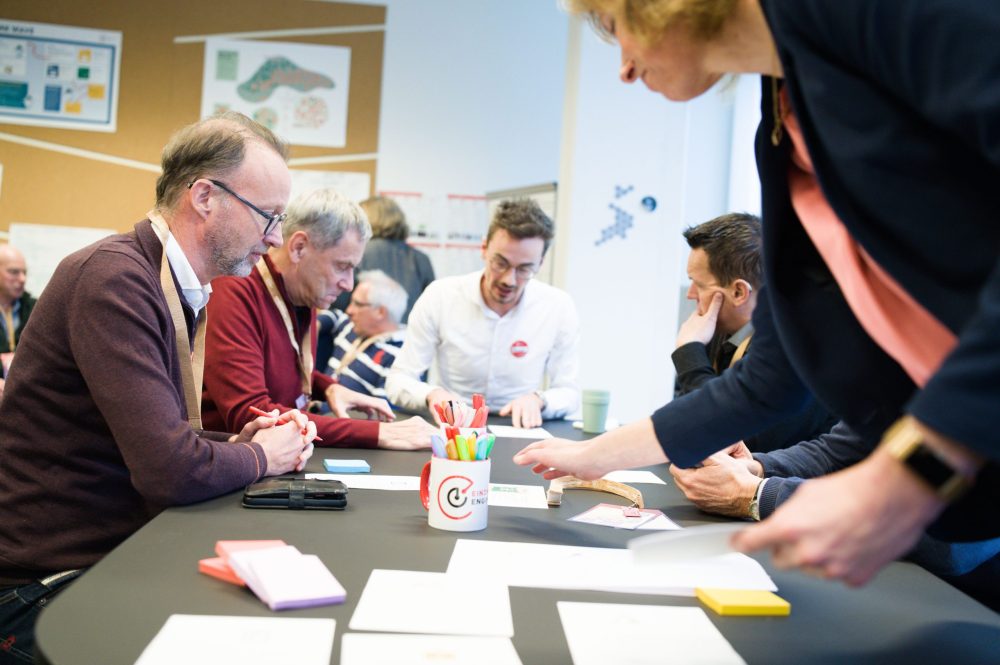
That all parties, first-tier suppliers, knowledge institutions, and Eindhoven Engine, now sit together at one table is, according to Brok, already a breakthrough. “The fact that companies are willing to look beyond their own business models says a lot. It is new, exciting, and sometimes complex. But there is a shared understanding: this is necessary, and it must be done together.” The semiconductor industry moves at high speed, is driven by strong economic incentives, and operates within global geopolitical dynamics. That makes the transition challenging, but also full of opportunity. “We hold a unique position in the global semiconductor landscape. If we can demonstrate here that circularity works, it can set a worldwide standard.”

An invitation to the wider ecosystem
Beyond CBPS, Eindhoven Engine’s Sustainable Semicon program connects with organizations that can bring relevant knowledge, capabilities or perspectives to the transition toward a more sustainable and circular semiconductor ecosystem. “We want to broaden the solution space by bringing in perspectives that can help us tackle the systemic challenges behind circularity.”
- Interested in joining or learning more? Please contact Janne Brok for more information.
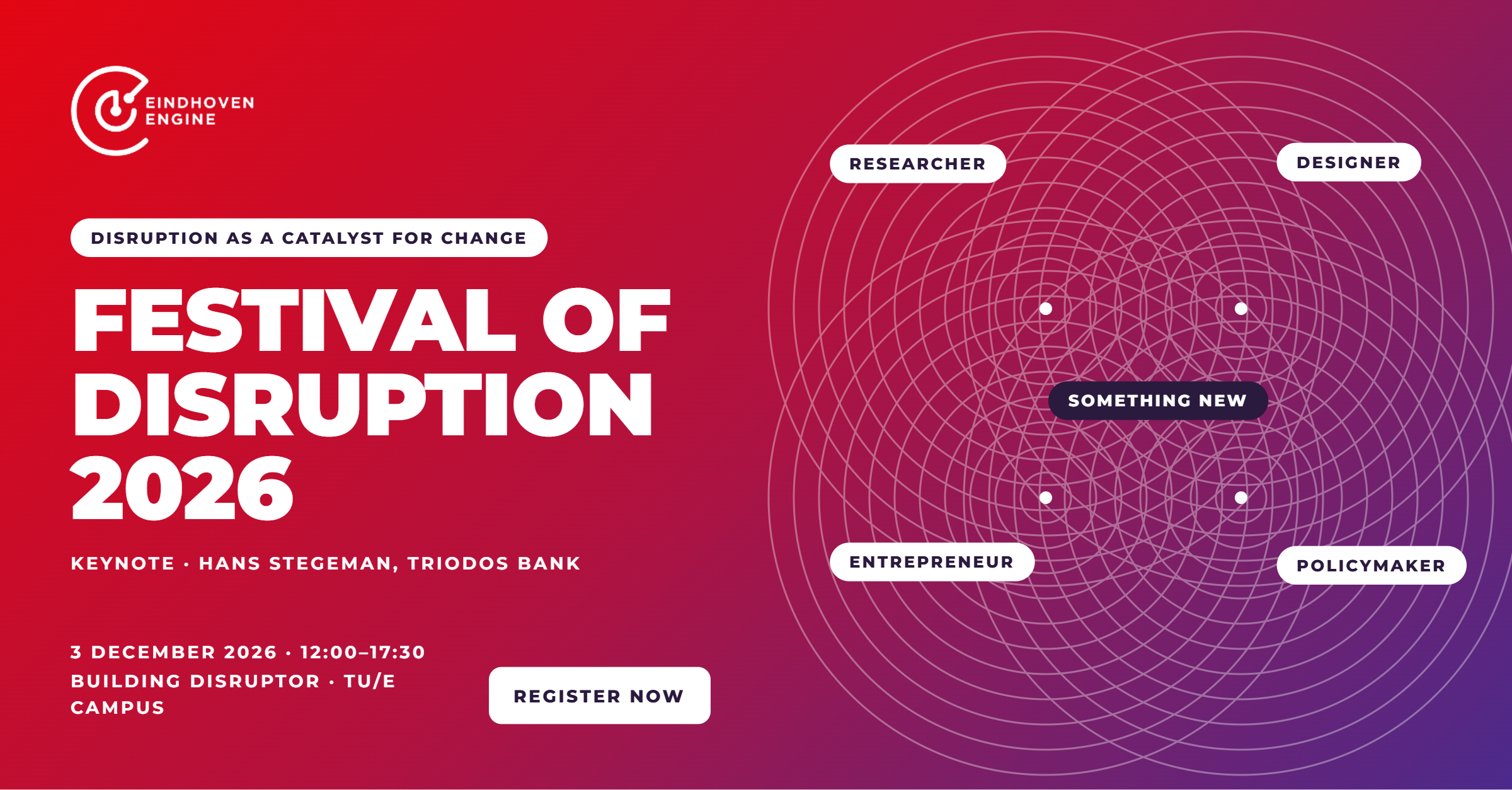
Following the success of last year’s edition, we’re excited to welcome you back to the Festival of Disruption on Thursday 3 December 2026.
Join us for a day of inspiring keynotes, thought-provoking discussions, interactive sessions, and meaningful networking with changemakers, researchers, entrepreneurs, policymakers, professionals, students, and anyone passionate about shaping a better future.
Get inspired | Keynote Hans Stegeman
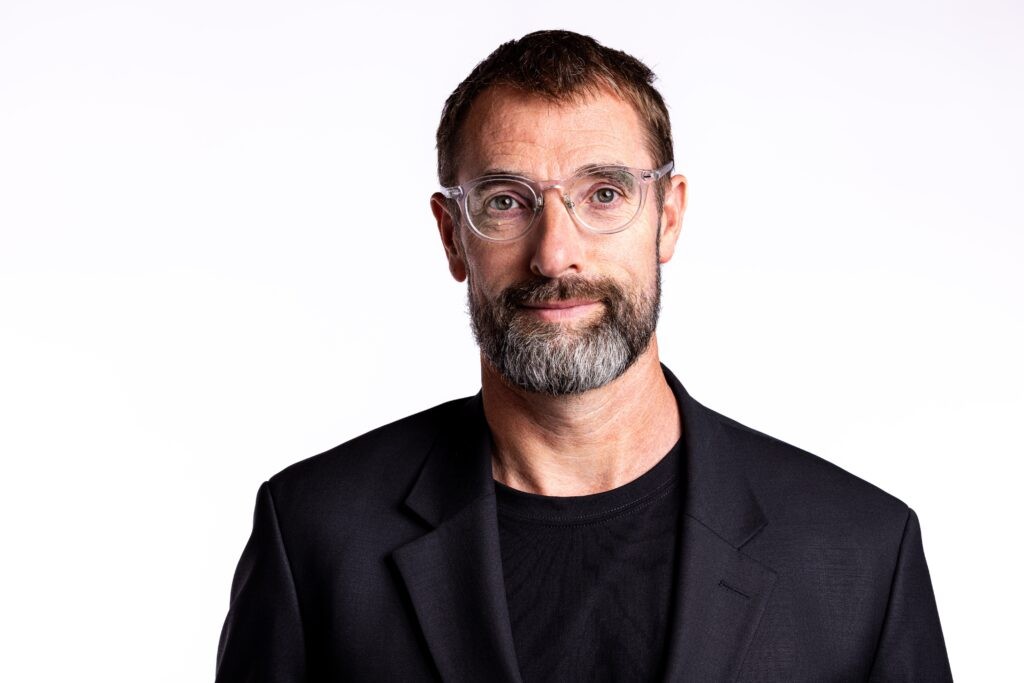
We are delighted to announce our keynote speaker: Hans Stegeman, Chief Economist at Triodos Bank.
Hans is known for looking beyond economic figures and trends. He connects economics with societal transitions and challenges us to rethink the systems, assumptions and structures that shape the way we live and work.
“In times of disruption, transforming societies is possible. But how to do that in the right way?”
Explore | Biomimicry: learning from nature
Nature has spent 3.8 billion years solving complex challenges. What can we learn from those solutions? How do ants collaborate so effectively? What can forests teach us about resilience?
In this interactive exploration, you will discover how nature’s strategies can help reshape organisations, technology and society.

Discover | Dynamic program
Throughout the afternoon, you will be immersed in a dynamic program featuring:
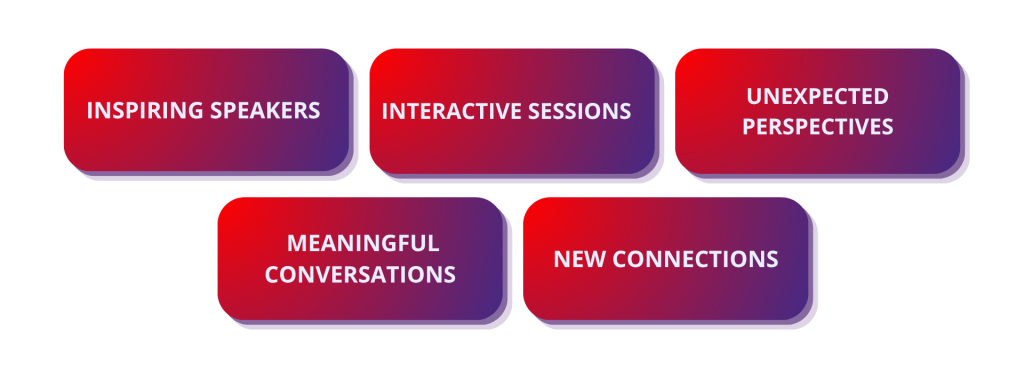
FREE ENTRY – LUNCH AND NETWORKING DRINKS INCLUDED
Act | Be part of the change
Disruption begins with curiosity. Join us on 3 December and discover how new ways of thinking can unlock new possibilities for the future. Sign up now and be part of the change.
Workshops
A strong labour market? Everyone has a part to play! | Workshop TINT
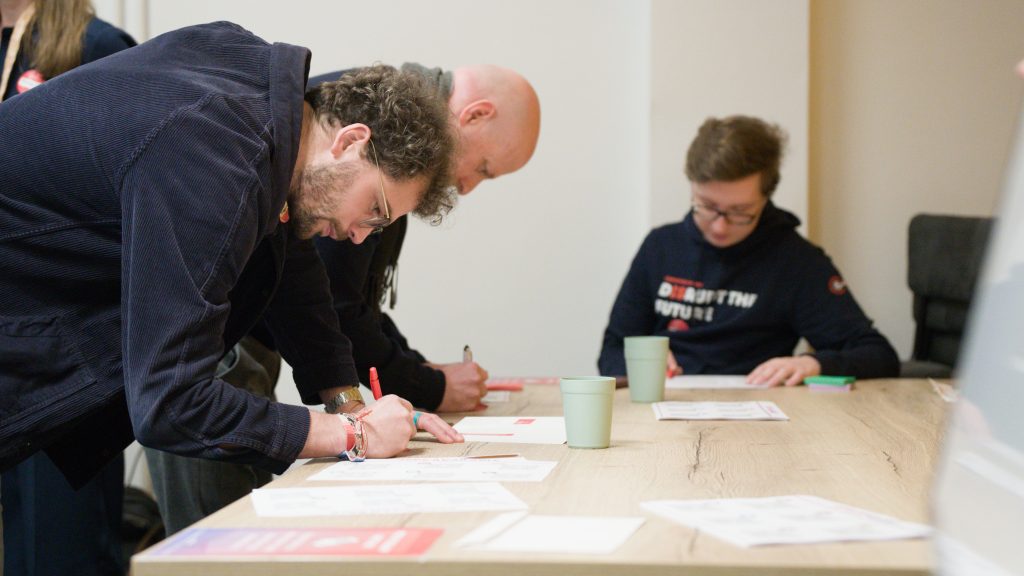
What if we viewed differences not as obstacles, but as added value? Join the interactive workshop by Carapax IT and TINT Brainport to discover and experience how technology can help us think and act differently, unlock talent more effectively, and work together to build a more inclusive labour market….
Previous versions

Registration Festival of Disruption 2026
We look forward to welcoming you to the Festival of Disruption!

Exploring Responsible AI support for Dutch social services
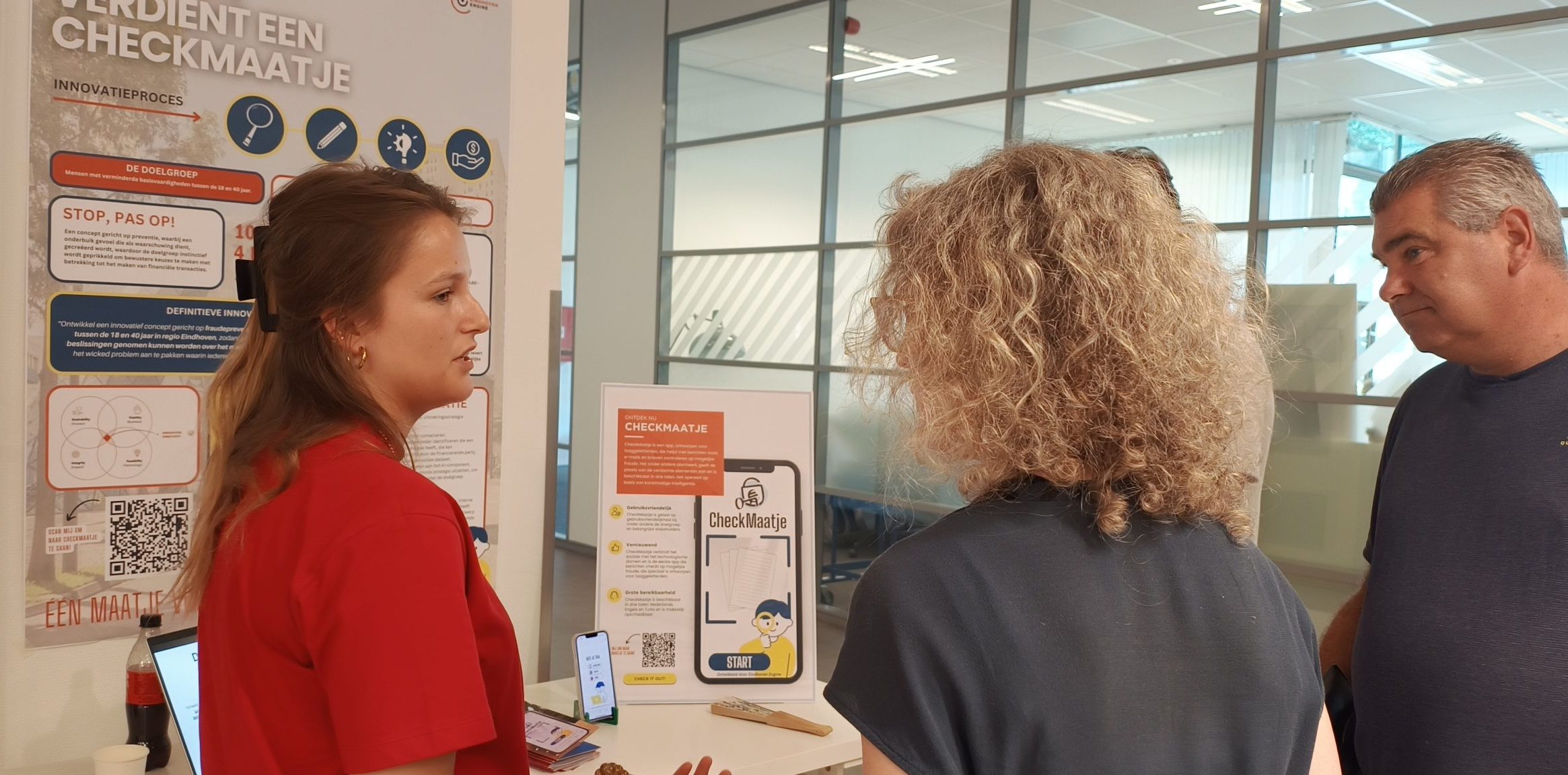
Creating an inclusive society requires more than good intentions, it requires making support accessible to everyone. Through our work at Eindhoven Engine, we have learned that many people with limited basic skills struggle to find the right help when they need it. Social support is often fragmented across organizations, with no single place where people can simply ask a question and be guided to the right service.
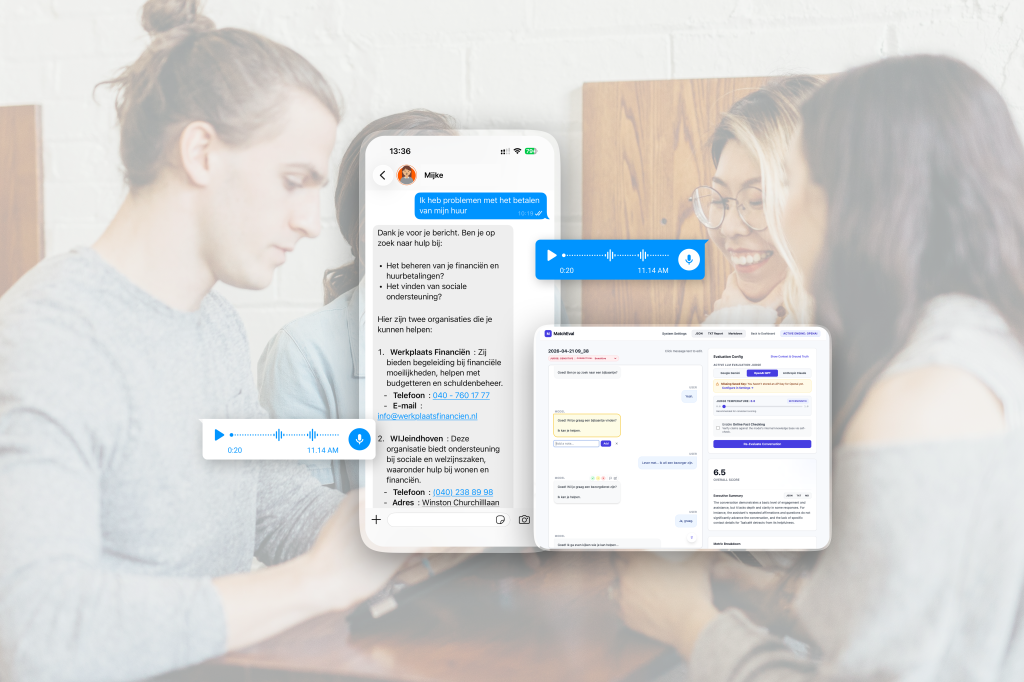
Mijke the Matchbot was developed to address this challenge. Mijke is an AI-powered conversational assistant that helps people find the right support in a friendly and accessible way. Instead of searching through websites or navigating complex systems, users can simply describe their situation and receive guidance towards relevant organisations and services.
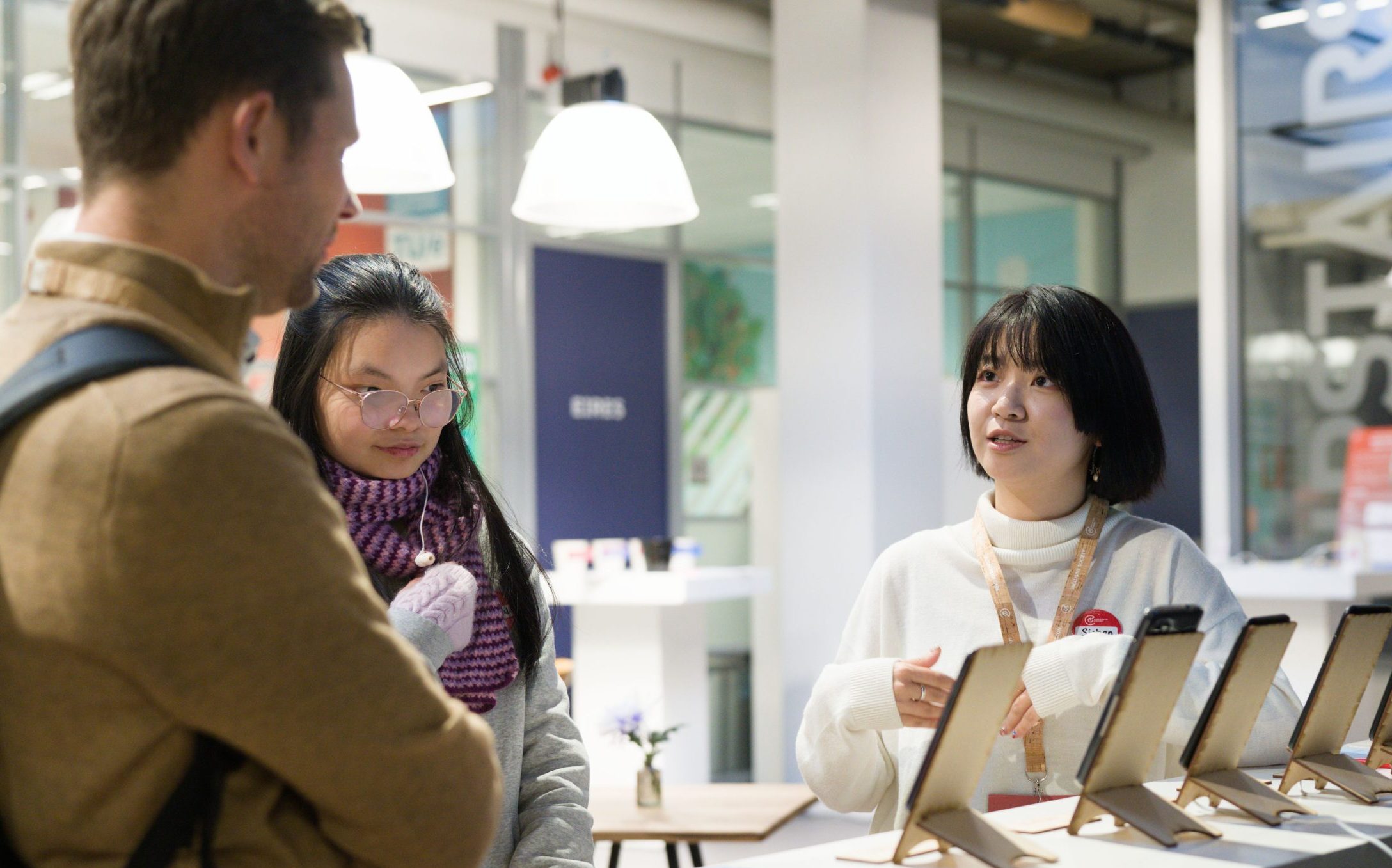
Over the past two years, Sichen Guo pursued her EngD traineeship within Eindhoven Engine’s Inclusive Society focus area. In her final year she dedicating her work to optimizing Mijke the Matchbot.

Bridging the gap between people and support
“My research focused on how conversational AI could help people with limited basic skills navigate Dutch social services,” says Sichen. “Many support systems still require people to search, compare, and interpret information independently, which can be challenging when dealing with financial, health, housing, or social issues.”
In her first year Sichen explored simplifying formal letters and service information. With these insights she was able to evaluate Mijke’s effectiveness and better understand user needs. She also focused on voice-enabled communication as a way to make the system even more accessible.
Building responsible AI
As the project progressed, the focus expanded beyond building a functional chatbot. Sichen investigated how such a system could be maintained, evaluated, and responsibly deployed over time.
Working closely with libraries, social workers, and other practitioners, she helped define five criteria for high-quality referrals:
- Relevance
- Trustworthiness
- Accuracy
- Clarity
- Completeness
These criteria formed the basis of a human-centered evaluation framework.
One of the most important findings was what Sichen calls the “Fluency Trap.” AI-generated responses can sound convincing, friendly, and professional, even when the information is incomplete or uncertain. This highlights the importance of continuous evaluation and human oversight when using AI in public-service settings.
Looking ahead
- Contact our Inclusive Society Team for more information.

Featured session: Jessica Goss — Mijke the Matchbot
Jessica Goss presents Mijke the Matchbot, a human-centered AI initiative that helps citizens navigate local social services while creating a continuous feedback loop between users, social organizations, and developers.
Rather than replacing human decision-making, Met Mij is designed as a socio-technical system: AI supports matching and navigation, while people remain central in setting criteria, validating outcomes, and guiding development.
Through an Obeya lens, this session shows how human judgment and AI can be effectively combined to improve alignment, learning, and service delivery—offering practical insights for organizations exploring AI within Obeya environments.
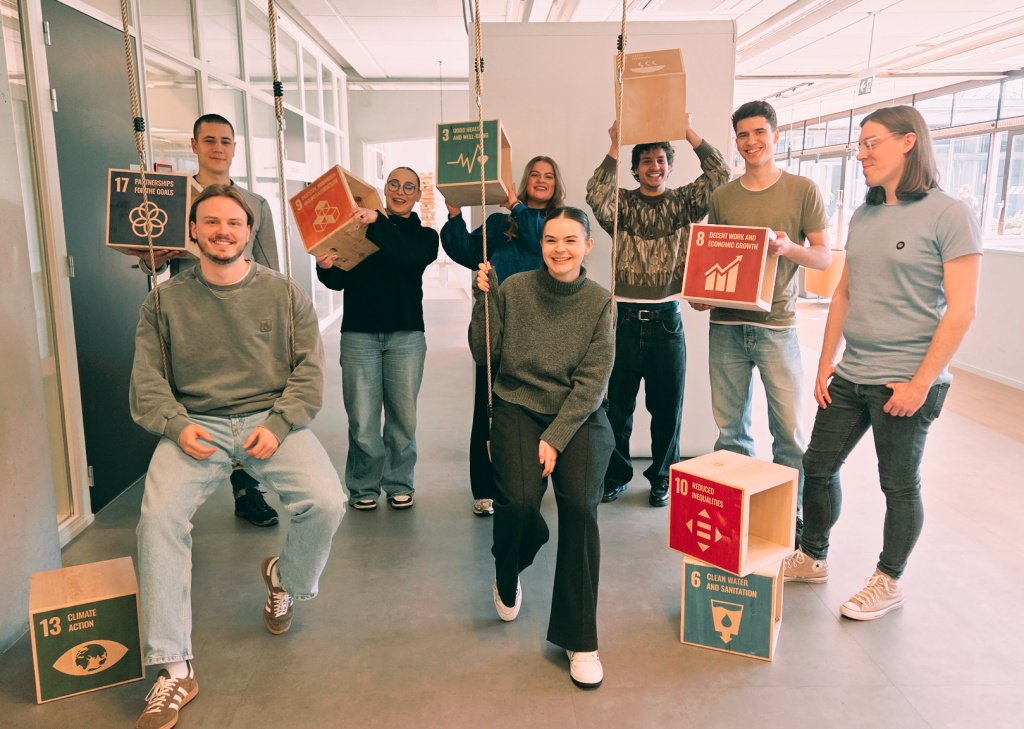
Feel free to drop by and learn about the effort of students over the last six months. Registration is not needed.
A milestone for the Circular Water Hub
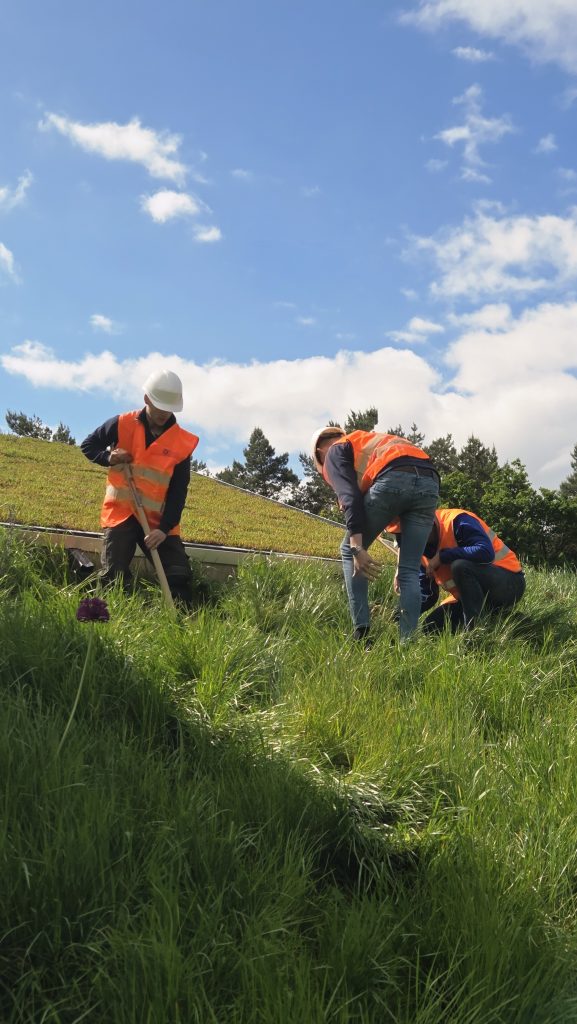
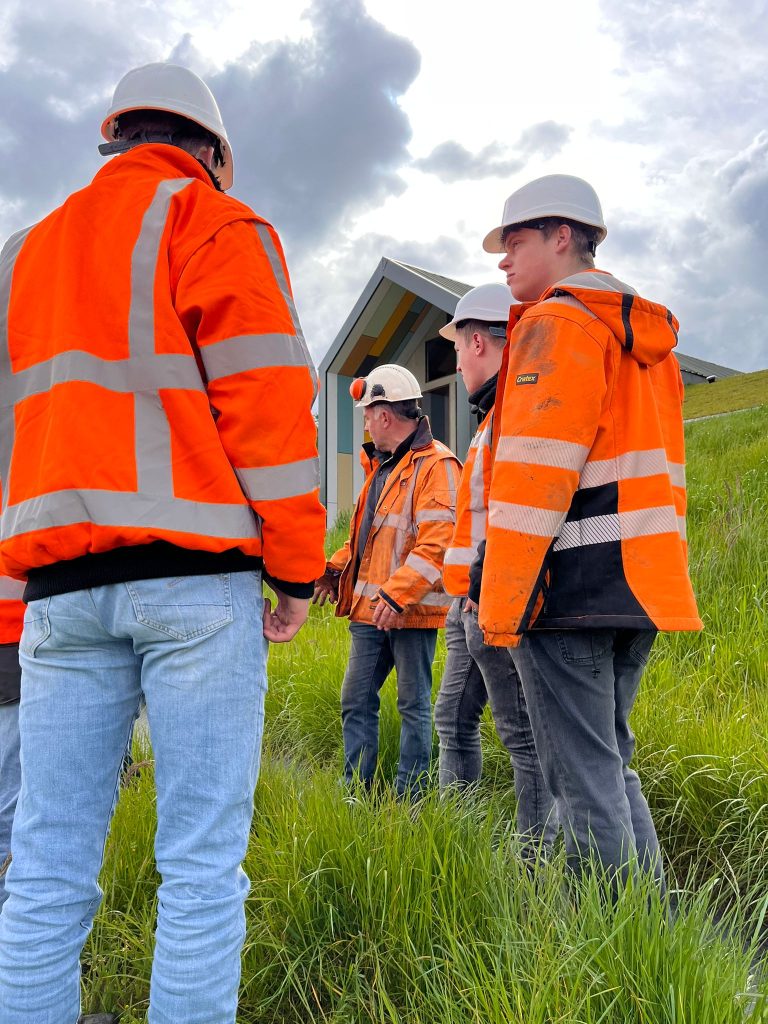
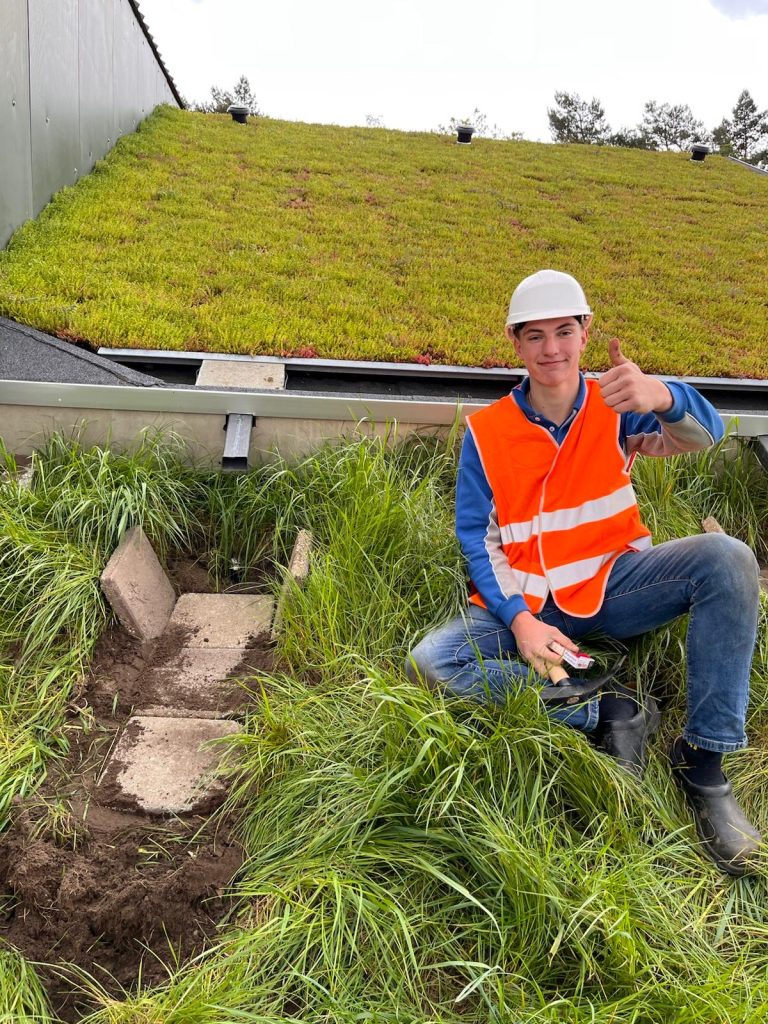
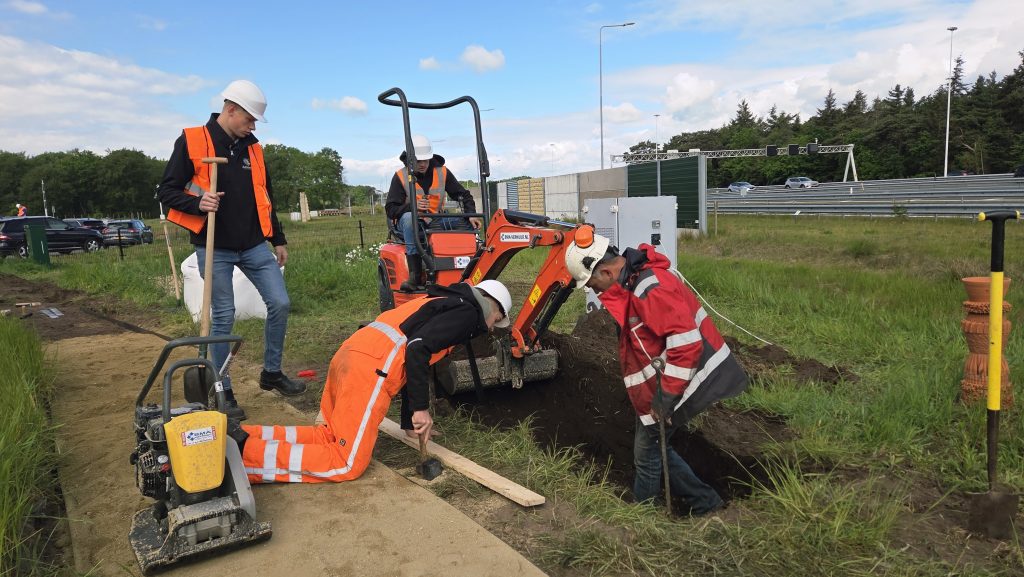
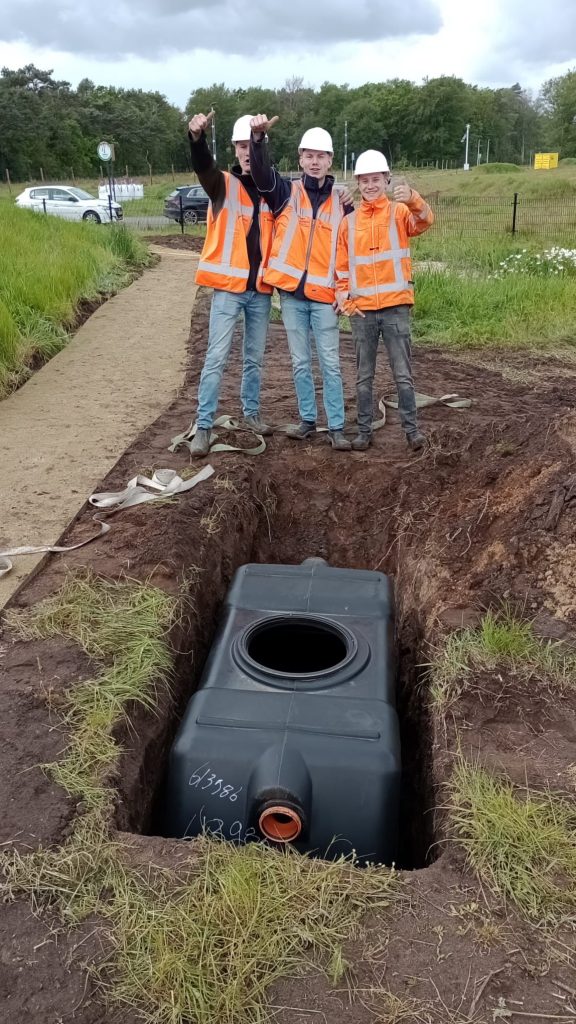
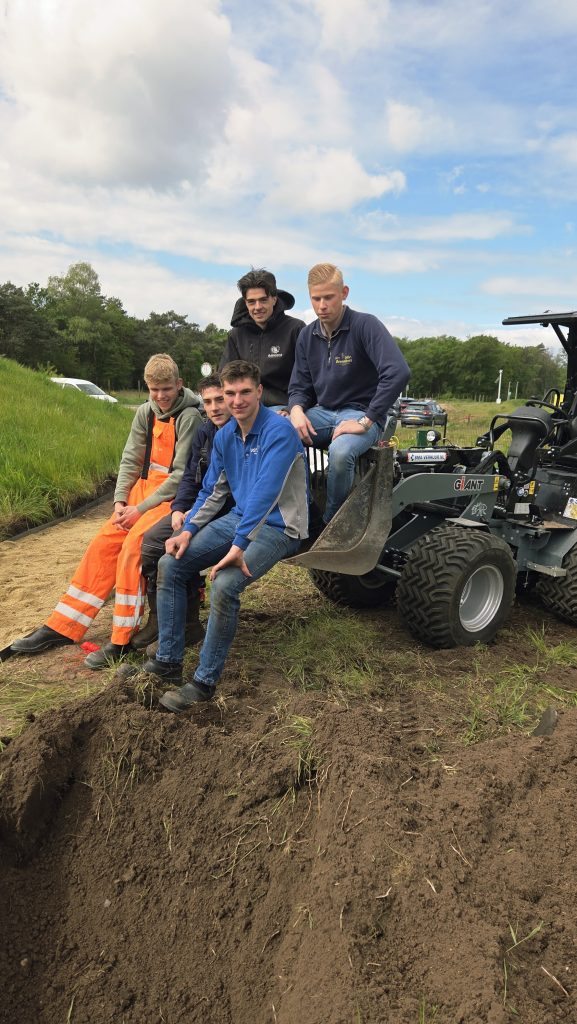
The first phase of the Circular Water Hub at service area Kloosters has been completed. Rainwater is captured, filtered, stored, and reused for the toilets in the Pavilion. Students from Yverta Dordrecht designed the solution, while students from Yuverta Boxtel carried out the implementation.
An inspiring example of learning by doing and collaboration. Rijkswaterstaat provided the experimental space, Bouwbedrijf Th. van Kasteren as part of ‘Coöperatie Symbiotisch Bouwen’ made this operationally possible, whilst Eindhoven Engine is the orchestrator of the broader circular water project for the region. It is great to see the collaboration between these partners!
𝗪𝗵𝗮𝘁’𝘀 𝗻𝗲𝘅𝘁?
The next phase will start soon, building on the same principle: capturing, filtering, storing, and reusing water. This time sourced from the highway A58 for local applications such as agriculture.



More info
Advancing energy flexibility in buildings
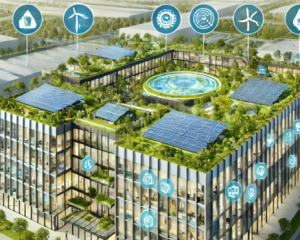
Tackling energy challenges in buildings: the BuildInFlexergy approach
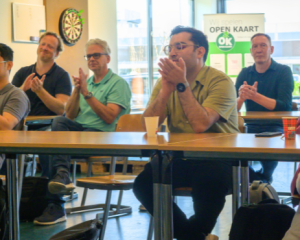
It also provides a valuable moment to receive feedback, exchange ideas, and gain insights from one another’s work. The session will follow an interactive and informal format: all interns will present their projects simultaneously, while participants are encouraged to walk around and explore the different presentations.
Eindhoven Engine News – March 2026
In this edition of Eindhoven Engine News: Building a sustainable semiconductor industry together, two grants, each 50K for Livable region and Inclusive society & more.
What else is happening at Eindhoven Engine?
A digital twin prototype for healthy living
The Smart Cities project reached the next milestone as Veron Augustine Afonso translated earlier academic system‑dynamics research by EngD researcher Golnoosh Sabahifard into a validated and interactive simulation model. This new model shows how environmental, social, and behavioral factors shape healthy living in neighborhoods.
A practical tool for smarter urban decisions
Built in Vensim, the model turns complex theory into a clear, usable tool that allows stakeholders to explore “what‑if” scenarios. For example, how reducing noise or improving social cohesion affects wellbeing over time. It is modular, transparent, and ready to evolve into future digital twin applications across the region.
Shaping a more livable region
With Veron’s successful completion of this phase Maria Mihaylova will take the project forward, focusing on designing an interactive dashboard for a broad group of municipal and regional partners. This strong foundation positions the Smart Cities project as a key enabler of evidence‑based decision‑making: helping cities design healthier, smarter, and more livable communities for everyone.
- Interested in joining or learning more? Please contact Walter Baets for more information.