Eindhoven Engine News – March 2026
In this edition of Eindhoven Engine News: Building a sustainable semiconductor industry together, two grants, each 50K for Livable region and Inclusive society & more.
What else is happening at Eindhoven Engine?
Welcome our new EngD trainee: Ana Hernández Madonado
We are excited to welcome Ana Hernández Madonado, who joined the Eindhoven Engine team last year as part of the Mechatronics System Design EngD program. As an EngD trainee, Ana is contributing to an impactful in-house project focused on accelerating the transition toward a climate‑neutral Brainport region by 2040.
Ana’s project is in close cooperation with Rijkswaterstaat TU/e and Eindhoven Engine. The work began with an exploration of opportunities for water reuse and regeneration within the Brainport region. Building on these early findings, Ana is now conducting an integrated systems analysis to better understand how natural systems, regional infrastructure, and human activities interact.
Her research involves defining system boundaries, mapping key actors, and identifying critical interdependencies across the region. This integrated approach supports the development of a shared regional understanding, an essential step for effective collaboration between stakeholders.
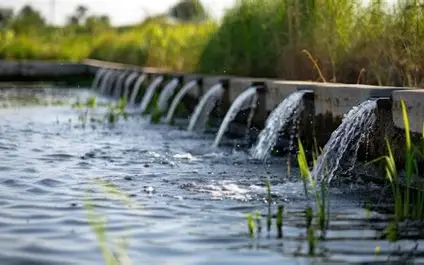
Supporting the Brainport region’s climate-neutral future
The insights from this project will help guide the Brainport region in its transition toward climate neutrality, providing a robust foundation for informed decision-making and future sustainable solutions. By emphasizing system integration and stakeholder alignment, Ana’s work underscores the vital role of collaboration in achieving long‑term environmental impact.
We warmly welcome Ana to Eindhoven Engine and look forward to following her contributions throughout her EngD journey!
Mijke the Matchbot: Bridging gaps with AI
Introducing Mijke, the Matchbot: a conversational AI designed to bridge the gap between individuals with low literacy and the support systems around them.
Hi, I’m Sichen, and I am currently pursuing an Engineering Doctorate (EngD) at Eindhoven Engine. With a background in Industrial Design and a strong focus on user experience (UX) and interaction design, I completed my master’s at Eindhoven University of Technology.
Currently, I work within the focus area of Inclusive Society. Here, I explore how AI can create more accessible and supportive environments for everyone. Our solution? Mijke, the Matchbot.
The project explores five core challenges:
1. Clarity in communication
Ensuring the chatbot communicates clearly.
4. Multi-modal accessibility
Offering multiple modes of interaction.
2. Emotional connection
Providing a supportive and empathetic interaction.
5. Precision in support
Connecting users with the right help efficiently.
3. User-friendly design
Making the chatbot intuitive and user-friendly.
Interested in more information about Mijke and the MetMij project?
Addressing information inequality
Millions of people in the Netherlands struggle with basic literacy, numeracy, and digital skills. Mijke shows a possibility of solving this information inequality by offering a friendly experience tailored to the real-world needs of often overlooked people via Artificial Intelligence (AI). This work stands at the crossroads of technology, social equity, and public service innovation. It shows how AI can be used responsibly in human-centered design.

Empowering communities
To achieve these goals, I plan to run iterative user tests to gather insights and improve mijke’s usability. to help people with limited basic skills access support more easily and confidently. By doing so, I hope to decrease the workload of stakeholders, such as social workers, employees from municipalities, or public service staff. Additionally, I want to set a benchmark for evaluating AI recommendations in social public service contexts and contribute new knowledge and tools to the fields of human-computer interaction (HCI), accessibility, and digital inclusion.
This work stands at the crossroads of technology, social equity, and public service innovation, showing how AI can be used responsibly in human-centered design.
Building a Healthier Future
My Journey at Eindhoven Engine
Hello, my name is Golnoosh Sabahifard, and I am currently pursuing my EngD traineeship at Eindhoven Engine. My focus is on the Livable Region program, where I am committed to enhancing the public well-being of residents.
At Eindhoven Engine, our mission is to create a sustainable and livable Brainport region where everyone can live healthily and safely. Our goals include reducing health disparities in neighbourhoods by 20% and adding three healthy living years for every person.
Understanding public well-being
Public well-being is influenced by eight factors: loneliness, stress, fewer years of good perceived health, lack of green spaces, noise pollution, population density, and distance to basic facilities. My research focuses on evaluating the effectiveness of current assessment tools and developing a dynamic model that visually illustrates how these factors interact to affect urban health.
The importance of interactive and dynamic analysis
The built environment significantly impacts public well-being, influencing both mental and physical health. Traditional urban assessment tools often lack interactive and dynamic analysis, making it difficult to estimate the long-term impacts of various elements.
My traineeship aims to change this. I am using Vensim, a visual modeling tool, to provide a data-driven, visual method that helps stakeholders understand how small changes in urban planning can lead to significant health benefits. This approach is crucial for evidence-based urban planning, enabling policymakers to make informed decisions to create healthier, more sustainable cities.
Ultimately, this work will lay the foundation for future research on building healthy and sustainable urban environments.
Towards automated personal comfort systems for heating, cooling and ventilation
Hello, my name is Petros Zimianitis (31 years old). I come from Greece and I was an EngD trainee in the Smart Buildings and Cities program at Eindhoven University of Technology. I studied Physics as my bachelor’s and did my master’s in Computational Physics in Greece.
Driven by my curiosity and my eagerness to come up with innovative solutions to interesting technical challenges, I started my Engineering Doctorate traineeship in 2021, to contribute to the world of the built environment.
Are we using energy efficiently?
In the Netherlands, buildings are responsible for a great proportion of the total energy consumption. It is estimated that there can be significant energy savings by improving building installations and conditioning systems. Another important issue is the reported dissatisfaction of occupants in non-residential buildings regarding their perceived comfort and air quality. This is not a very efficient way of using energy, especially now that the world is moving to more sustainable energy generation. There are also a lot of research findings regarding the differences in perceived comfort across individuals.
Individualizing comfort in offices
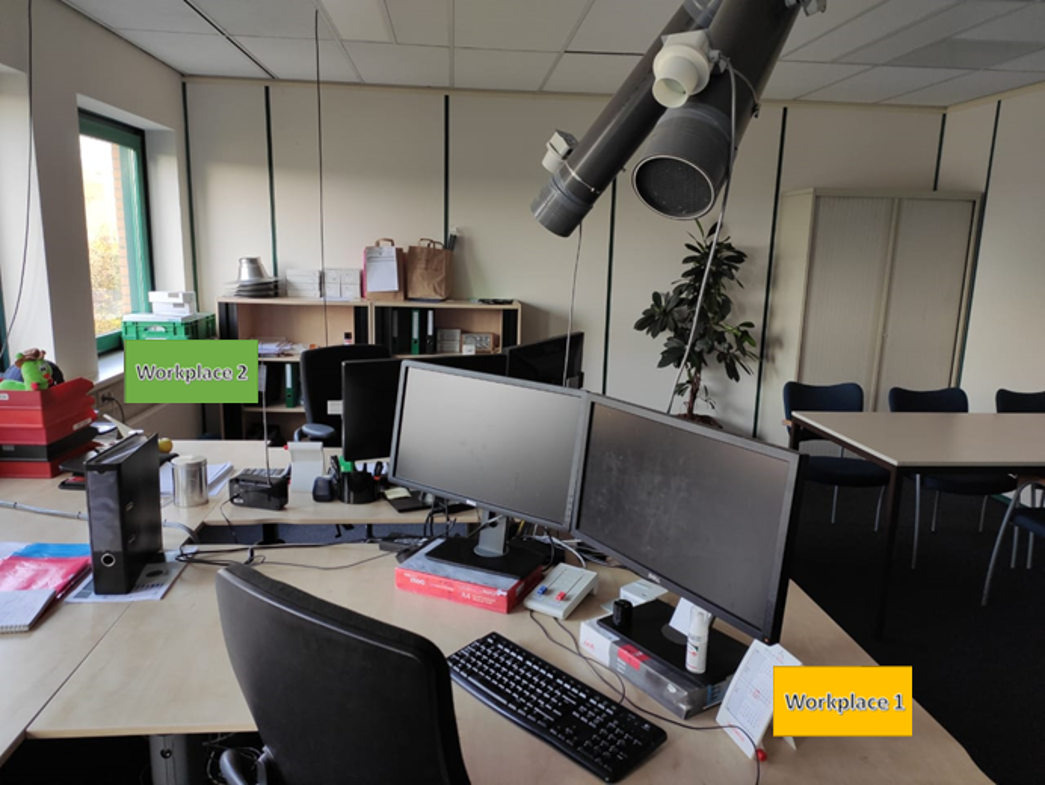
My project, ‘Towards automated personal comfort systems for heating, cooling and ventilation’, is part of the Brains4Buildings consortium. It aims to take the step from research towards design and, thus to develop and test a prototype personalized comfort system (PCS), controlled by a machine learning model, as a module for building management systems for office buildings. The control inputs for the system come from both objective measurements of the environmental conditions around the occupant as well as the occupants’ perceived thermal comfort and perceived air quality.
System development
The prototype PCS was developed in a real office environment, in the living lab of Kropman in Breda. Prior to now, there was been a lot of research performed in controlled experiment rooms (climate chambers) at universities and other institutes. The benefit of developing such a system in a real office environment is that the system and the interaction that the occupants have with it can be tested in real-world conditions.
Performance
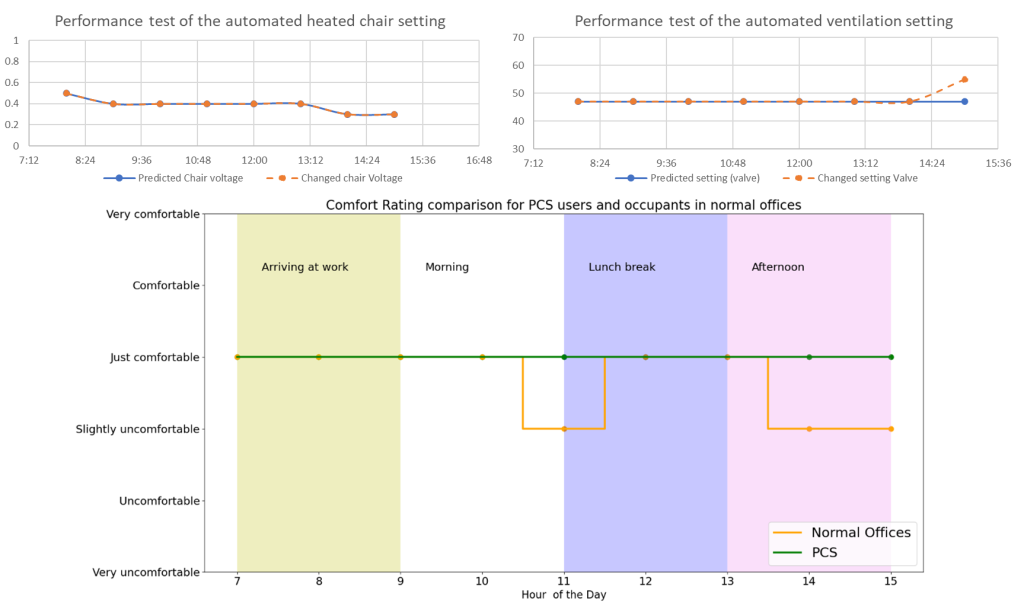
During the tests, the system showed promising performance. The machine learning models were able to predict the perfect settings for the volunteers the majority of the time. It was also reported that the volunteers that were using the PCS were felt comfortable throughout the day, whereas other people that worked in the same building in normal offices were experienced some kind of discomfort throughout the day.
What does this mean?
By individualizing comfort systems, there are huge gains that can be made in energy use. PCSs are using significantly less energy for the same task than central conditioning systems. A combination of these systems can prove to be much more energy efficient than the systems currently in use, thus, enabling buildings to easily integrate sustainable on-site energy generation solutions. All this is possible, while still providing increased levels of comfort to the occupants, which also extends to higher productivity and overall improvement of the occupants’ well-being!
By individualizing comfort systems, there are huge gains that can be made in energy use. PCSs are using significantly less energy for the same task than central conditioning systems
Improving indoor air quality in schools in the Netherlands
Hello, I’m Ayda Golahmadi, a curious individual and an EngD trainee from Iran who is always seeking fresh perspectives on everything around me. My dedication, creativity and abilities have always been directed towards fostering innovative viewpoints and adopting a holistic approach to all aspects of life. Engineering and design emerged as the perfect avenue for me to kickstart my career.
Improving indoor air quality
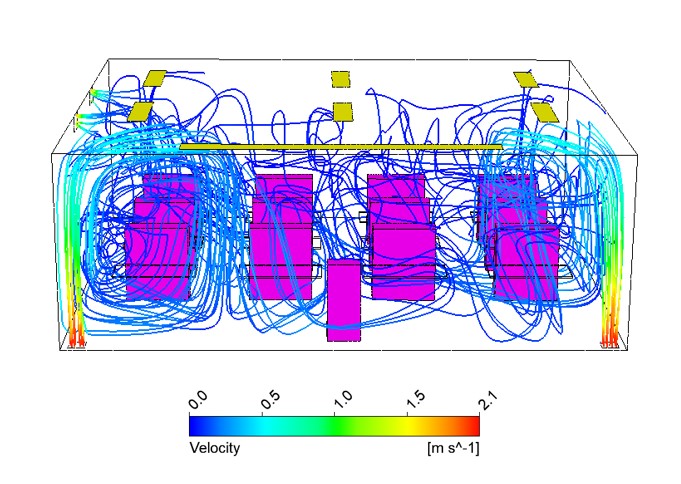
My research is focused on improving indoor air quality (IAQ) in schools in the Netherlands as part of the ECOS-IAQ project. The project aims to propose new strategies for improving the performance of ventilation systems in Dutch schools. The study explores the concept of ventilation effectiveness as a strategy to improve IAQ in classrooms. It demonstrates the potential of improving the effectiveness of ventilation rather than merely increasing airflow rates to meet indoor air quality needs.
Promising results
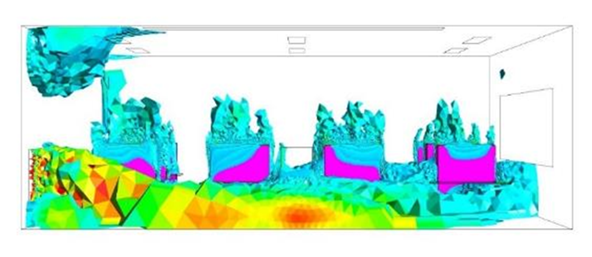
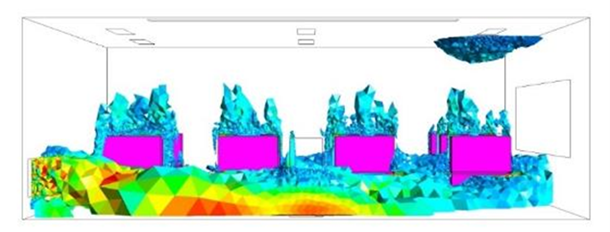
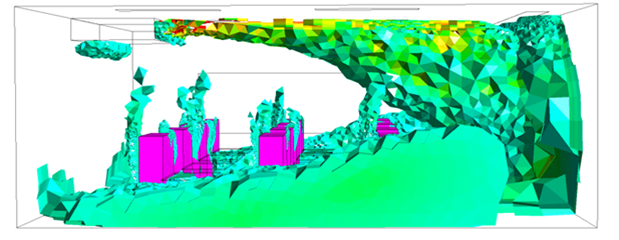
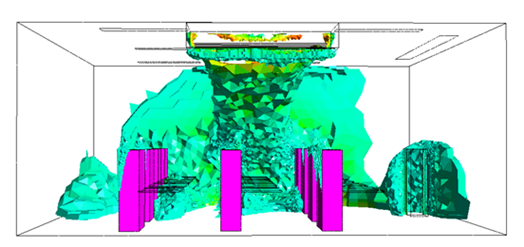
The results of my research so far have been promising. I have been able to use Computational Fluid Dynamics (CFD) simulations to analyze the airflow distribution in a classroom and assess the performance of different ventilation systems. The insights gained from these simulations have been instrumental in understanding the impact of various factors on indoor air quality. One of the key findings of my research is the potential impact of implementing multi-zone ventilation concepts and methodologies in classrooms. This approach has shown promise in improving the effectiveness of ventilation and indoor air quality.
Limitations
However, there are several challenges that I still need to address. One of the main challenges is the limitations of CFD simulations. The quality of the input data has a significant impact on the accuracy of the results. Additionally, the complexity of physical phenomena such as turbulence and heat transfer can also affect the accuracy of the CFD simulations. Another challenge is the generalization of ventilation types. The study focused on two specific types of ventilation concepts: displacement ventilation and mixing ventilation. However, there are other ventilation concepts that were not considered in the study.
Impact is significant
Despite these challenges, I am optimistic about the impact of my research. Indoor air quality is a critical factor that significantly impacts the health and academic performance of students in schools. By improving the ventilation systems in schools, we can enhance the indoor air quality, leading to better health, thermal comfort and higher energy efficiency. This research addresses the social problem of poor indoor air quality in schools, which has been linked to a decrease in students’ cognitive abilities.
In conclusion, while there are challenges to overcome, the potential impact of this research is significant. The insights gained from this study will not only contribute to the academic field but also have the potential to bring about meaningful change in the real world. I look forward to continuing my work on this project and making a positive impact on the lives of students in schools.
The insights gained from this study will not only contribute to the academic field but also have the potential to bring about meaningful change in the real world.
Vacancy: EngD trainee – Bridging the gap in society using the digital library of the future
Are you a masters graduate who wants to continue your study and obtain an Engineering Doctorate (EngD) with the focus on bridging the gap in society, caused by low literacy, using the digital library of the future?
Eindhoven Engine and the TU/e department Industrial Design is offering a fully funded 2-year position to master graduates leading to the award of an EngD (Engineering Doctorate) degree in Designing Human- System Interaction. Start date: as soon as possible.
About the assignment
In cooperation with a few project partners, Eindhoven Engine has decided to contribute to a deeper understanding and the design of a few meaningful interventions, addressing the huge societal challenge of non-inclusiveness. In particular, while the Brainport region is a highly intellectual region, at the same time 15% of the population is low literate, which excludes them from part of the possibilities available in the region. With that purpose in mind, Eindhoven Engine will bring together an ecosystem of students, researchers, start-ups and corporates to co-create, in an open innovation mindset, meaningful technology-based solutions with a strong human dimension.
The library itself has done a design oriented investigation to identify the problem and published its results. This report contains valuable suggestions. What we need now is a creative, innovative and open minded EngD candidate who can take responsibility for steering the ecosystem and leading the design of the possible solutions, for instance with student teams. No roads are impossible, as long as the impact is clear and it contributes to a solution of a real problem. B2 level of the Dutch language is a plus.
Do you have questions about this traineeship? You can also contact Walter Baets, Learning Officer @ Eindhoven Engine, via w.r.j.baets@tue.nl.
Updates on Emergence Lab


Vacancy: EngD trainee – Bridging the gap in society using the digital library of the future
Are you a masters graduate who wants to continue your study and obtain an Engineering Doctorate (EngD) with the focus on bridging the gap in society, caused by low literacy, using the digital library of the future?
Eindhoven Engine and the TU/e department Industrial Design is offering a fully funded 2-year position to master graduates leading to the award of an EngD (Engineering Doctorate) degree in Designing Human- System Interaction.
About the assignment
In cooperation with a few project partners, Eindhoven Engine has decided to contribute the development of an integrated multi-dimensional digital twin of the Brainport region. Currently many scattered efforts for digital twinning are running. The aim of this project is to align a reasonable amount of these efforts into a state-of-the-art prototype that allows the Brainport region to address diverse actual problems (such as nitrogen reduction, the energy transition to renewables, the addition of 100.000 persons to the region and their impact on traffic, emergency service, …).
The challenge for the EngD position at Eindhoven University of Technology would be to develop and evaluate a concept prototype of a multidimensional, integrated digital twin for the MRE (Metropolitan Region Eindhoven) area. This digital twin should accurately represent the physical and functional aspects of the region, including infrastructure, transportation, buildings, and other urban systems.
Candidates should have a background in an area related to interaction design (e.g., industrial design, software engineering, and human computer interaction). They need to be creative, and entrepreneurial and to have an innovative mind. Candidates will be embedded in a multidisciplinary team consisting of computer scientists, industrial designers, and business entrepreneurs.
Eindhoven Engine News – May 2023
In this edition of Eindhoven Engine News: Innovator Jesper Pilmeyer in the Spotlight, Using technology to tackle low literacy, Project VIPNOM welcomes Devansh Kandpal and more!
What else is happening at Eindhoven Engine?
A simulation of emergency vehicles in connected and autonomous traffic
Part of the SmartTwo+ project
Meet Giel Oosterbos. Giel is an EngD graduate of the Smart Cities and Buildings EngD program and does his graduation assignment within Eindhoven Engine project SmartTwo+.
Traffic in the built environment has more and more access to linked open data. Through smart use of communication between vehicles and road network the traffic flow can be improved. The SmartTwo+ project investigates the possibilities of this improvement. How will road traffic evolve in the future and how can emergency services benefit from this evolution? I’m Giel, an EngD graduate from the SmartTwo+ project, and these are the overarching questions that have been puzzling me for the past two years. There is a broad consensus that road traffic will radically change in the coming decades.
On the one hand, vehicles will be enabled to talk to each other and to the road infrastructure, constituting a connected traffic system. On the other hand, vehicle-driving functions will be increasingly automated on the path to fully autonomous vehicles. These transitions are expected to reduce the number of road accidents drastically, resulting in fewer road deaths and serious injuries. This is specifically relevant to emergency services as their operation typically entails high-pressure situations involving many risks.
Research in communication devices
In my research, I proposed three applications that employ communication devices to reduce the response time of emergency services and improve their safety in traffic. The first two applications were evaluated in large-scale simulations performed with the Simulation of Urban Mobility (SUMO) traffic simulator. The third application was tested in the realistic 3D traffic environment provided by CARLA, utilizing the Autoware.auto autonomous driving software.
Application 1
The Traffic Signal Priority Service allows emergency vehicles to request absolute priority from intelligent Traffic Light Controllers. This removes the need for emergency services to violate red traffic lights and was shown to increase their speed by roughly 20% with a minor impact on traffic flow.
Application 2
The Vehicle Rerouting Service redirects other traffic participants away from the emergency route, reducing the local traffic density for emergency services. The reduction in interactions with other vehicles improves safety and results in a decrease in emergency response time, which is similar to the Traffic Signal Priority Service. However, its negative impact on the traffic flow was found to be much larger.
Application 3
The Maneuver Coordination Service is designed to prioritize emergency vehicles at unsignalized intersections. This service requires that all vehicles involved share their current status and can autonomously adapt to a proposed trajectory.
Vision Zero
The investigation resulted in a formula to determine the minimum range at which the emergency vehicle should request its priority depending on the specific circumstances at the intersection. For the past two years, I have immersed myself in studying connected and automated mobility. I now consider it a crucial development in achieving Vision Zero by reducing the number of road deaths and serious injuries to nearly zero by 2050. At the same time, the Smart Cities and Buildings EngD program expanded my view and helped me to become a more confident professional. Soon, I will leave for a thrilling adventure in Nepal and plan my next career steps!
“My investigation resulted in a formula to determine the minimum range at which the emergency vehicle should request its priority depending on the specific circumstances at the intersection.”