Eindhoven Engine News – March 2026
In this edition of Eindhoven Engine News: Building a sustainable semiconductor industry together, two grants, each 50K for Livable region and Inclusive society & more.
What else is happening at Eindhoven Engine?
A digital twin prototype for healthy living
The Smart Cities project reached the next milestone as Veron Augustine Afonso translated earlier academic system‑dynamics research by EngD researcher Golnoosh Sabahifard into a validated and interactive simulation model. This new model shows how environmental, social, and behavioral factors shape healthy living in neighborhoods.
A practical tool for smarter urban decisions
Built in Vensim, the model turns complex theory into a clear, usable tool that allows stakeholders to explore “what‑if” scenarios. For example, how reducing noise or improving social cohesion affects wellbeing over time. It is modular, transparent, and ready to evolve into future digital twin applications across the region.

Shaping a more livable region
With Veron’s successful completion of this phase Maria Mihaylova will take the project forward, focusing on designing an interactive dashboard for a broad group of municipal and regional partners. This strong foundation positions the Smart Cities project as a key enabler of evidence‑based decision‑making: helping cities design healthier, smarter, and more livable communities for everyone.
- Interested in joining or learning more? Please contact Walter Baets for more information.
Eindhoven Engine receives 50K grant for sustainable upscaling of Mijke the Matchbot
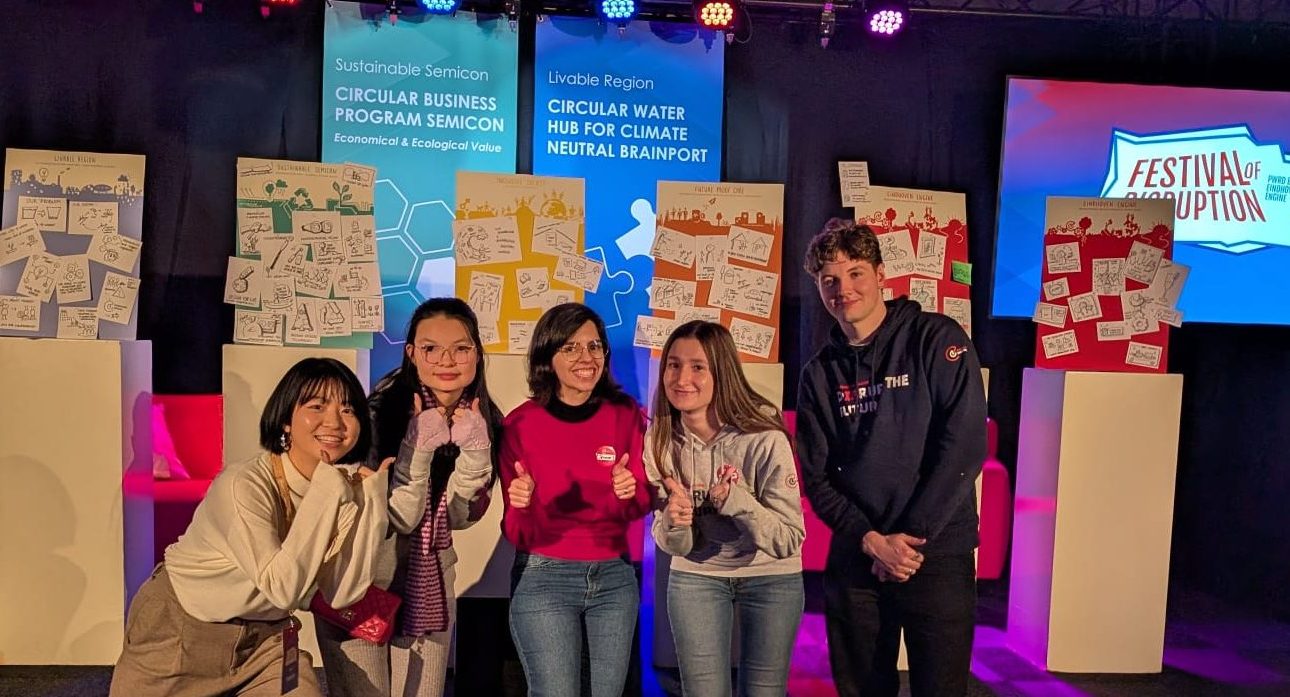
We are pleased to announce that Eindhoven Engine has been awarded 50K. This funding will support the sustainable upscale of Mijke the Matchbot. Mijke is our AI‑powered digital assistant. She is designed to make service delivery more accessible, reliable, and inclusive across the region.
What is Mijke the Matchbot?
Mijke the Matchbot is an AI-driven digital assistant developed at Eindhoven Engine that helps individuals find the right public or social services quickly and easily. The feasibility of the concept has already been validated: Mijke can guide users through complex information, streamline referrals, and reduce barriers to essential support. The next step is ensuring that this innovation can scale responsibly, securely, and effectively within the European context.
Focus of the new project: two core developments
1. Exploring locally hosted LLMs for European‑aligned privacy and autonomy
A key part of this project is assessing the feasibility of running large language models (LLMs) locally, rather than relying on external cloud services. This approach enables:
- Privacy-by-design, with sensitive data fully protected
- Greater autonomy and resilience for public organizations
- Predictable, controllable operational costs
- Alignment with European data governance requirements and regulations
This exploration is essential for ensuring that Mijke can be deployed widely and responsibly within public and social sectors.
2. Creating a continuous user feedback loop
To ensure long-term quality and trustworthiness, the project will design and test a structured user feedback system. This mechanism enables real-time improvement of:
- Referral accuracy
- Reliability of information
- Overall accessibility of the digital assistant
By embedding user experience directly into ongoing development, Mijke will evolve in step with the needs of residents, professionals, and service organizations.
The next step is ensuring that this innovation can scale responsibly, securely, and effectively within the European context.
In collaboration with Eindhoven University of Technology (TU/e) feasibility studies and pilots will be conducted within the Eindhoven Metropolitan Region (MRE). The project aims to deliver a scalable, privacy-friendly, and inclusive digital solution that strengthens accessible public and social service delivery and supports long-term regional impact.”
Eindhoven Engine receives another 50K to accelerate climate‑neutral Brainport region by 2040
We are proud and delighted to announce that our project Brainport Circulaire Waterhub – From Isolated Initiatives to Collective Water Management has been awarded a 50K Kennis‑in‑Actie grant for Collectief Waterbeheer Oost‑Brabant. This support marks an important milestone in our joint program with Rijkswaterstaat to help the Brainport region become climate neutral by 2040.
A shared challenge, a collective opportunity
The rapidly growing Brainport region faces a significant water challenge. Urban expansion, industrial demand, and the effects of climate change mean that by 2040 we must retain more water locally and extract far less. At the same time, our region is uniquely positioned to lead the way. Brainport’s strong collaborative culture, where government, businesses, knowledge institutions, and society work hand in hand, creates fertile ground for innovative solutions.
This project embraces that strength. Together, we aim to transition from fragmented water initiatives to a cohesive, future-proof model of collective water management. Our ambition is to enable the same water to be used multiple times across companies, public authorities, agriculture, and households, before returning it to nature in the highest possible quality.
Collaboration at the heart
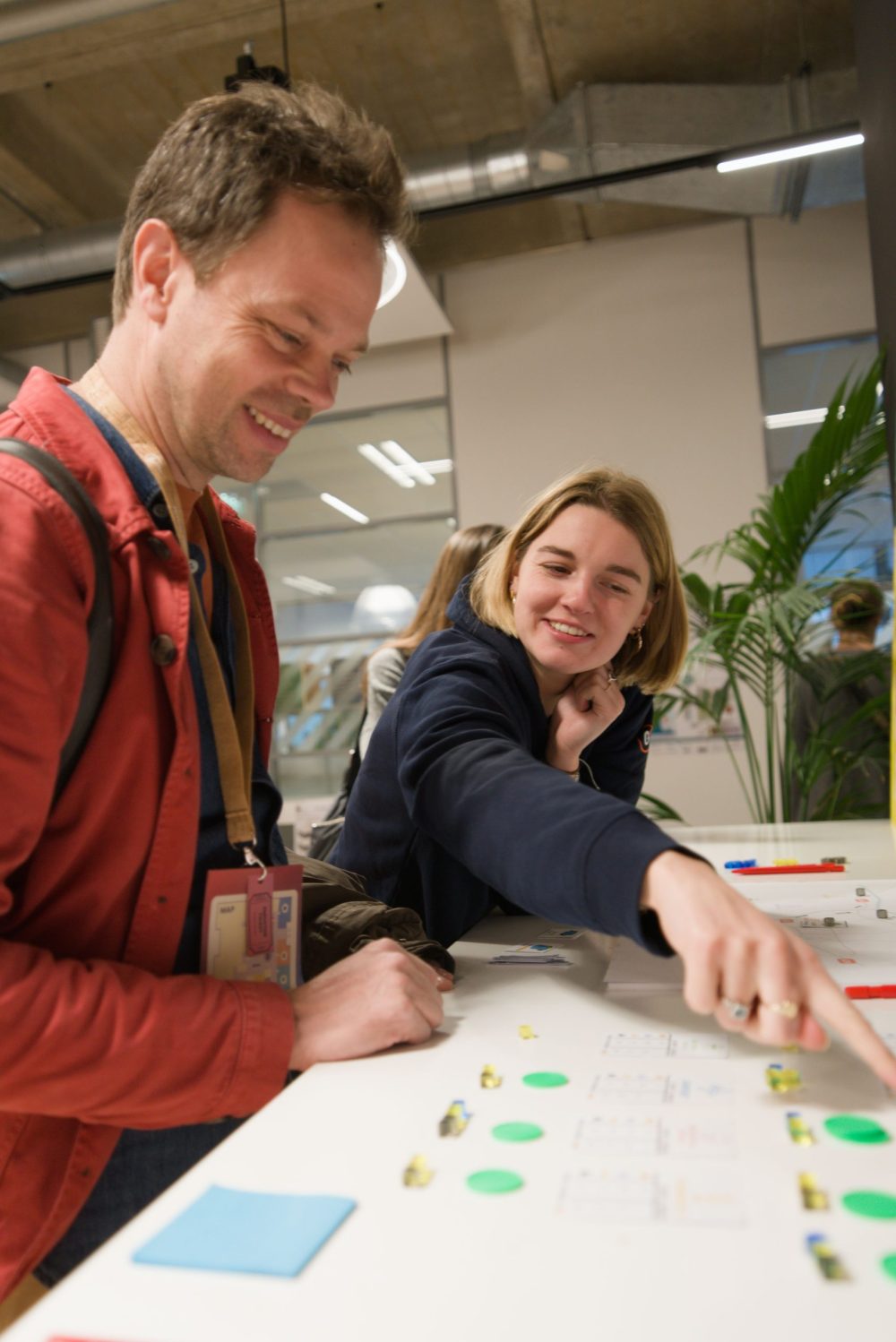
Eindhoven Engine will serve as project lead, working closely with a diverse and committed consortium:
- Eindhoven Engine
- Kloostersland
- Sustainable Dynamics
- TU/e Industrial Engineering & Innovation Sciences
- TU/e Mechanical Engineering
- vanderPoll office
This powerful coalition embodies the Brainport spirit: multidisciplinary, innovative, and united by a common purpose.
Ambition in action
This six-month exploratory project started in February 2026 and brings together technical expertise, scientific insights and practical experience. Through co-creation, we will investigate the process step to create a regional circular water system with stakeholder, laying the groundwork for broader implementation across Oost‑Brabant.
The grant enables us to deepen this journey and make the lessons learned available for other locations.
Media: How can we keep Eindhoven’s air as clean as possible?
Anyone who lives in Eindhoven breathes a different mix of exhaust fumes, dust particles and fresh air every day. But where exactly the air is most polluted, and who is most affected, remained unclear for a long time. That’s why the Municipality of Eindhoven, TNO, Zicht op Data, TU/e and Fontys are working together within Eindhoven Engine on DynaPopeX: an innovative approach that shows where residents inhale high concentrations of fine particulate matter and nitrogen dioxide, and how the city can take targeted action.
Thanks to funding from the Regio Deal, these insights are now sharper than ever.
Source: Brainport Eindhoven
Photography: Nick Bookelaar
You can’t do this as a single organisation. The strength lies in the collaboration between the municipality, knowledge institutions and companies, which makes insights faster and more widely applicable.
Brabant invests €2 million in sustainable chip production
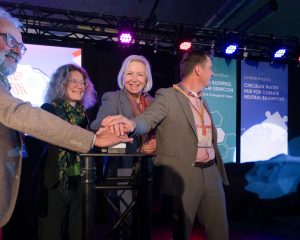
Brabant is known for its strong semiconductor sector. With the Innovation Coalition Circular Semicon (ICCS), the province of North Brabant will help companies in the chip industry produce smarter, more sustainably, and future-proof starting today. The province is allocating €2 million to accelerate this circular transition.
Together with leading companies, knowledge institutions, and intermediaries, the province supports businesses in gaining better access to raw materials, reducing dependence on foreign suppliers, and designing products with circular principles. “With this coalition, we are taking a significant step toward a future-proof economy,” says Martijn van Gruijthuijsen, Provincial Executive for Economy, Knowledge, and Talent Development in North Brabant.
Less waste, more autonomy
ICCS focuses on smarter use of materials, extending product lifespans, and reusing components. This contributes to strategic autonomy: companies become less dependent on scarce raw materials and international suppliers, enabling them to respond better to market changes.
In addition to initiators Brainport Industries, ImpactX, and the Brabant Development Agency (BOM), companies such as ASML, VDL ETG, Prodrive Technologies, Neways, KMWE, ERIKS, HQ Pack, Meilink, and Aalberts Advanced Mechatronics are contributing their knowledge, experience, and financial resources. Knowledge partners like TNO, TU/e, Eindhoven Engine, and Fontys also provide research and expertise.
What does this mean for Brabant residents?
A circular semiconductor sector will create more jobs in Brabant, especially in technical and service-oriented roles. Moreover, products will become more affordable and sustainable through smarter use of materials and components—good for both the environment and consumers’ wallets.
Brabant as a driving force for national and European innovation
The coalition’s circular ambitions will take shape through concrete projects. For example, a fault analysis and repair center will be established where companies can inspect and restore machine components. A digital tool will also be developed to show which parts can be reused. Furthermore, the parties will create a plan and tools to help companies adopt circular practices more easily. The first results are expected in 2026.
Source: www.brabant.nl
Original text: Brabant investeert samen met het bedrijfsleven ruim 4 miljoen in duurzame chipproductie | Brabant
Eindhoven Engine News – October 2025
In this edition of Eindhoven Engine News: Festival of Disruption 2025, How healthy is your neighborhood?, Mijke the Matchbot update & more.
What else is happening at Eindhoven Engine?
Media: Mijke the Matchbot guides you through the jungle of social organisations
Imagine you have a question about finances, your health, or a difficult letter. But in the maze of social organisations, your first attempt always leads you to the wrong organization. For over three million Dutch people with limited basic skills, this is a daily reality. Many give up out of frustration or shame. Mijke the Matchbot aims to change that: a friendly digital assistant, developed with support from the Regio Deal Brainport Eindhoven funds, that actually points you in the right direction.
Source: Brainport Eindhoven
Advancing energy flexibility in buildings
Transforming building energy management with smart control systems
The BuildInFlexergy project, funded by the Dutch Mission-Driven Research, Development, and Innovation (MOOI) program, is revolutionizing building energy flexibility. This is supported by the Dutch Ministry of Economic Affairs and Climate Policy and the Ministry of the Interior and Kingdom Relations, and managed by the Netherlands Enterprise Agency (RVO). This four-year industry leading initiative unites 10 industry partners (including Eindhoven Engine) and 2 top universities (TU Eindhoven and TU Delft).
A unified approach to innovation
Coordinated and managed by Kropman B.V., the consortium includes installation companies, energy consultants, platform developers, building owners and managers, technology providers, and other experts. The aim is to foster open knowledge exchange and drive innovation through strategic collaboration and widespread dissemination of results.
Buildings at the heart of the energy transition
As the energy sector shifts towards a decentralized, digital, and low-carbon future, buildings—significant consumers of electricity and thermal energy—are key to providing demand-side flexibility. This flexibility allows buildings to adjust their energy use in response to external signals like electricity prices, carbon intensity, or grid constraints, without sacrificing occupant comfort or essential functions.
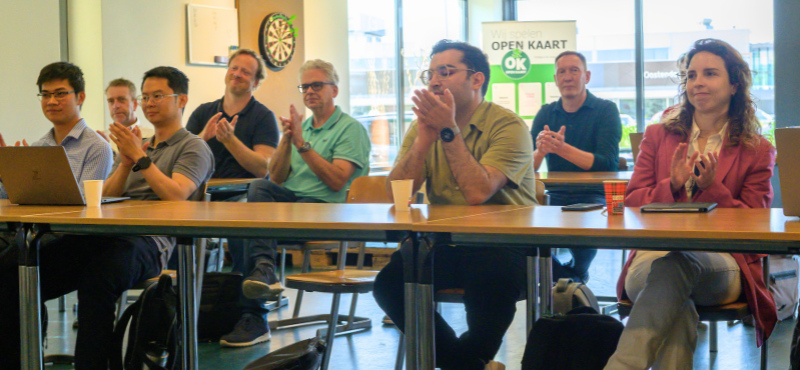
Kick-off meeting 17th June, 2025 | Kropman Nijmegen
The power of model predictive control
Model Predictive Control (MPC) is a cutting-edge tool for optimizing building energy performance. Unlike traditional control systems, MPC uses predictive models and real-time data to proactively manage a wide range of systems, including HVAC (Heating, Ventilation, and Air Conditioning), lighting, heat pumps, thermal storage, electric vehicles charging and other building loads It uses forecasts of occupancy, weather conditions and other relevant parameters to determine the best control actions over a future period, continuously updating the plan based on new data.
The aim of this project is to foster open knowledge exchange and drive innovation through strategic collaboration and widespread dissemination of results.
Real-time responsiveness with dynamic climate control
Dynamic climate control adjusts HVAC settings and ventilation rates based on changing indoor and outdoor conditions. This allows buildings to pre-cool or pre-heat spaces when renewable energy is plentiful or electricity prices are low, shifting loads without compromising comfort or overloading the grid.
Optimizing with key performance indicators
Key Performance Indicators (KPIs) are developed based on the Smart Readiness Indicator. KPIs guide decisions and balance objectives like energy cost, comfort, CO₂ emissions, and grid support. KPIs such as total energy consumption, peak load reduction, indoor comfort indices, and flexibility scores can be prioritized based on goals.
The future of building energy flexibility
The KPI-driven MPC framework makes buildings energy-efficient, grid-responsive, and climate-conscious. This approach is ideal for buildings in smart grids or demand response programs, supporting both building managers’ operational goals and energy system planners’ strategic targets.
In conclusion, combining MPC, dynamic climate control, and KPI-driven optimization can significantly enhance building energy flexibility. This strategy is crucial for making buildings active participants in the low-carbon energy system of the future.
Eindhoven Engine News – June 2025
In this edition of Eindhoven Engine News: Oefenen.nl and Eindhoven Engine join forces, Workshop ‘The Power of Understanding Each Other’, EngD trainee Sichen Guo in the spotlight & more
What else is happening at Eindhoven Engine?