Media: How can we keep Eindhoven’s air as clean as possible?
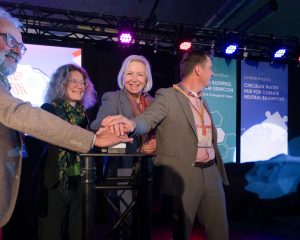
Anyone who lives in Eindhoven breathes a different mix of exhaust fumes, dust particles and fresh air every day. But where exactly the air is most polluted, and who is most affected, remained unclear for a long time. That’s why the Municipality of Eindhoven, TNO, Zicht op Data, TU/e and Fontys are working together within Eindhoven Engine on DynaPopeX: an innovative approach that shows where residents inhale high concentrations of fine particulate matter and nitrogen dioxide, and how the city can take targeted action.
Thanks to funding from the Regio Deal, these insights are now sharper than ever.
Source: Brainport Eindhoven
Photography: Nick Bookelaar
You can’t do this as a single organisation. The strength lies in the collaboration between the municipality, knowledge institutions and companies, which makes insights faster and more widely applicable.
Eindhoven Engine will once again be participating this year. We look forward to engaging with students, presenting our projects, and exploring how we can work together to drive meaningful and sustainable innovation.
Eindhoven Engine is committed to tackling complex societal challenges—often referred to as wicked problems. As an independent organization, we strive to contribute to a livable and sustainable Brainport region. Supported by our stakeholders Fontys, TNO, and Eindhoven University of Technology, we focus on four key areas: Livable Region, Future‑Proof Care, Sustainable Semicon, and Inclusive Society.
What sets Eindhoven Engine apart is our ability to operate outside traditional frameworks. We collaborate closely with industry, academia, government partners, and the people directly experiencing these challenges. This approach enables us to innovate faster and respond more effectively to emerging needs. By combining independence and openness with respect for existing ecosystems, we create space for disruptive solutions that can truly make a difference.
The Career Expo is an exciting event created especially for TU/e students—but the doors are also open to non‑TU/e students who want to explore the expo floor and connect with the wide range of participating companies.
Across two inspiring days, students can introduce themselves to more than 180 forward‑thinking companies ready to answer questions, share insights, and explore potential opportunities in their field of study or business. It’s a unique chance to discover new directions, broaden perspectives, and kick‑start a meaningful career journey.
Eindhoven Engine is committed to tackling complex societal challenges—often referred to as wicked problems. As an independent organization, we strive to contribute to a livable and sustainable Brainport region. Supported by our stakeholders Fontys, TNO, and Eindhoven University of Technology, we focus on four key areas: Livable Region, Future‑Proof Care, Sustainable Semicon, and Inclusive Society.
We can’t wait to connect with students who are passionate about technology, creativity, and making a difference—see you at the expo!
Eindhoven Engine News – October 2025
In this edition of Eindhoven Engine News: Festival of Disruption 2025, How healthy is your neighborhood?, Mijke the Matchbot update & more.
What else is happening at Eindhoven Engine?
How healthy is your neighborhood?
A new way to understand urban well-being
Cities are more than just buildings. They shape how we live, feel, and connect. A healthy city offers clean air, safe transportation, green spaces, and opportunities for social interaction. Yet, as urban areas expand, these qualities come under pressure.
By 2050, nearly 70% of the world’s population will live in cities, facing increased noise, pollution, inequality, and stress.
Improve health
To address these challenges, the municipality of Eindhoven launched the Healthy Living Area project, aiming to improve health in neighborhoods. However, they encountered a key obstacle: existing tools focused either on hard data or personal experiences — rarely both. What was needed was a method that could integrate objective indicators with the lived experiences of residents.
In collaboration with the municipality, Eindhoven Engine hosted the EngD project of Golnoosh Sabahifard, embodying its core philosophy: deeply understand the problem before jumping to solutions. A systems overview was essential, beginning with a systems dynamics sketch — the foundation for a model that could later support policy scenarios. Crucially, the project wasn’t done for the people, but with them. Stakeholders were involved in co-creating and validating the systems map, ensuring it reflected real experiences. These principles — co-creation, systems thinking, and problem understanding — are central to Eindhoven Engine’s approach to innovative solutions.

A new approach: Combining data with daily life
With a background in architecture and built environment, Golnoosh brought a systems-thinking mindset to the project. She combined systems dynamics modeling with citizen participation, using the Vensim platform to build a model based on eight criteria — four social and four environmental — already used by the municipality:
Social indicators:
- Socioeconomic status (SES)
- Loneliness
- Stress
- Years in good perceived health
Environmental indicators:
- Green space
- Noise levels
- Distance to facilities
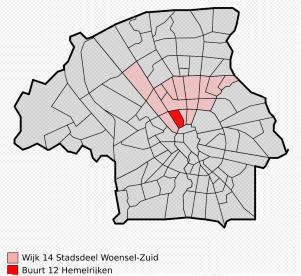
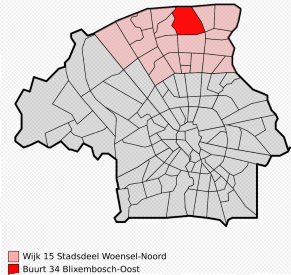
These criteria were applied to two neighborhoods: Hemelrijken and Blixembosch-Oost. The model visualized how these factors interact, enabling comparison and scenario testing. But numbers alone weren’t enough. To capture residents’ perspectives, Golnoosh used the Repertory Grid technique. Participants compared criteria in triads — for example, stress, green space, and noise — and explained which two felt similar and why. This revealed personal constructs like “quiet vs noisy” or “stressful vs calm.” Residents then rated all criteria, adding depth and nuance to the model.
Neighborhood-specific strategy
The findings were revealing. In Hemelrijken, low SES and high stress emerged as the strongest negative drivers of health. Green space and noise were key environmental concerns. Residents confirmed these insights, emphasizing stress, noise, and crowding as major issues. They prioritized solutions such as stress relief, affordable housing, and long-term health support.
In contrast, Blixembosch-Oost presented a different picture. Residents focused more on long-term health, SES, and green space. Loneliness and distance to facilities were more prominent concerns, reflecting the suburban layout. While noise and stress were present, they weren’t central. Residents valued green space and lifestyle health, viewing affordability and density as moderate issues.
These differences highlight a crucial lesson: urban health strategies must be neighborhood-specific. What works in one area may not apply in another. A one-size-fits-all approach simply doesn’t work.
Based on the findings, Golnoosh proposed tailored solutions:
- For Hemelrijken: pocket parks, green roofs, noise reduction measures, affordable housing, and community events to relieve stress and foster belonging
- For Blixembosch-Oost: preserving green infrastructure, health awareness programs, noise buffers, and inclusive community activities
Two additional insights emerged. First, urban health is shaped not just by data, but by people’s lived experiences. Residents often described health in personal terms, such as ‘quiet vs noisy’ or ‘stressful vs calm’. Second, co-creation is essential: involving residents leads to more grounded and accepted solutions.
Finding solutions is easy — once you truly understand the problem.
The next phase
The project didn’t end there. A new team member, Veron Afonso, joined to expand the systems dynamics simulation, bringing an IT perspective. The next phase involves returning to residents for validation and scenario building, continuing the cycle of co-creation and refinement.
This project exemplifies how diverse expertise, citizen involvement, and systems thinking can lead to meaningful urban innovation. As Golnoosh’s work shows, understanding the problem deeply is the key to designing healthier cities. Once the real challenges are clear, solutions follow naturally.
Advancing energy flexibility in buildings
Transforming building energy management with smart control systems
The BuildInFlexergy project, funded by the Dutch Mission-Driven Research, Development, and Innovation (MOOI) program, is revolutionizing building energy flexibility. This is supported by the Dutch Ministry of Economic Affairs and Climate Policy and the Ministry of the Interior and Kingdom Relations, and managed by the Netherlands Enterprise Agency (RVO). This four-year industry leading initiative unites 10 industry partners (including Eindhoven Engine) and 2 top universities (TU Eindhoven and TU Delft).
A unified approach to innovation
Coordinated and managed by Kropman B.V., the consortium includes installation companies, energy consultants, platform developers, building owners and managers, technology providers, and other experts. The aim is to foster open knowledge exchange and drive innovation through strategic collaboration and widespread dissemination of results.
Buildings at the heart of the energy transition
As the energy sector shifts towards a decentralized, digital, and low-carbon future, buildings—significant consumers of electricity and thermal energy—are key to providing demand-side flexibility. This flexibility allows buildings to adjust their energy use in response to external signals like electricity prices, carbon intensity, or grid constraints, without sacrificing occupant comfort or essential functions.
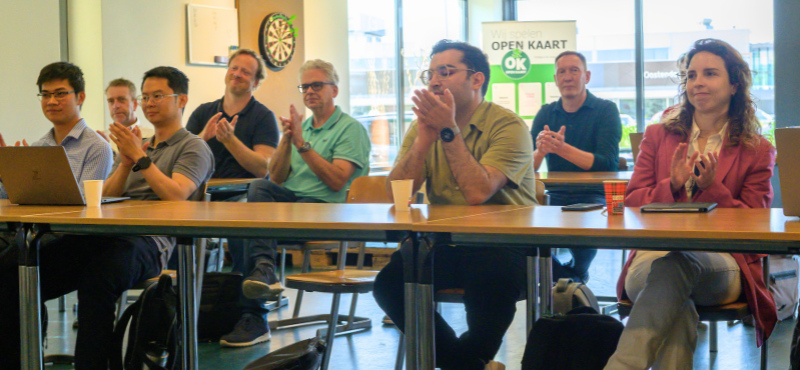
Kick-off meeting 17th June, 2025 | Kropman Nijmegen
The power of model predictive control
Model Predictive Control (MPC) is a cutting-edge tool for optimizing building energy performance. Unlike traditional control systems, MPC uses predictive models and real-time data to proactively manage a wide range of systems, including HVAC (Heating, Ventilation, and Air Conditioning), lighting, heat pumps, thermal storage, electric vehicles charging and other building loads It uses forecasts of occupancy, weather conditions and other relevant parameters to determine the best control actions over a future period, continuously updating the plan based on new data.
The aim of this project is to foster open knowledge exchange and drive innovation through strategic collaboration and widespread dissemination of results.
Real-time responsiveness with dynamic climate control
Dynamic climate control adjusts HVAC settings and ventilation rates based on changing indoor and outdoor conditions. This allows buildings to pre-cool or pre-heat spaces when renewable energy is plentiful or electricity prices are low, shifting loads without compromising comfort or overloading the grid.
Optimizing with key performance indicators
Key Performance Indicators (KPIs) are developed based on the Smart Readiness Indicator. KPIs guide decisions and balance objectives like energy cost, comfort, CO₂ emissions, and grid support. KPIs such as total energy consumption, peak load reduction, indoor comfort indices, and flexibility scores can be prioritized based on goals.
The future of building energy flexibility
The KPI-driven MPC framework makes buildings energy-efficient, grid-responsive, and climate-conscious. This approach is ideal for buildings in smart grids or demand response programs, supporting both building managers’ operational goals and energy system planners’ strategic targets.
In conclusion, combining MPC, dynamic climate control, and KPI-driven optimization can significantly enhance building energy flexibility. This strategy is crucial for making buildings active participants in the low-carbon energy system of the future.
Mijke the Matchbot: Bridging gaps with AI
Introducing Mijke, the Matchbot: a conversational AI designed to bridge the gap between individuals with low literacy and the support systems around them.
Hi, I’m Sichen, and I am currently pursuing an Engineering Doctorate (EngD) at Eindhoven Engine. With a background in Industrial Design and a strong focus on user experience (UX) and interaction design, I completed my master’s at Eindhoven University of Technology.
Currently, I work within the focus area of Inclusive Society. Here, I explore how AI can create more accessible and supportive environments for everyone. Our solution? Mijke, the Matchbot.
The project explores five core challenges:
1. Clarity in communication
Ensuring the chatbot communicates clearly.
4. Multi-modal accessibility
Offering multiple modes of interaction.
2. Emotional connection
Providing a supportive and empathetic interaction.
5. Precision in support
Connecting users with the right help efficiently.
3. User-friendly design
Making the chatbot intuitive and user-friendly.
Interested in more information about Mijke and the MetMij project?
Addressing information inequality
Millions of people in the Netherlands struggle with basic literacy, numeracy, and digital skills. Mijke shows a possibility of solving this information inequality by offering a friendly experience tailored to the real-world needs of often overlooked people via Artificial Intelligence (AI). This work stands at the crossroads of technology, social equity, and public service innovation. It shows how AI can be used responsibly in human-centered design.

Empowering communities
To achieve these goals, I plan to run iterative user tests to gather insights and improve mijke’s usability. to help people with limited basic skills access support more easily and confidently. By doing so, I hope to decrease the workload of stakeholders, such as social workers, employees from municipalities, or public service staff. Additionally, I want to set a benchmark for evaluating AI recommendations in social public service contexts and contribute new knowledge and tools to the fields of human-computer interaction (HCI), accessibility, and digital inclusion.
This work stands at the crossroads of technology, social equity, and public service innovation, showing how AI can be used responsibly in human-centered design.










GENIUS reveals battery to balance campus grid
On Monday 18 November, some 180 people gathered in the Disruptor building at the TU/e campus to witness the reveal of the 3.4 MWh battery that is at the heart of the GENIUS project. The battery is key in an attempt to manage net congestion on the campus power grid.
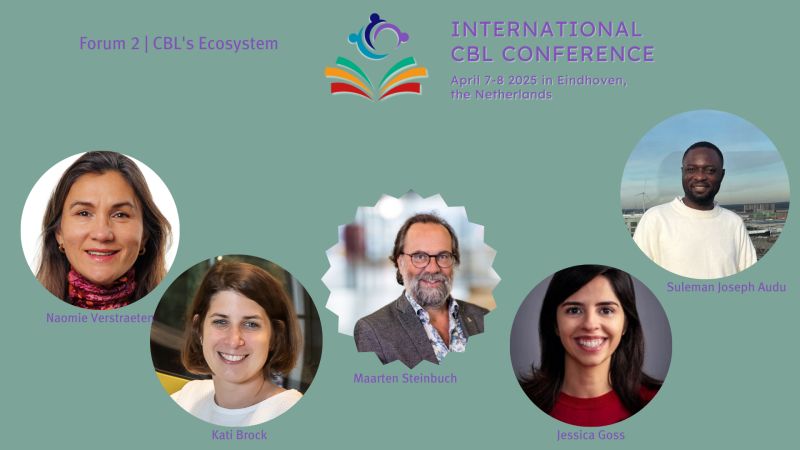
Following the success of the Dutch CBL Conference in 2023, the organization is thrilled to bring together educators, researchers, practitioners, industry leaders, and community stakeholders from around the world.
We are especially proud to feature our esteemed colleagues in Forum 2: Exploring CBL’s Ecosystem:
- Jessica Goss (Designer & Researcher, Eindhoven Engine), an expert in human-centered design and social innovation, will share her insights on tackling literacy challenges with AI-driven solutions for a more inclusive society.
- The session will be moderated by our scientific director, Maarten Steinbuch, ensuring a dynamic and insightful conversation.
New interns
Eindhoven Engine welcomed a vibrant group of new interns in 2025. Get to know them from left to right. Additionally, four bachelor students from TU/e have started. Over the coming months, they will focus on the climate-adaptive region, working one day a week.
We wish them good luck! We hope the interns gain valuable experience and bring fresh insights to the various programs at Eindhoven Engine. Everyone can make impact on society!
- Cathelijne Brantjes | Human & Technology, 4th year, Avans University of Applied Sciences | Inclusive Society
Research on making blended care more understandable at general practitioners’ offices for people aged 18-40 with reduced digital skills.
- Hilde Schram | Strategic Communication, HBO Master, Fontys University of Applied Science | Communication
Eindhoven Engine focuses on the complex challenges our society faces. Addressing these challenges requires a specific approach. Hilde is researching how this approach can be tackled through strategic communication.
- Levi Deerenberg | Business Innovation, 4th year, Avans University of Applied Sciences | Livable Region
Develop a concept that reduces energy consumption at the residential towers Luna & Aurora on the TU/e-campus by actively influencing the behavior of the residents.
- Ivory Johan | Business Innovation, 4th year, Avans University of Applied Sciences | Livable Region
Develop an innovative concept to increase the engagement and participation of students and staff on the TU/e campus around sustainability, by connecting them with sustainable innovations in an inspiring way.
- David Rozenberg | HBO-ICT (Software) , 4th year, Fontys University of Applied Science | Inclusive Society
Preparing the MetMij chatbot for deployment and real-world use. MetMij easily directs people with low basic skills to appropriate support agencies.
- Santiago Triginer | Industrial Engineering, 3rd year, Eindhoven University of Technology | Livable Region
Identifying challenges and solutions for solar panel reuse, and exploring how AI can enhance recycling processes.
- Mare Gijsbers | Business Innovation, 4th year, Avans University of Applied science | Inclusive Society
Develop a methodology to effectively and accessibly introduce the ‘Met Mij’ app to users with low literacy, enabling them to quickly and easily receive support to participate fully in society.
- Rosalie Hendriks | Business Innovation, 4th year, Avans University of Applied Sciences | Inclusive Society
Develop a new concept for people with low basic skills between the ages of 18 and 40 in the Eindhoven region, in such a way that these people can independently ensure the security of their financial situation.