Partners



Infographic
Project updates
A year of SmartMan

Thinking outside the box: students, SMEs and the SmartMan project

Shareholders, SMEs and SmartMan: the viewpoint of Ella Hueting
Brainport Regio Deal Innovation Projects – Eindhoven Engine
Eindhoven Engine is one of the Regio Deal innovation projects with social impact.
Check out this video showcasing our way of working, the Carbyon project and SmartMan project.
Partners


Videos
Marieke van Beurden – Project leader
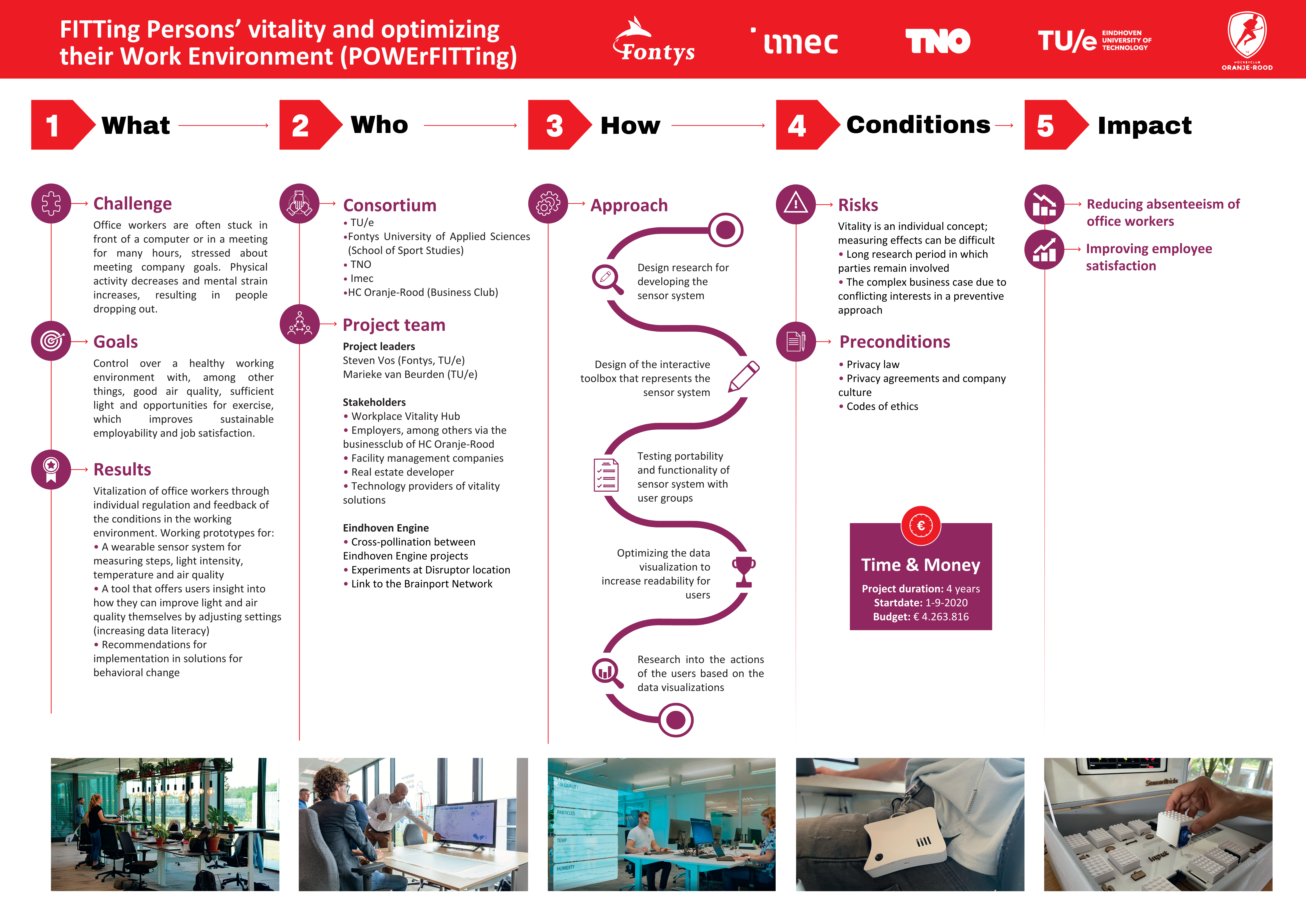
The POWerFITTing project focuses on the optimization of a person’s vitality both at work and the (home) office to remain healthy and productive.
Steven Vos – Professor Fontys & TU/e
We are optimizing the relationship between vitality and the (home) office environment. By taking into account individual, societal and contextual factors, this enables employees to remain both healthy and productive.
Hans Brombacher – PhD candidate
Hans, PhD candidate in the POWErFITTing project, researches the improvement of a healthier and active environment for people in (home) offices. By the combination of data acquisition, integration and application for the validation and acceleration of user-oriented solutions, Hans is optimizing the relationship between vitality and the (home) office environment.
Infographic
More project info

Human-data interaction to enhance office well-being
Moving faster!

Talkshow ‘a Vital Working Environment’
Partners


Key outcomes
iHeat@home gained valuable connections with Brainport stakeholders, including VDL. Periodical sessions broadened the team’s perspective and provided useful feedback from engineers and researchers, speeding up concept development. The project also benefited from access to consortium meeting spaces, student workrooms, and shared lab facilities—offering equipment and test setups not available elsewhere.
Additionally, the project initiated new collaboration between TNO, TU/e, and Fontys on the topic of TCM, strengthening regional knowledge exchange.
Videos
Olaf Adan – Project leader
The Eindhoven Engine project iHeat@Home works on a breakthrough innovation in thermal energy storage: a heat battery which is better, cheaper, smaller and greener than any competitor.
Evelien created an experimental set up and used flow simulations to research the improvement of heat batteries.
Partners









Videos
The built environment is responsible for about 36% of the global energy demand. About 5-30% of the energy use of buildings is related to energy waste due to faults in heating, ventilation and air-conditioning systems. The goal is to develop a self-learning module that can monitor and diagnose climate systems in large buildings.
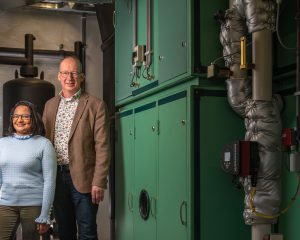
Rick Kramer – Project leader & Assistent Professor TU/e | Srinivasan Gopalan – PhD canditate TU/e
The goal is to develop a self-learning module that can monitor and diagnose climate systems in large buildings. Rick Kramer is the project leader of this project. Srinivasan is one of his PhD candidates who is focusing on developing a generic, robust and reliable fault detection and diagnosis tool
Petros Zimianitis – EngD trainee TU/e
Petros is focusing on the people within large buildings. He is doing research on the control and the functionality of a personalized control system, that people will be able to use in their office environment to tailor it according to their needs and preferences.
Partners

More info
Video
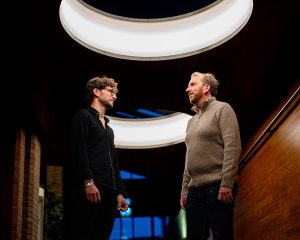
Ruben Goudriaan – Project Manager TNO & Rik Thijs – Councilor Municipality of Eindhoven
Partnership is essential in this project. The research institute TNO collaborates with the government, industry, neighboring municipalities, and the province of North Brabant. Together, we are working towards clean air for the residents of Eindhoven.
Partners

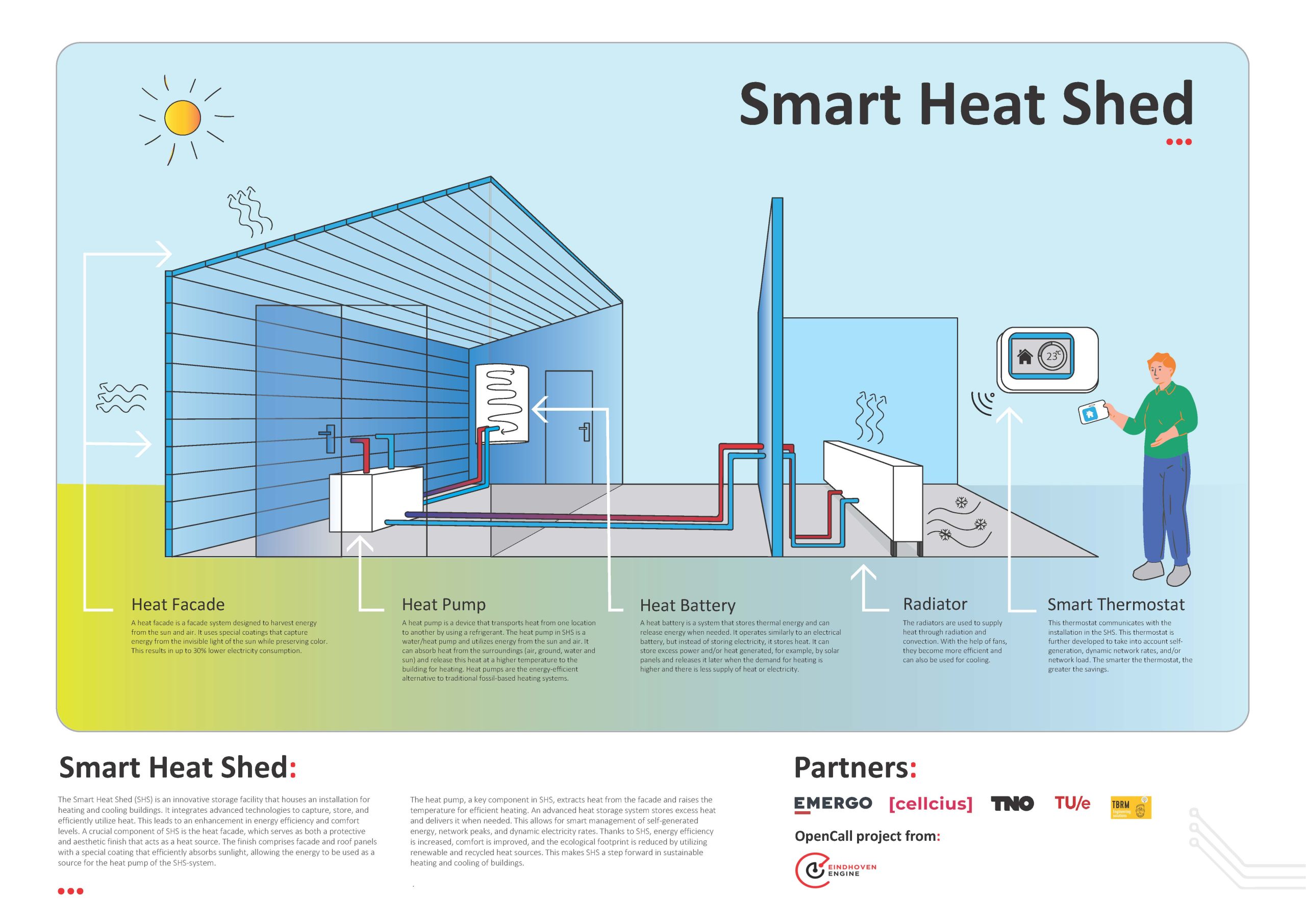
Infographic
More about the project
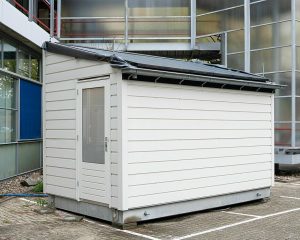
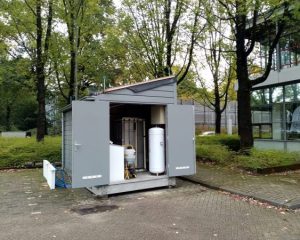
Smart shed powers buildings year-round
Media: ‘Slim schuurtje’ voorziet gebouwen het hele jaar door van energie
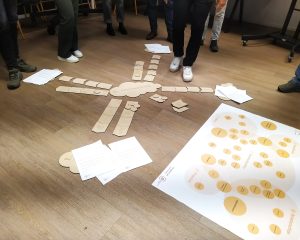
Interns join Smart Heat Shed and Low Literacy projects
Media: New innovation projects for Fontys in Eindhoven Engine
Fontys participates with two new innovation projects in Eindhoven Engine, the innovation accelerator of the Brainport region. A total of seven new innovation projects will start.
These projects in particular in the fields of energy, health and smart mobility will conduct research in the coming years with a total budget of nearly 17 million euros, to which Eindhoven Engine contributes a total of over 2.4 million euros. The investment for the Eindhoven Engine OpenCall 2022 comes from the Brainport Regio Deal.
The seven projects can bring their innovations to the market faster, as they continue their research within Eindhoven Engine, collaborate at Eindhoven Engine’s colocation on the TU/e campus and build the internal community together. Until 2025, the new projects have time to use the boost from Eindhoven Engine to further develop their innovations.

About the project
In this research, Eindhoven Engine and its partners will focus on the development of sustainable medical isolation gowns that can be used multiple times: the ProH I-gown. In addition, an investigation will take place into how the production capacity can be made (economically) scalable and flexible when necessary.
These sustainable medical isolation gowns can save six tons of CO2 per million gowns. If these isolation gowns are fully utilized during crisis situations, the result could be a saving of 0.2% of the total plastic waste stream in the Netherlands. In addition, ProH I-gowns stimulate the production of protective clothing in Europe.
The execution of this research consists of two phases. Eindhoven Engine, research organization TNO and manufacturer HAVEP will carry out a technical feasibility assessment in the first phase. A business case will also be set up. The gowns will be made of woven PET material with an environmentally friendly coating. Research will also be carried out into the durability and wearability of these gowns. In phase two of the project, the concrete industrialization will be worked out in detail.
In the first and second quarter of 2022, HAVEP started the production of the sustainable medical isolation gowns. The gowns were tested in the Reinier de Graaf Gasthuis with positive results. The Life Cycle Analyses (LCA) also had a positive outcome. Due to the rapidly changing market, among other things, we have currently frozen the further development of ProH I-gowns.
This research is supported by Small Business Innovation Research (SBIR) of the Netherlands Enterprise Agency (RVO).
More project info
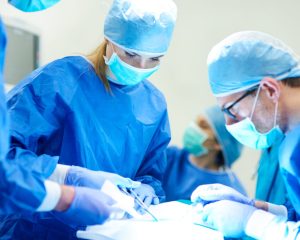
Phase 2 of SBIR project on sustainable medical isolation gowns gets started
Accelerate by working together