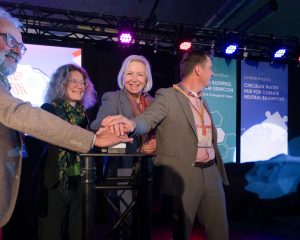
Janne Brok, both the managing director and program manager of the Eindhoven Engine Sustainable Semicon program, aims to contribute to this transition. That’s why she is enthusiastic about joining the Circular Business Program Semicon (CBPS) consortium. The approach within the CBPS is multidisciplinary, and above all, collaborative.
* The Circular Business Program Semicon (CBPS) is a regional initiative focused on accelerating circularity in the semiconductor industry in the Brainport region. Partners include Brainport Industries, ImpactX, Brabantse Ontwikkelings Maatschappij, ASML, VDL ETG, Prodrive Technologies, Neways, KMWE, ERIKS, HQ Pack, Meilink, Aalberts Advanced Mechatronics, TNO, TU/e, Eindhoven Engine, and Fontys.
We are facing a challenge that no single company can solve on its own,” Brok says. “So we need to learn to collaborate in ways that are new for this industry.”
The societal urgency: from linear to circular
ASML systems are designed for very long operational lifetimes, with the great majority of machines ever delivered still in use. Over such lifetimes, however, many components and modules are replaced as part of maintenance and continuous upgrades. In a sector where precision, reliability and throughput are critical, this continuous innovation is essential. At the same time, replaced components can still contain significant functional, material and economic value. The opportunity is therefore not simply to reduce waste, but to find better ways of retaining and recapturing that value across the supply chain.
The problem is not primarily technical. Brok explains: “Technology is something we usually can solve here in Brainport. What makes this really complex are the business models, data exchange, logistics, quality assurance, and above all: how do you distribute costs and benefits in a circular model?” This turns the issue into a systemic challenge, a complex interplay of interests, processes, business structures, and power relations within an extremely refined supply chain.
The Eindhoven Engine approach: a new way of working together
Where bilateral collaboration (ASML and supplier) has been the norm, the CBPS is based on a multilateral approach. It brings ASML, first-tier suppliers, and knowledge organisations to the same table, as equal partners in change.
Eindhoven Engine serves as a neutral orchestrator, creating an inspiring environment where experimentation can thrive. It supports partners by jointly analysing processes and key decision points, offering clear insights into value creation, CO₂ impact, and opportunities for reuse. This collaborative approach helps establish agreements and solutions that benefit the entire chain. Acting as an independent facilitator, Eindhoven Engine operates without commercial interests. Its focus remains on the collective good, supported by strong expertise in guiding system innovation.
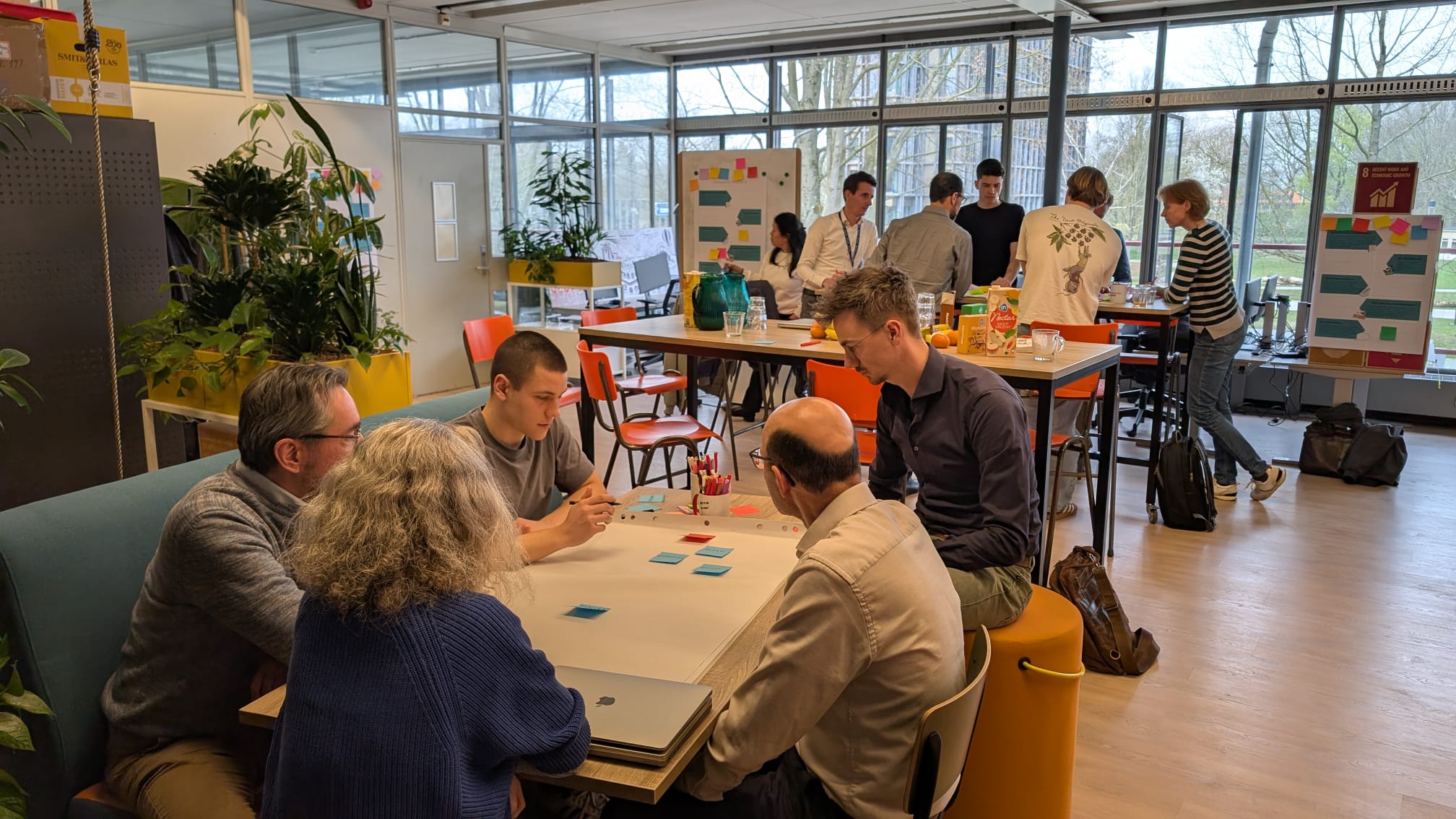
Through the involvement of students, the project maps out processes, data flows, and reuse opportunities, often revealing insights that companies find difficult to uncover themselves. Currently, three students from both HBO and WO institutions are working on the project together with partners.
Our role is to create a sandbox where companies can experiment safely,” Brok says. “We set the conditions, invite the right people, and help teams move from individual interests to collective goals.”
The strength of the ecosystem: prepared for shared responsibility
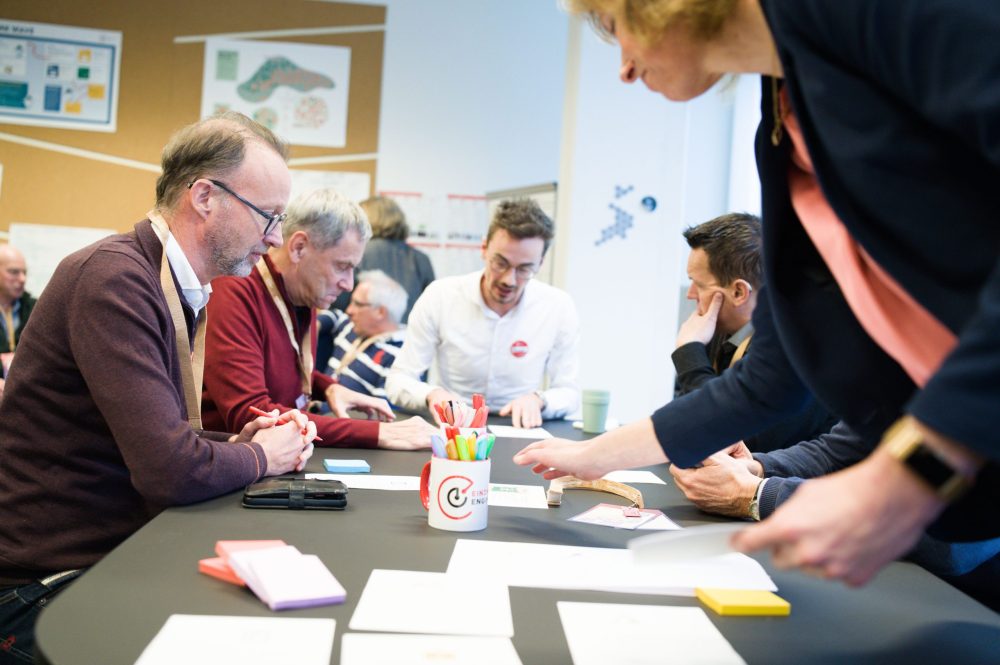
That all parties, first-tier suppliers, knowledge institutions, and Eindhoven Engine, now sit together at one table is, according to Brok, already a breakthrough. “The fact that companies are willing to look beyond their own business models says a lot. It is new, exciting, and sometimes complex. But there is a shared understanding: this is necessary, and it must be done together.” The semiconductor industry moves at high speed, is driven by strong economic incentives, and operates within global geopolitical dynamics. That makes the transition challenging, but also full of opportunity. “We hold a unique position in the global semiconductor landscape. If we can demonstrate here that circularity works, it can set a worldwide standard.”

An invitation to the wider ecosystem
Beyond CBPS, Eindhoven Engine’s Sustainable Semicon program connects with organizations that can bring relevant knowledge, capabilities or perspectives to the transition toward a more sustainable and circular semiconductor ecosystem. “We want to broaden the solution space by bringing in perspectives that can help us tackle the systemic challenges behind circularity.”
- Interested in joining or learning more? Please contact Janne Brok for more information.