Circular water hub
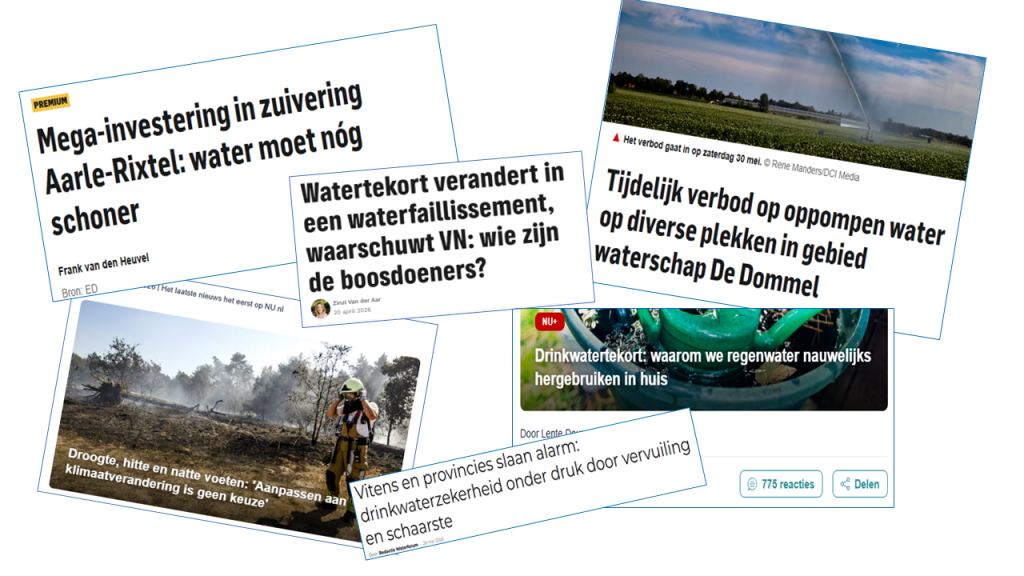
Water scarcity is one of the most urgent climate risks facing the Netherlands. Due to climate change, erratic precipitation patterns, and increasing water demand, the availability of fresh water is coming under growing pressure. Without additional measures, a shortage of drinking water is expected as early as 2030.
For the Brainport Eindhoven region, this presents an even greater challenge. The combination of strong industrial growth (Beethoven), ongoing urbanisation, and vulnerable sandy soils leads to a structural water deficit.
Why act now?
Increasing pressure on the water system:
- Warmer, drier summers and increased evaporation
- Rainfall occurring in short, heavy bursts that quickly run off
- Growing demand from industry, agriculture, and households
- Salinisation of rivers and groundwater
The solution: circular water hubs
Circular water hubs make it possible to reuse water multiple times within a closed loop. Together with businesses, governments, and residents share, treat, and reuse water locally, ensuring that after use it returns to nature just as clean or even cleaner. In partnership with Rijkswaterstaat and Eindhoven University of Technology, we have taken the initiative to develop and realize circular water hubs. As a regional innovation orchestrator we connect partners from government, industry, and academia to co-develop and scale solutions to complex societal challenges.
Through this approach, we are working towards a resilient, future-proof, and circular water system. Our ambition is to achieve a climate-neutral Brainport region by 2040.
Water security for tomorrow’s Brainport region
Contact Paul Desmedt
- Email: p.a.c.desmedt@tue.nl
- LinkedIn: Paul Desmedt | LinkedIn
From pilot to scaling up
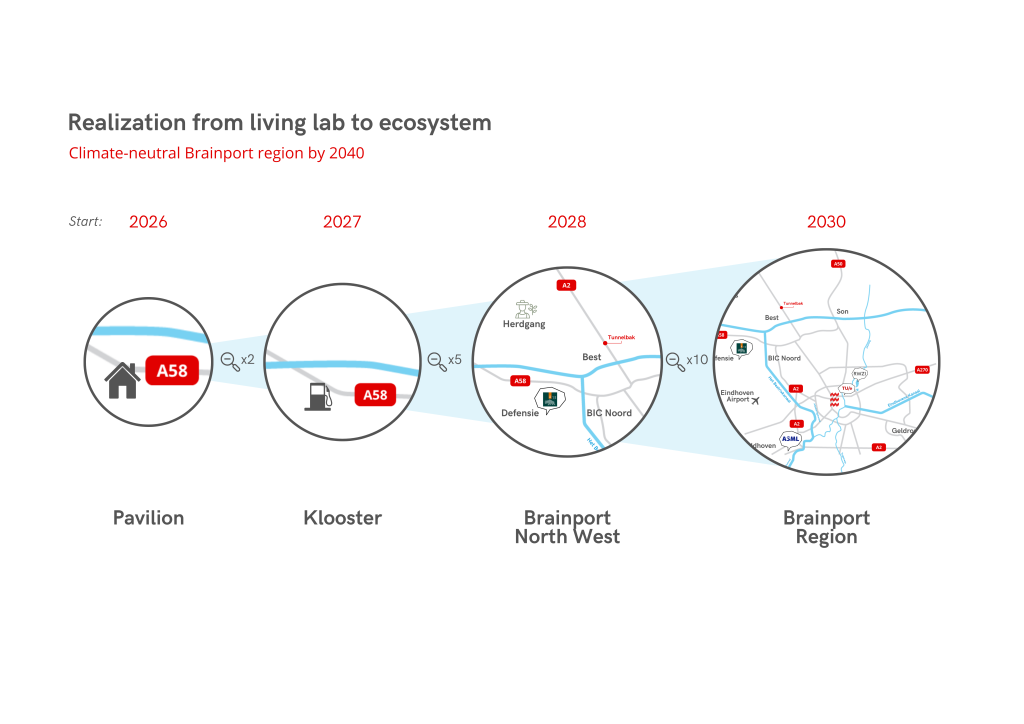
The Circular Water Hub project consists of four levels, gradually scaling from experimentation to large-scale application.
Level 1: Pavilion
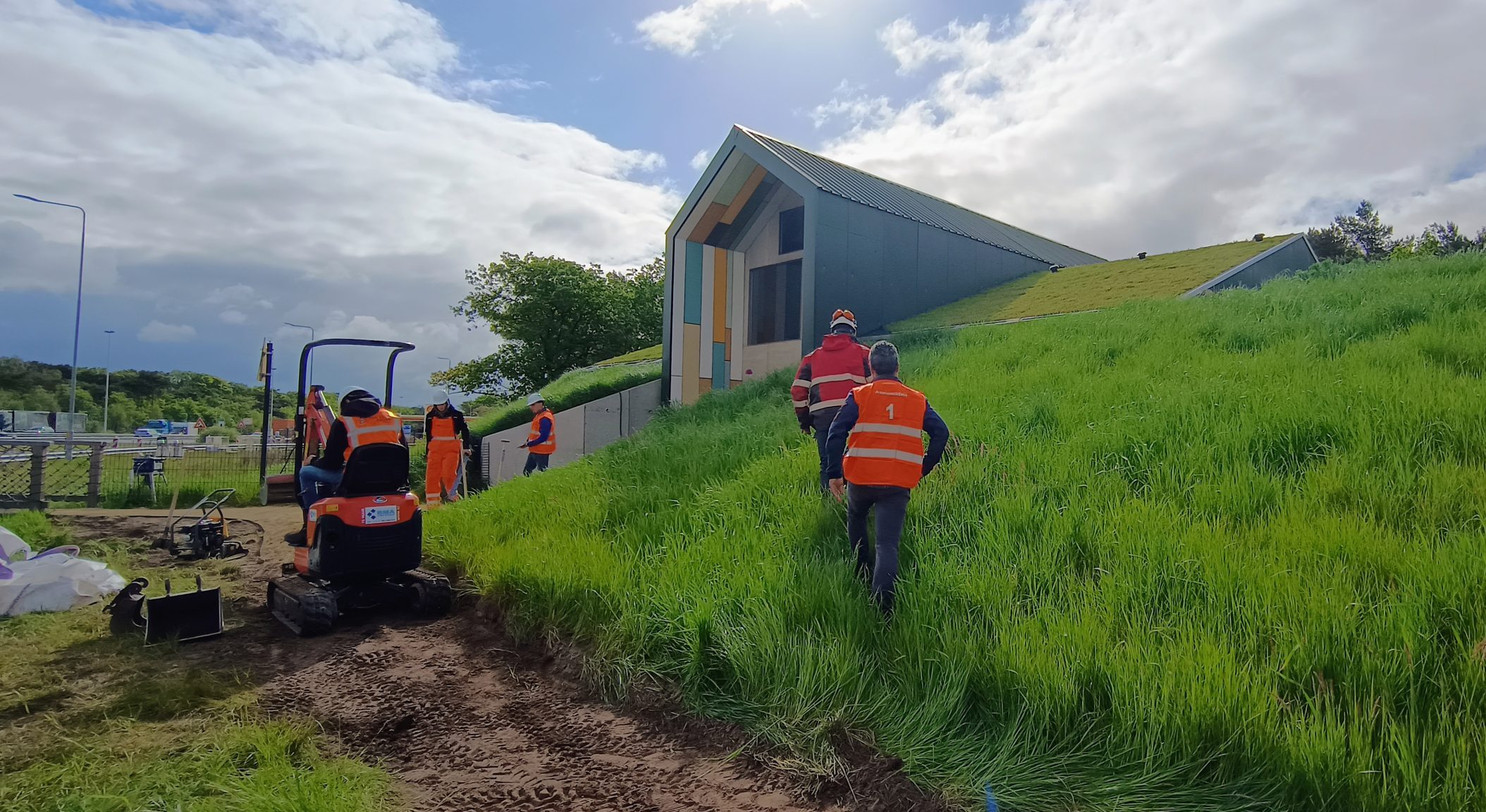
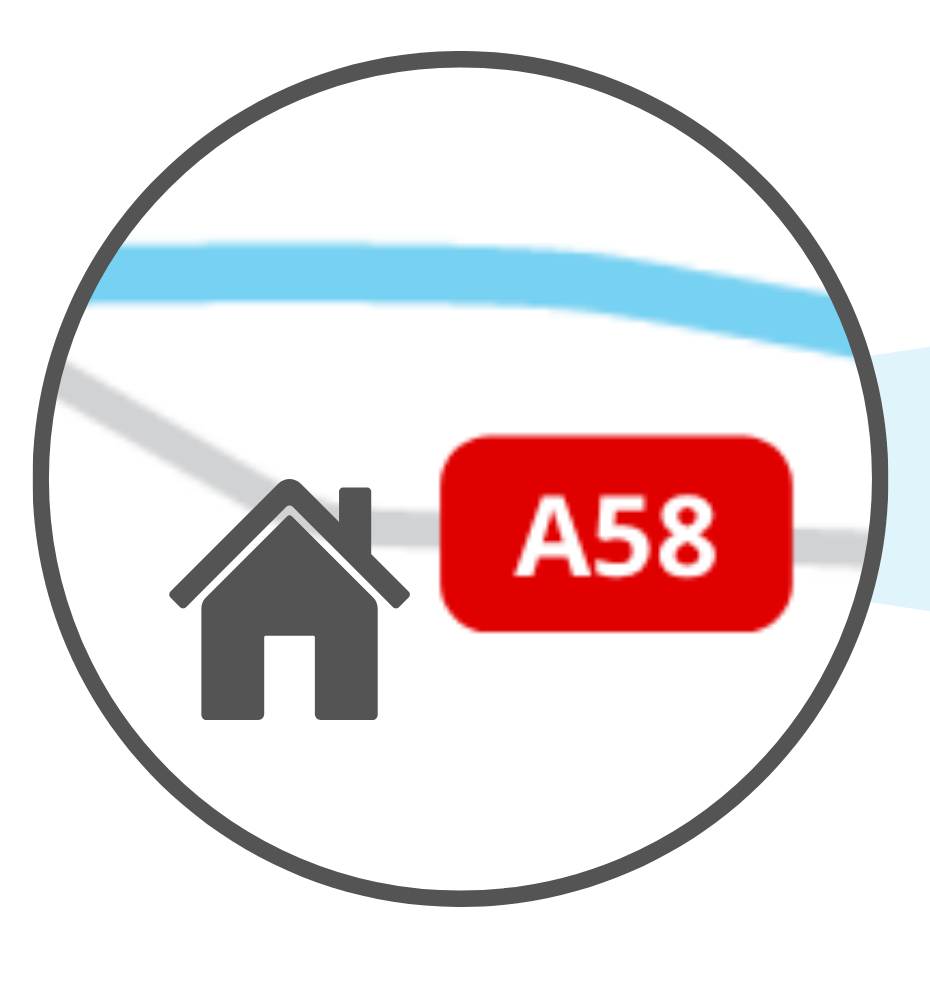
In the first level of this project, a circular water hub is being realized at the Kloosters service area (A58, Oirschot), a visible demonstration and meeting place where innovation, practice, and knowledge come together. Institutes, companies, students, and researchers meet here to collaborate. Rainwater is collected, filtered, stored, and reused for the toilets in the pavilion.
The solution was designed by students from Yuverta and also implemented by them. This marks an important step in building a learning community. Rijkswaterstaat InnovA58 provided the site as an experimental space. Construction company Th. van Kasteren, as a partner of the Symbiotic Living Cooperative, made the realisation possible. Students from various educational institutions work together with these partners on the water challenge. Eindhoven Engine acts as orchestrator, bringing all parties together.
Level 2: Kloosters
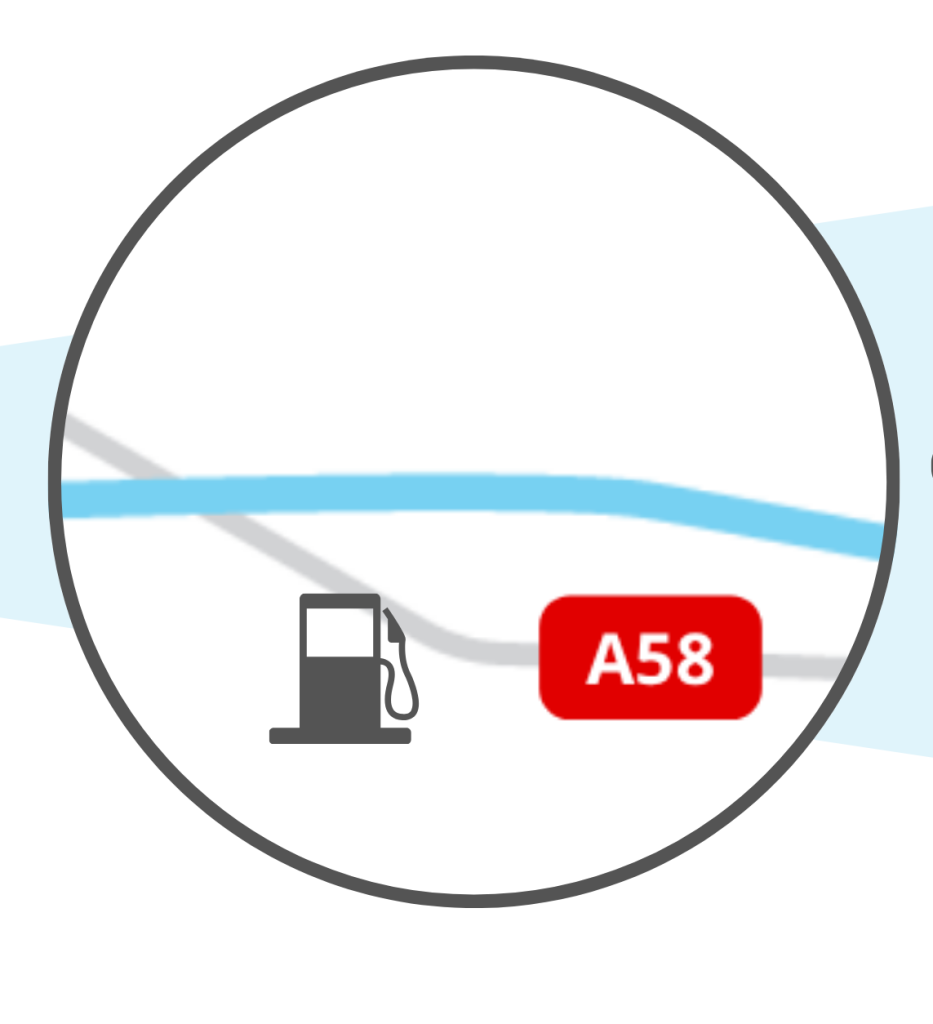
In the next level, we build on the same principles: collecting, filtering, storing, and reusing water. At Rijkswaterstaat’s Kloosters test site, water from the A58 motorway is used for local applications, such as agriculture.
Students again play a central role. HBO ICT students are working on an initial design for sensors that measure water quality. They are investigating, among other things, rainwater collection, water flows, and the functioning of purification systems. They also examine how data can be stored and shared.
At the same time, TU/e students conduct a system analysis, mapping how all factors are interconnected and how the system functions as a whole. These insights are then tested for feasibility by HBO and MBO students.
The next step is the construction of collection basins: three in total, one of which is specifically intended for experiments. In the near future, additional themes such as nitrogen, asphalt, and noise barriers will also be explored.
Level 3: Brainport Northwest
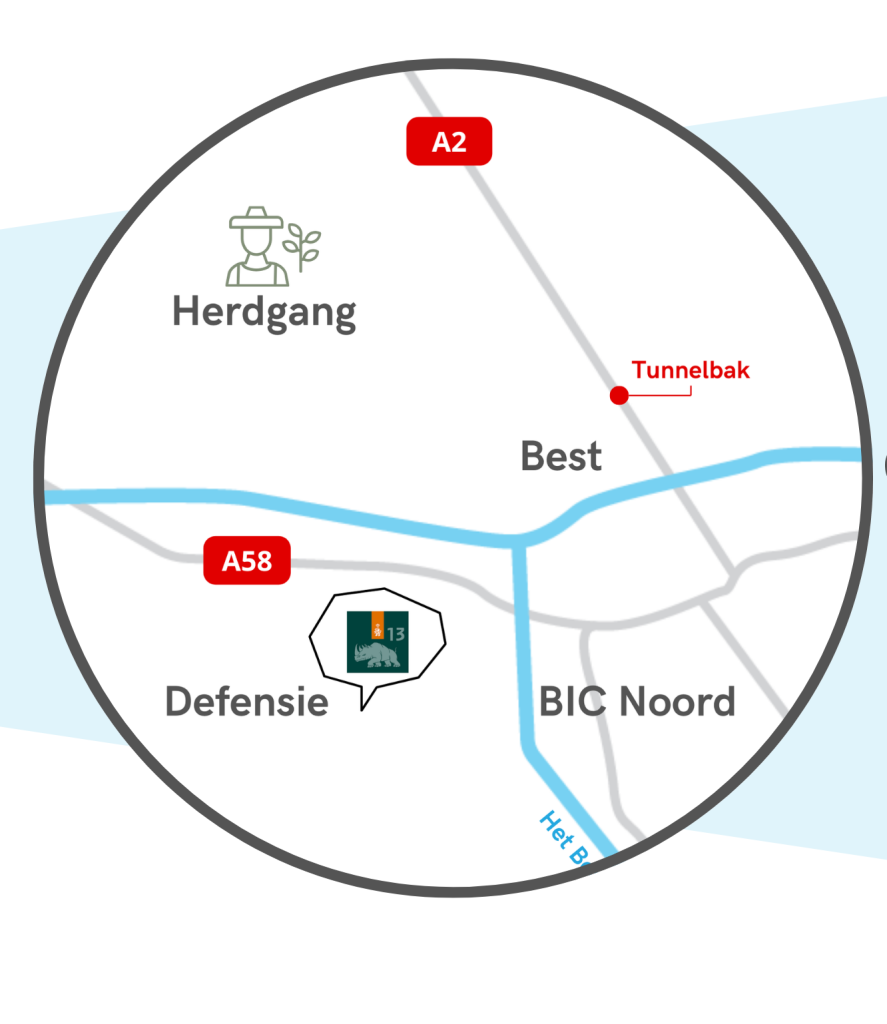
In the third level, the project is further scaled up. The focus is on developing a subregional circular water system in Brainport Northwest.
Students, an EngD trainee, and master’s and PhD candidates from Eindhoven University of Technology are currently working on concept development. The idea is to collect, filter, and store rainwater on a large scale so that it can be reused by industry, agriculture, and households.
This system should help relieve pressure on the already strained water system. Collaboration is key: government, industry, education, research, nature, and society work together on both an economic and a societal solution.
The start of implementation of this circular water system is planned for 2028.
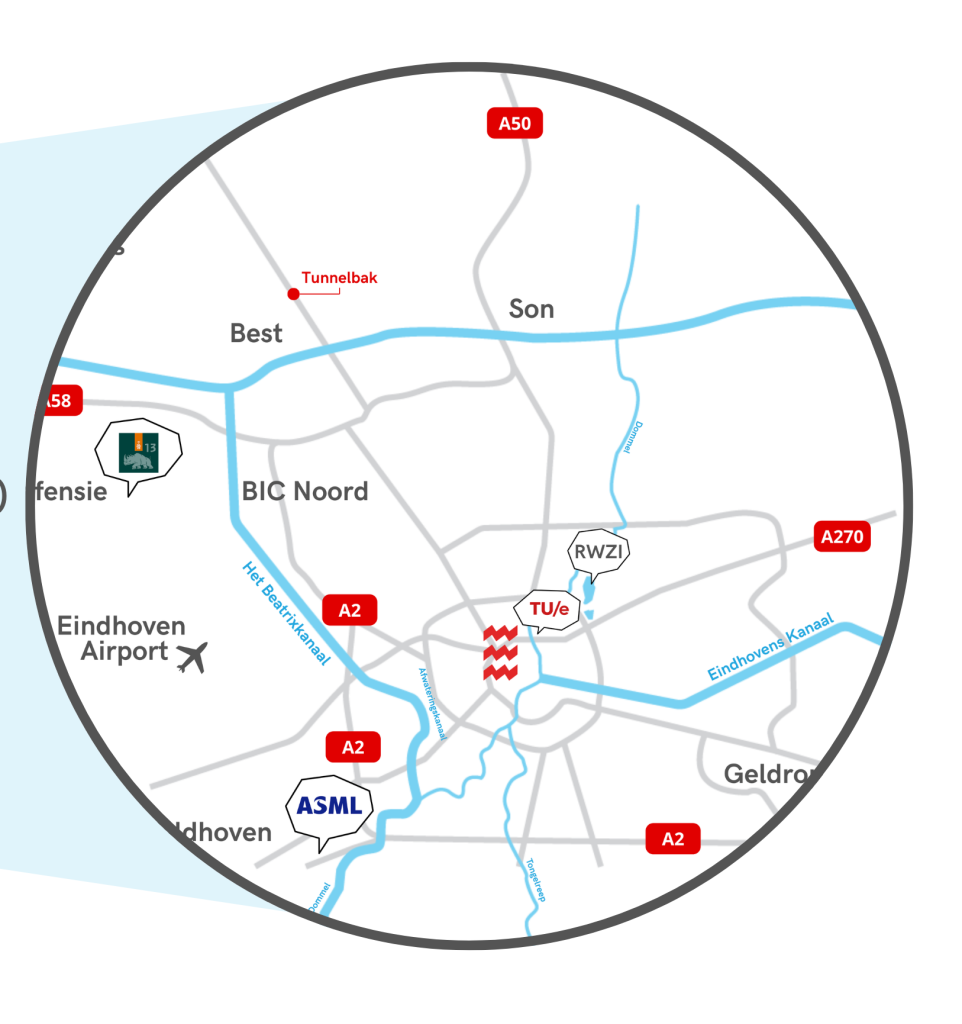
Phase 4: Brainport Region
In the final phase, the system will be expanded further. Brainport Northwest will serve as the foundation for scaling up to the wider Brainport region.
More info
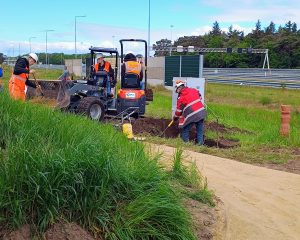
A milestone for the Circular Water Hub

Eindhoven Engine receives another 50K to accelerate climate‑neutral Brainport region by 2040