Welcome our new EngD trainee: Ana Hernández Madonado
We are excited to welcome Ana Hernández Madonado, who joined the Eindhoven Engine team last year as part of the Mechatronics System Design EngD program. As an EngD trainee, Ana is contributing to an impactful in-house project focused on accelerating the transition toward a climate‑neutral Brainport region by 2040.
Ana’s project is in close cooperation with Rijkswaterstaat TU/e and Eindhoven Engine. The work began with an exploration of opportunities for water reuse and regeneration within the Brainport region. Building on these early findings, Ana is now conducting an integrated systems analysis to better understand how natural systems, regional infrastructure, and human activities interact.
Her research involves defining system boundaries, mapping key actors, and identifying critical interdependencies across the region. This integrated approach supports the development of a shared regional understanding, an essential step for effective collaboration between stakeholders.

Supporting the Brainport region’s climate-neutral future
The insights from this project will help guide the Brainport region in its transition toward climate neutrality, providing a robust foundation for informed decision-making and future sustainable solutions. By emphasizing system integration and stakeholder alignment, Ana’s work underscores the vital role of collaboration in achieving long‑term environmental impact.
We warmly welcome Ana to Eindhoven Engine and look forward to following her contributions throughout her EngD journey!
Eindhoven Engine receives 50K grant for sustainable upscaling of Mijke the Matchbot
We are pleased to announce that Eindhoven Engine has been awarded 50K. This funding will support the sustainable upscale of Mijke the Matchbot. Mijke is our AI‑powered digital assistant. She is designed to make service delivery more accessible, reliable, and inclusive across the region.
What is Mijke the Matchbot?
Mijke the Matchbot is an AI-driven digital assistant developed at Eindhoven Engine that helps individuals find the right public or social services quickly and easily. The feasibility of the concept has already been validated: Mijke can guide users through complex information, streamline referrals, and reduce barriers to essential support. The next step is ensuring that this innovation can scale responsibly, securely, and effectively within the European context.
Focus of the new project: two core developments
1. Exploring locally hosted LLMs for European‑aligned privacy and autonomy
A key part of this project is assessing the feasibility of running large language models (LLMs) locally, rather than relying on external cloud services. This approach enables:
- Privacy-by-design, with sensitive data fully protected
- Greater autonomy and resilience for public organizations
- Predictable, controllable operational costs
- Alignment with European data governance requirements and regulations
This exploration is essential for ensuring that Mijke can be deployed widely and responsibly within public and social sectors.
2. Creating a continuous user feedback loop
To ensure long-term quality and trustworthiness, the project will design and test a structured user feedback system. This mechanism enables real-time improvement of:
- Referral accuracy
- Reliability of information
- Overall accessibility of the digital assistant
By embedding user experience directly into ongoing development, Mijke will evolve in step with the needs of residents, professionals, and service organizations.
The next step is ensuring that this innovation can scale responsibly, securely, and effectively within the European context.
In collaboration with Eindhoven University of Technology (TU/e) feasibility studies and pilots will be conducted within the Eindhoven Metropolitan Region (MRE). The project aims to deliver a scalable, privacy-friendly, and inclusive digital solution that strengthens accessible public and social service delivery and supports long-term regional impact.”
Media: Building the water systems of the future together
- Read more [article is in Dutch]
Eindhoven Engine receives another 50K to accelerate climate‑neutral Brainport region by 2040
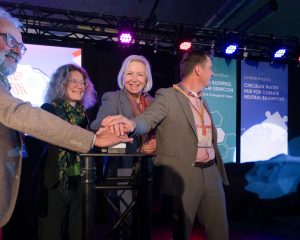
We are proud and delighted to announce that our project Brainport Circulaire Waterhub – From Isolated Initiatives to Collective Water Management has been awarded a 50K Kennis‑in‑Actie grant for Collectief Waterbeheer Oost‑Brabant. This support marks an important milestone in our joint program with Rijkswaterstaat to help the Brainport region become climate neutral by 2040.
A shared challenge, a collective opportunity
The rapidly growing Brainport region faces a significant water challenge. Urban expansion, industrial demand, and the effects of climate change mean that by 2040 we must retain more water locally and extract far less. At the same time, our region is uniquely positioned to lead the way. Brainport’s strong collaborative culture, where government, businesses, knowledge institutions, and society work hand in hand, creates fertile ground for innovative solutions.
This project embraces that strength. Together, we aim to transition from fragmented water initiatives to a cohesive, future-proof model of collective water management. Our ambition is to enable the same water to be used multiple times across companies, public authorities, agriculture, and households, before returning it to nature in the highest possible quality.
Collaboration at the heart
Eindhoven Engine will serve as project lead, working closely with a diverse and committed consortium:
- Eindhoven Engine
- Kloostersland
- Sustainable Dynamics
- TU/e Industrial Engineering & Innovation Sciences
- TU/e Mechanical Engineering
- vanderPoll office
This powerful coalition embodies the Brainport spirit: multidisciplinary, innovative, and united by a common purpose.
Ambition in action
This six-month exploratory project started in February 2026 and brings together technical expertise, scientific insights and practical experience. Through co-creation, we will investigate the process step to create a regional circular water system with stakeholder, laying the groundwork for broader implementation across Oost‑Brabant.
The grant enables us to deepen this journey and make the lessons learned available for other locations.
This is an elective course for EngD trainees in Designing Human–System Interaction and Automotive Systems Design.
The challenges of today are wicked in nature: we have no upfront idea where the solution might be found. Most of the technology management approaches and methods are not based on this reality of a complex, systemic world, and therefore do not always equip engineers ideally.
To make sense of today’s reality, engineers must take charge. They need to shape the future instead of being swept along by it. This means understanding what innovation truly requires in a world that is constantly shifting and filled with uncertainty. And above all, they must be ready to navigate the rapid disruption driven by exponential technologies. They need to know how to construct business models that matter, using technologies for positive impact. Additional to their technological specialization, engineers need to develop an understanding of, and a competence in, turning the great potential of (exponential) technologies into business models to bring to market.
More about the course >>
Media: How can we keep Eindhoven’s air as clean as possible?
Anyone who lives in Eindhoven breathes a different mix of exhaust fumes, dust particles and fresh air every day. But where exactly the air is most polluted, and who is most affected, remained unclear for a long time. That’s why the Municipality of Eindhoven, TNO, Zicht op Data, TU/e and Fontys are working together within Eindhoven Engine on DynaPopeX: an innovative approach that shows where residents inhale high concentrations of fine particulate matter and nitrogen dioxide, and how the city can take targeted action.
Thanks to funding from the Regio Deal, these insights are now sharper than ever.
Source: Brainport Eindhoven
Photography: Nick Bookelaar
You can’t do this as a single organisation. The strength lies in the collaboration between the municipality, knowledge institutions and companies, which makes insights faster and more widely applicable.
Eindhoven Engine will once again be participating this year. We look forward to engaging with students, presenting our projects, and exploring how we can work together to drive meaningful and sustainable innovation.
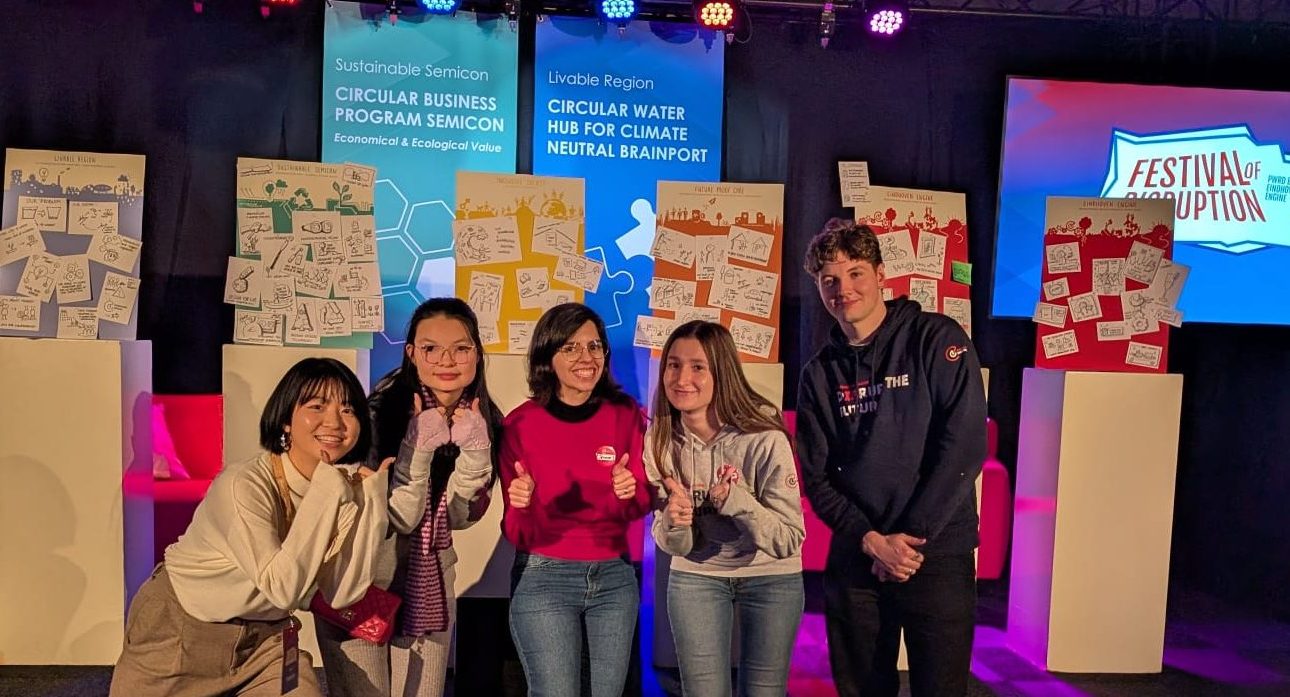
Eindhoven Engine is committed to tackling complex societal challenges—often referred to as wicked problems. As an independent organization, we strive to contribute to a livable and sustainable Brainport region. Supported by our stakeholders Fontys, TNO, and Eindhoven University of Technology, we focus on four key areas: Livable Region, Future‑Proof Care, Sustainable Semicon, and Inclusive Society.
What sets Eindhoven Engine apart is our ability to operate outside traditional frameworks. We collaborate closely with industry, academia, government partners, and the people directly experiencing these challenges. This approach enables us to innovate faster and respond more effectively to emerging needs. By combining independence and openness with respect for existing ecosystems, we create space for disruptive solutions that can truly make a difference.
The Career Expo is an exciting event created especially for TU/e students—but the doors are also open to non‑TU/e students who want to explore the expo floor and connect with the wide range of participating companies.
Across two inspiring days, students can introduce themselves to more than 180 forward‑thinking companies ready to answer questions, share insights, and explore potential opportunities in their field of study or business. It’s a unique chance to discover new directions, broaden perspectives, and kick‑start a meaningful career journey.
Eindhoven Engine is committed to tackling complex societal challenges—often referred to as wicked problems. As an independent organization, we strive to contribute to a livable and sustainable Brainport region. Supported by our stakeholders Fontys, TNO, and Eindhoven University of Technology, we focus on four key areas: Livable Region, Future‑Proof Care, Sustainable Semicon, and Inclusive Society.
We can’t wait to connect with students who are passionate about technology, creativity, and making a difference—see you at the expo!
Eindhoven Engine News – October 2025
In this edition of Eindhoven Engine News: Festival of Disruption 2025, How healthy is your neighborhood?, Mijke the Matchbot update & more.
What else is happening at Eindhoven Engine?
How healthy is your neighborhood?
A new way to understand urban well-being
Cities are more than just buildings. They shape how we live, feel, and connect. A healthy city offers clean air, safe transportation, green spaces, and opportunities for social interaction. Yet, as urban areas expand, these qualities come under pressure.
By 2050, nearly 70% of the world’s population will live in cities, facing increased noise, pollution, inequality, and stress.
Improve health
To address these challenges, the municipality of Eindhoven launched the Healthy Living Area project, aiming to improve health in neighborhoods. However, they encountered a key obstacle: existing tools focused either on hard data or personal experiences — rarely both. What was needed was a method that could integrate objective indicators with the lived experiences of residents.
In collaboration with the municipality, Eindhoven Engine hosted the EngD project of Golnoosh Sabahifard, embodying its core philosophy: deeply understand the problem before jumping to solutions. A systems overview was essential, beginning with a systems dynamics sketch — the foundation for a model that could later support policy scenarios. Crucially, the project wasn’t done for the people, but with them. Stakeholders were involved in co-creating and validating the systems map, ensuring it reflected real experiences. These principles — co-creation, systems thinking, and problem understanding — are central to Eindhoven Engine’s approach to innovative solutions.
A new approach: Combining data with daily life
With a background in architecture and built environment, Golnoosh brought a systems-thinking mindset to the project. She combined systems dynamics modeling with citizen participation, using the Vensim platform to build a model based on eight criteria — four social and four environmental — already used by the municipality:
Social indicators:
- Socioeconomic status (SES)
- Loneliness
- Stress
- Years in good perceived health
Environmental indicators:
- Green space
- Noise levels
- Distance to facilities
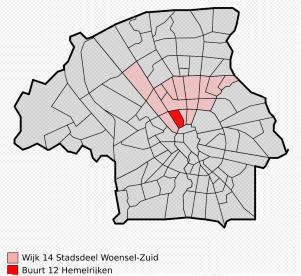
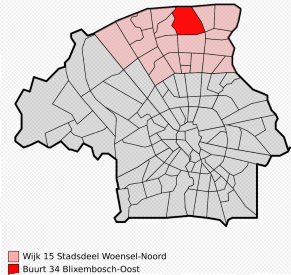
These criteria were applied to two neighborhoods: Hemelrijken and Blixembosch-Oost. The model visualized how these factors interact, enabling comparison and scenario testing. But numbers alone weren’t enough. To capture residents’ perspectives, Golnoosh used the Repertory Grid technique. Participants compared criteria in triads — for example, stress, green space, and noise — and explained which two felt similar and why. This revealed personal constructs like “quiet vs noisy” or “stressful vs calm.” Residents then rated all criteria, adding depth and nuance to the model.
Neighborhood-specific strategy
The findings were revealing. In Hemelrijken, low SES and high stress emerged as the strongest negative drivers of health. Green space and noise were key environmental concerns. Residents confirmed these insights, emphasizing stress, noise, and crowding as major issues. They prioritized solutions such as stress relief, affordable housing, and long-term health support.
In contrast, Blixembosch-Oost presented a different picture. Residents focused more on long-term health, SES, and green space. Loneliness and distance to facilities were more prominent concerns, reflecting the suburban layout. While noise and stress were present, they weren’t central. Residents valued green space and lifestyle health, viewing affordability and density as moderate issues.
These differences highlight a crucial lesson: urban health strategies must be neighborhood-specific. What works in one area may not apply in another. A one-size-fits-all approach simply doesn’t work.
Based on the findings, Golnoosh proposed tailored solutions:
- For Hemelrijken: pocket parks, green roofs, noise reduction measures, affordable housing, and community events to relieve stress and foster belonging
- For Blixembosch-Oost: preserving green infrastructure, health awareness programs, noise buffers, and inclusive community activities
Two additional insights emerged. First, urban health is shaped not just by data, but by people’s lived experiences. Residents often described health in personal terms, such as ‘quiet vs noisy’ or ‘stressful vs calm’. Second, co-creation is essential: involving residents leads to more grounded and accepted solutions.
Finding solutions is easy — once you truly understand the problem.
The next phase
The project didn’t end there. A new team member, Veron Afonso, joined to expand the systems dynamics simulation, bringing an IT perspective. The next phase involves returning to residents for validation and scenario building, continuing the cycle of co-creation and refinement.
This project exemplifies how diverse expertise, citizen involvement, and systems thinking can lead to meaningful urban innovation. As Golnoosh’s work shows, understanding the problem deeply is the key to designing healthier cities. Once the real challenges are clear, solutions follow naturally.